Long-range allosteric communication within antibodies affects antigen-binding affinity
-
By
-
Susan K. Vester
-
Brian J. Sutton
-
James M. McDonnell
-
July 3, 2026
-
Objective:
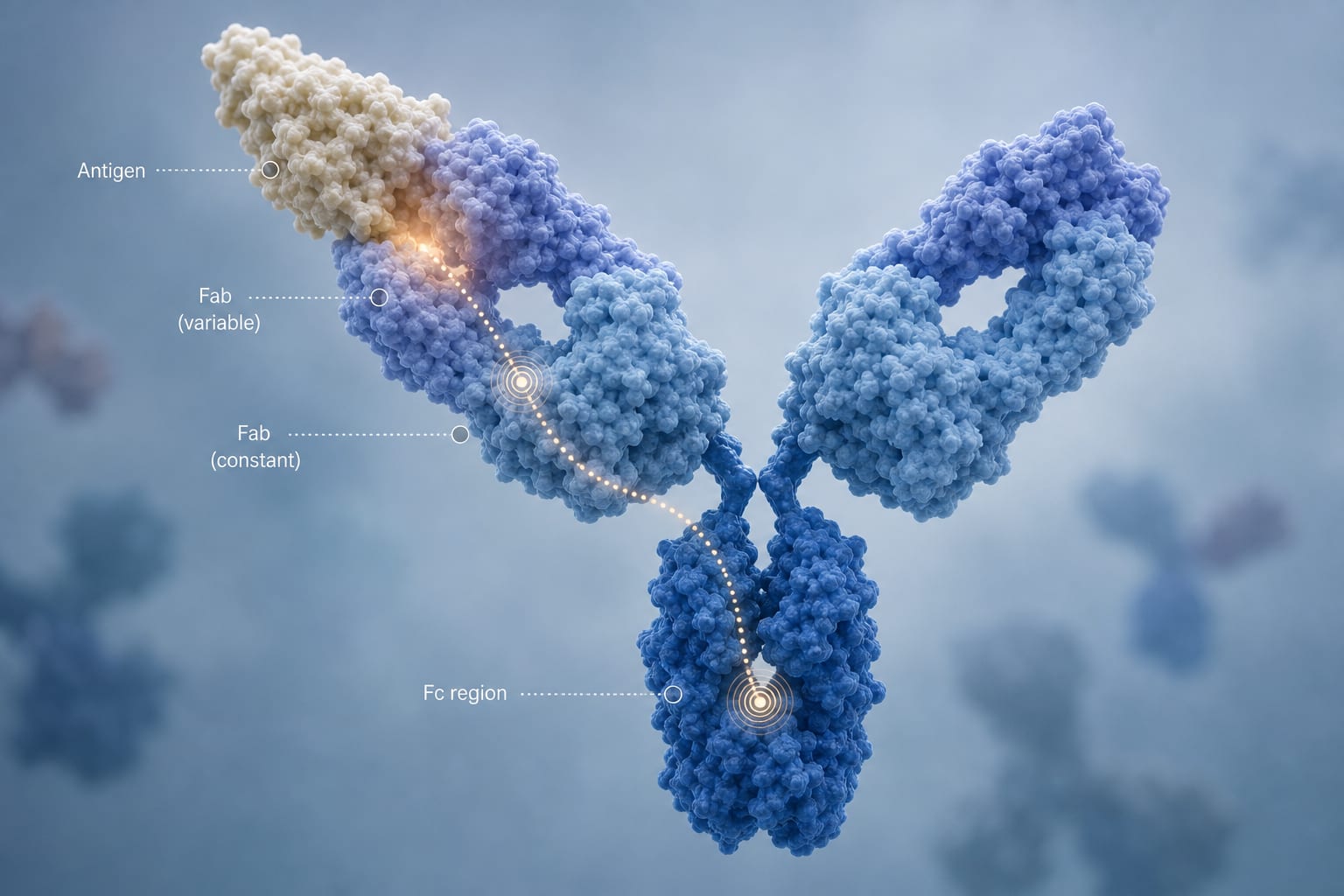
To investigate allosteric communication within antibodies and its effects on antigen-binding affinities across different classes and subclasses.
Approach:
- Methodology: Utilized surface plasmon resonance to compare IgA1, IgD, IgE, IgG1, IgG4, and IgM Fabs across five distinct antibody-antigen systems.
- Analysis: Conducted thermodynamic analysis to assess the influence of antibody flexibility and pre-organization on binding affinities.
Key Findings:
- Different CH1 domains produced varying allosteric differences in affinity.
- Larger long-range effects were observed from the Fc region to the Fab region.
- Full-length antibodies exhibited higher binding affinities than their Fab counterparts.
Interpretation:
Allosteric modulation of antigen binding, mediated by the CH1 domain, Fc region, and Fc-ligand interactions, is crucial for antibody function.
Limitations:
- The study primarily focused on five human antibody classes and may not represent all antibody interactions.
- Potential effects of avidity and molecular reach on affinity measurements were noted.
Conclusion:
The findings provide insights into the allosteric mechanisms influencing antibody function and may inform therapeutic antibody engineering.