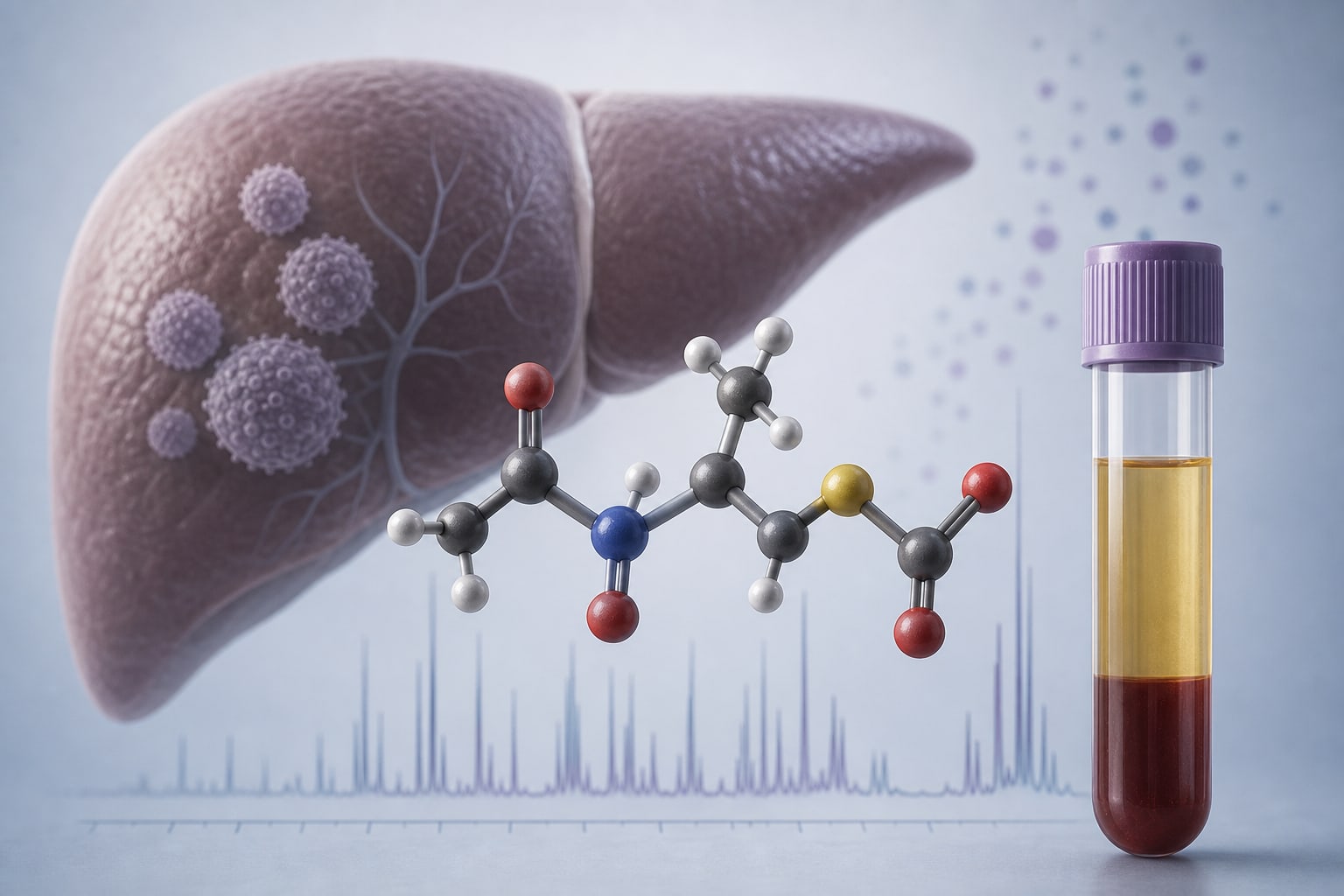
To characterize the metabolic signatures of HBeAg-positive patients and identify key metabolites associated with HBeAg seroconversion.
Key Findings:
HBeAg-positive patients exhibited distinct metabolic profiles with 227 differential metabolites.
Downregulated pathways included tryptophan, pyruvate, glycine, serine, and threonine metabolism.
Upregulated pathways included arginine biosynthesis and cysteine and methionine metabolism.
Gamma-glutamylglycine was significantly upregulated in HBeAg-positive patients.
A predictive model using plasma gamma-glutamylglycine identified HBeAg seroconversion with AUC values of 0.857 and 0.780 in developing and external cohorts, respectively.
Interpretation:
Altered amino acid metabolism is a predominant feature in HBeAg-positive patients, with plasma gamma-glutamylglycine levels negatively associated with HBeAg seroconversion.
Limitations:
The study was limited to specific cohorts and may not be generalizable to all chronic hepatitis B patients.
The sample size for some subgroups was relatively small.
Conclusion:
Plasma levels of gamma-glutamylglycine may serve as a biomarker for predicting HBeAg seroconversion in chronic hepatitis B patients.