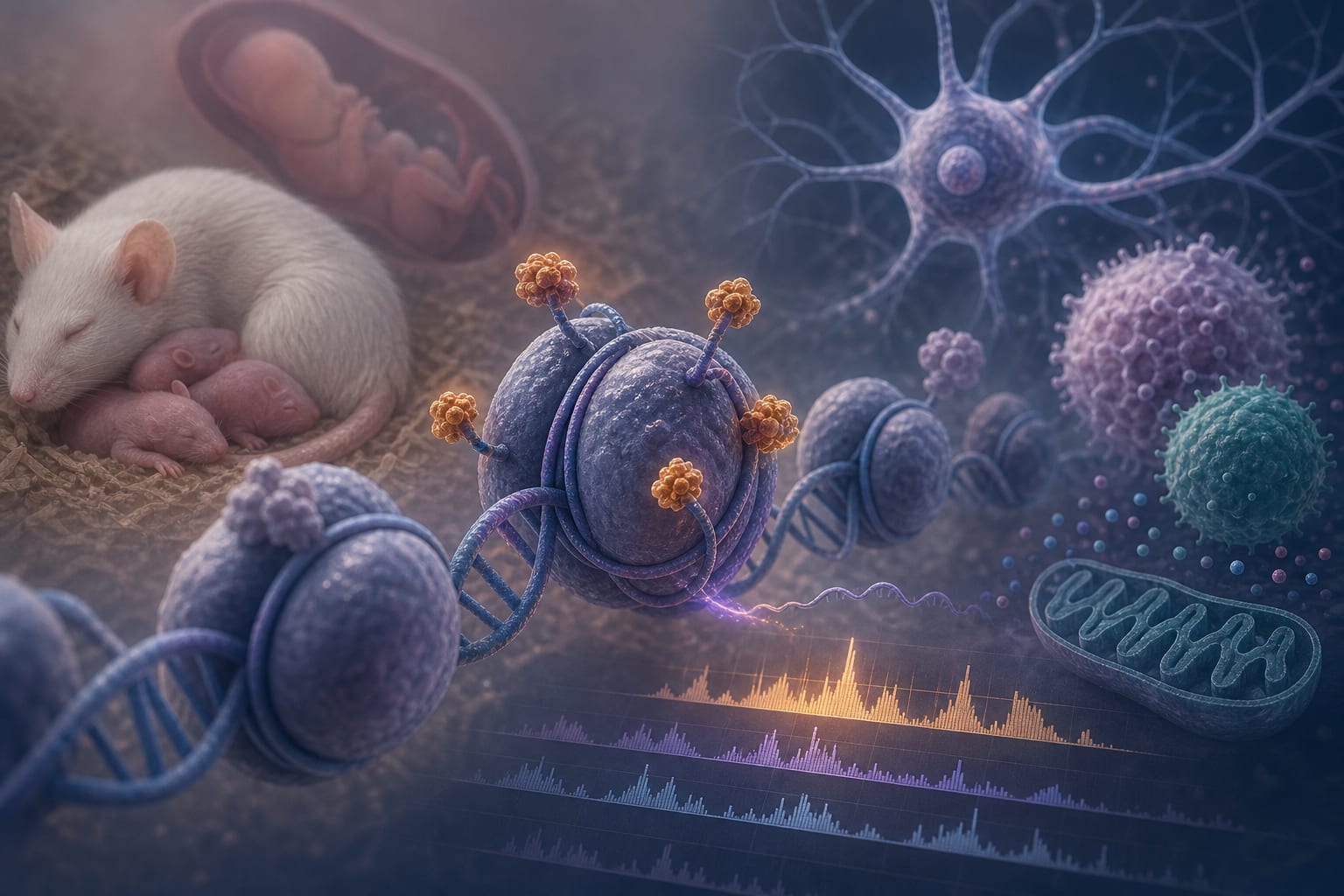
To investigate the enduring impact of perinatal opioid exposure on chromatin structure, gene expression, and subsequent immune and metabolic functions.
Approach:
Methodology: Utilized a multi-region, multi-omic approach combining RNA sequencing and H3K27ac chromatin immunoprecipitation sequencing in a mouse model of NOWS.
Cytokine Measurement: Measured cytokine levels in the brain and spleen, and assessed physiological responses under basal and immune-challenged conditions.
Key Findings:
Differentially expressed genes and H3K27ac modifications were enriched for immune and metabolic pathways in hypothalamic neurons.
Transcription factor 4 (TCF4) was identified as a key regulatory hub under immune-challenged conditions.
Cytokine levels were suppressed in morphine-exposed mice both at baseline and during immune challenges.
Alterations in metabolic properties, including changes in weight and basal body temperature, were observed.
Interpretation:
Perinatal opioid exposure leads to changes in chromatin structure and gene expression, particularly affecting immune and metabolic functions.
Limitations:
Variability in experimental outcomes due to differences in opioid type, exposure duration, and administration route.
Lack of robust adult phenotypes in some rodent models.
Conclusion:
The study provides insights into the physiological impacts of early-life opioid exposure, highlighting altered immune and metabolic responses.
Exagamglogene autotemcel is now indicated for patients aged 2 years and older with sickle cell disease and recurrent vaso-occlusive crises or transfusion-dependent beta thalassemia.