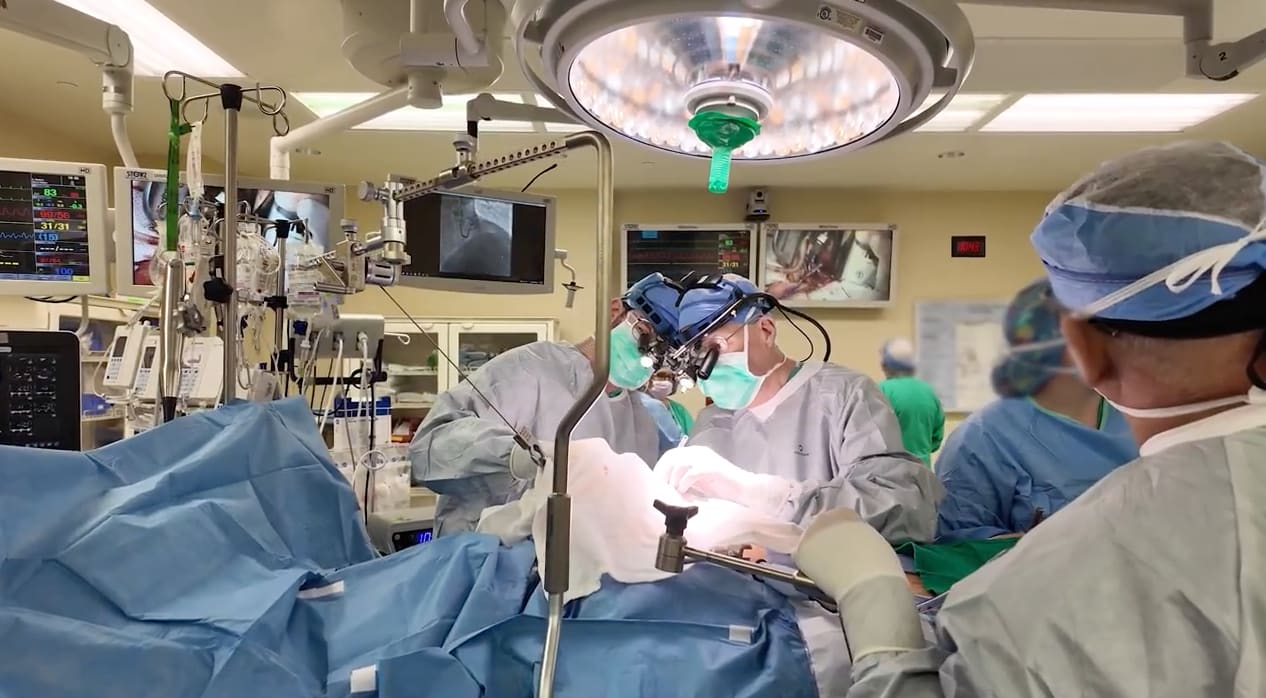
To develop a unified model for real-time catheter detection and segmentation in X-ray images, enhancing surgical guidance and improving patient outcomes.
Key Findings:
The proposed model surpasses state-of-the-art methods in both public and private datasets, achieving a detection accuracy of X% and segmentation accuracy of Y%.
Dynamic task prioritization improves the model's focus on difficult tasks, enhancing detection and segmentation performance significantly.
The architecture effectively integrates attention mechanisms for better feature enhancement, leading to improved model robustness.
Interpretation:
The multi-task learning framework with dynamic resource prioritization significantly improves the accuracy and efficiency of catheter detection and segmentation in X-ray images, potentially leading to better surgical outcomes.
Limitations:
The model's performance may vary with different types of medical imaging tasks, such as ultrasound or MRI.
Potential challenges in real-time application due to computational demands, particularly in high-resolution imaging scenarios.
Conclusion:
The study presents a robust approach to catheter detection and segmentation that could facilitate advancements in robotic-assisted surgeries, paving the way for future research in automated surgical systems.
For many people, cardiovascular disease develops silently. It can remain undetected for years, overshadowed by an active lifestyle and an apparent lack of symptoms.