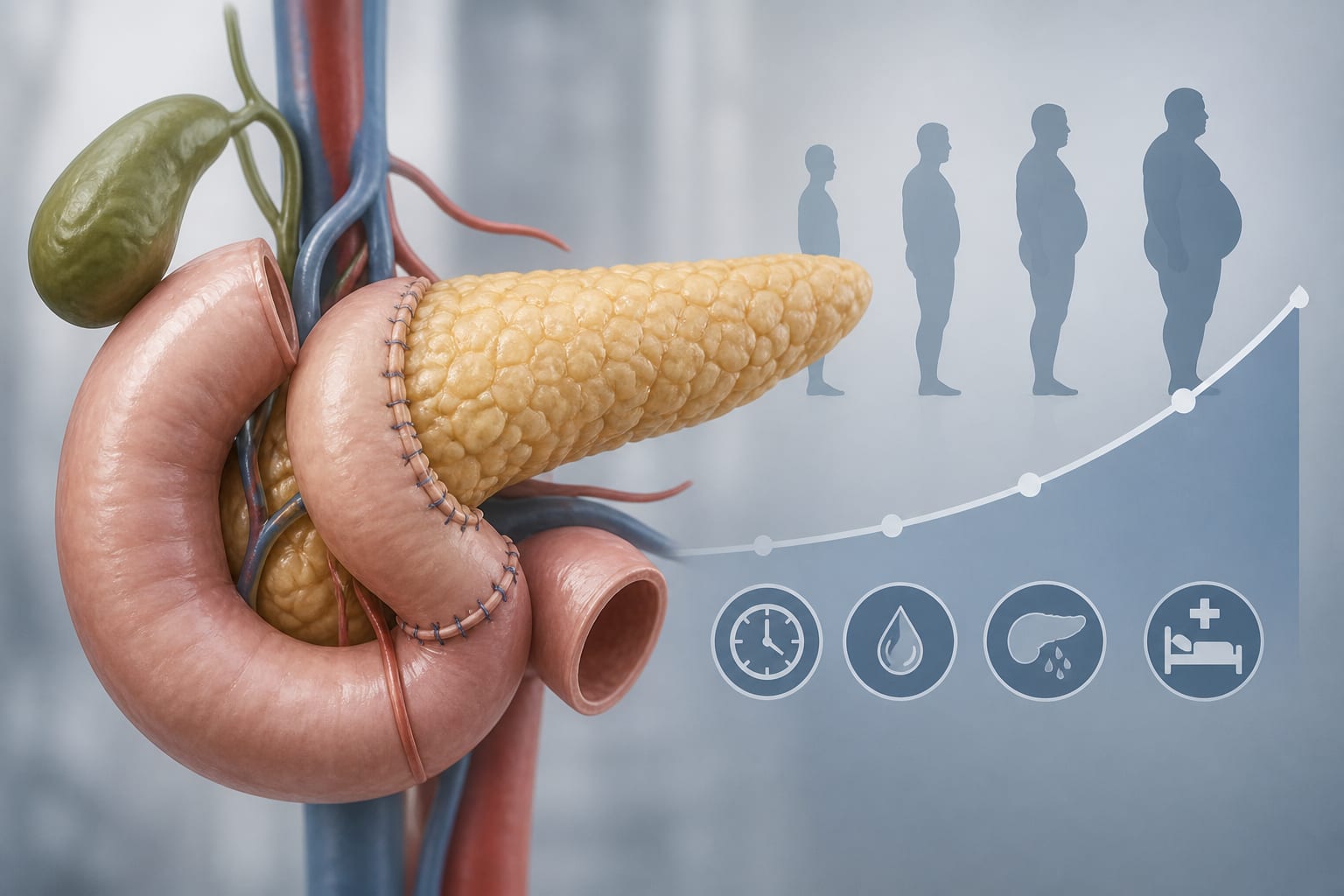
Graded and threshold effects of body mass index on perioperative outcomes after pancreaticoduodenectomy: a meta-analysis incorporating an institutional cohort - Summary - MDSpire
To determine how varying BMI categories affect operative complexity, postoperative morbidity, and mortality following pancreaticoduodenectomy (PD).
Approach:
Study Design: Systematic review and meta-analysis of 25 studies, including one institutional cohort, focusing on BMI-related perioperative and survival outcomes.
Outcomes Examined: Operative duration, blood loss estimates, postoperative complications, clinically relevant pancreatic fistula, reoperation, perioperative mortality, and overall survival.
Key Findings:
BMI ≥25 kg/m2 associated with longer operative duration, increased blood loss, and higher risks of postoperative complications.
BMI ≥30 kg/m2 linked to greater perioperative mortality risk.
Operative complexity increased progressively with higher BMI, while perioperative mortality showed a threshold pattern starting from BMI ≥30 kg/m2.
No significant association found between BMI and long-term overall survival.
Interpretation:
Overweight (BMI ≥25 kg/m2) is linked to greater operative complexity and moderate morbidity, while obesity (BMI ≥30 kg/m2) is associated with increased perioperative mortality.
Limitations:
Variability in BMI categorization across studies.
Differences in patient populations, operative techniques, and outcome definitions complicate comparisons.
Conclusion:
The findings indicate the need for further investigation into BMI's role in perioperative management for patients undergoing PD.