Evaluation of the concept of students learning practical gynecological and obstetric skills at a large German university hospital, using the example of the Homburg university women's clinic - Summary - MDSpire
Conexiant’s news site is now MDSpire News. Learn more
Advertisement
Assessment of Practical Gynecological and Obstetric Skill Acquisition Among Students at a Major University Hospital in Germany: A Case Study of the Homburg Women's Clinic
To assess the structure and effectiveness of the clinical rotation for medical students in obstetrics and gynecology at the Homburg University Women's Hospital.
Approach:
Clinical Rotation Structure: The clinical rotation lasts 5 days, combining clinical sessions and seminars, with a focus on practical skill acquisition in various areas of obstetrics and gynecology.
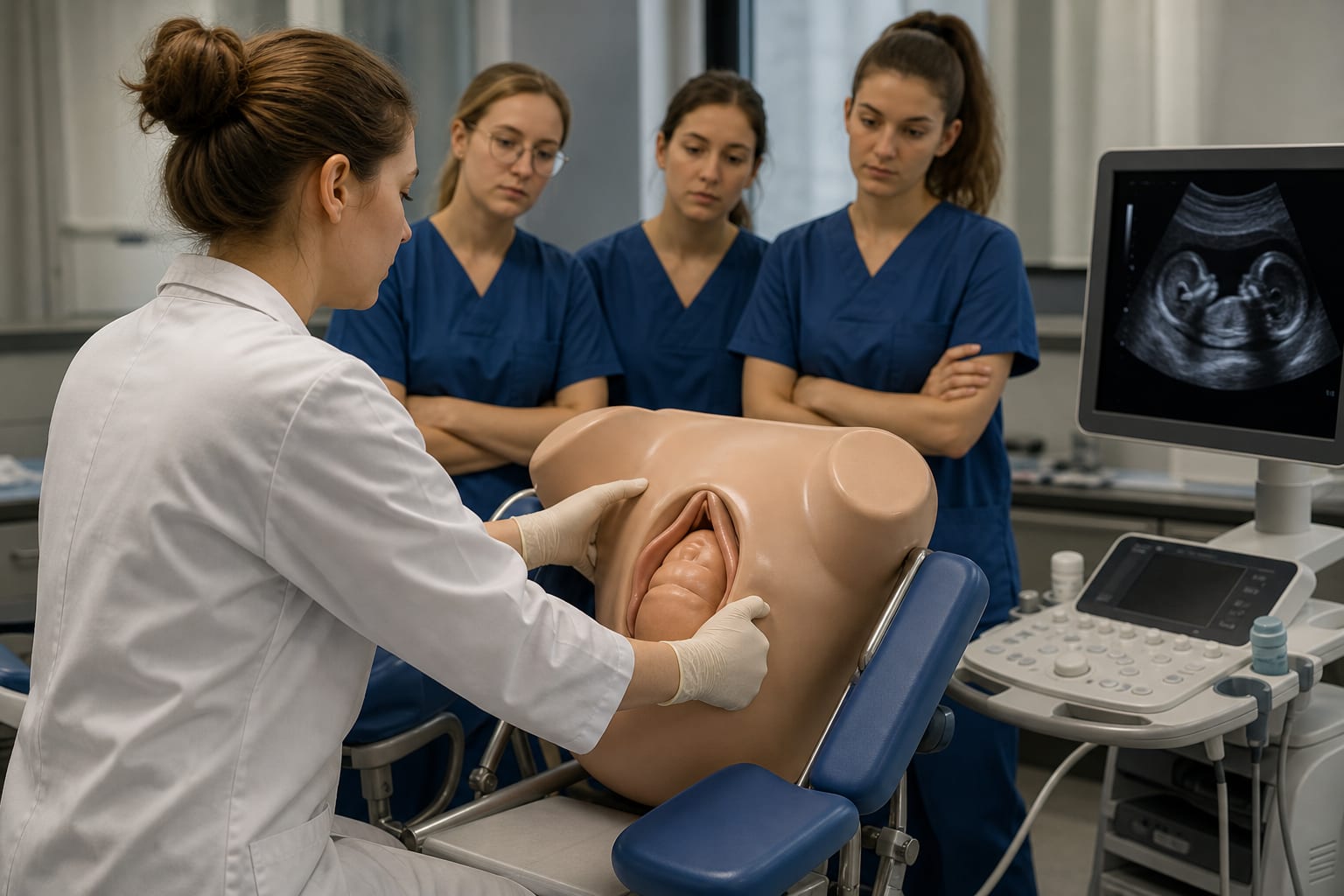
Daily Schedule: Each day includes introductory sessions, practical demonstrations, and hands-on practice in areas such as ultrasound, gynecological examinations, and emergency management.
Skill Development: Students engage in role-playing, practice procedures on models, and analyze clinical cases to enhance their practical skills and theoretical knowledge.
Key Findings:
The structured rotation allows students to gain hands-on experience in multiple functional areas of obstetrics and gynecology, including ultrasound and emergency management.
Positive feedback from students indicates high satisfaction with the training process, particularly regarding innovative teaching methods such as role-playing and the use of models for practical skills.
Interpretation:
The clinical rotation at Homburg University Women's Hospital effectively integrates practical skill acquisition with theoretical learning, contributing to student satisfaction and preparedness for future medical practice.
Limitations:
The study lacks a standardized comparison with other university hospitals in Germany, and no quantitative data on skill acquisition outcomes were provided.
Conclusion:
The Homburg clinical rotation model may serve as a reference for other institutions seeking to enhance their obstetrics and gynecology training programs.
by Sebastian Findeklee, Mariz Kasoha, Gregor Leonhard Olmes, Klaus Diedrich, Mihai-Teodor Georgescu, Romina Marina Sima, Erich-Franz Solomayer, Bashar Haj Hamoud
Claims-based target trial emulation found no clear association between continued GLP-1 receptor agonist use in early pregnancy and nonlive birth, fetal growth abnormalities, or major congenital malformations.