Clinical and radiographic factors associated with surgical approach selection in total hip arthroplasty: a preliminary machine learning analysis - Summary - MDSpire
To investigate the clinical and radiographic factors associated with surgeon selection of the direct anterior approach (DAA) versus the posterolateral approach (PLA) in total hip arthroplasty (THA), and to explore whether machine learning methods can characterize historical surgical selection patterns.
Approach:
Study Design: A retrospective analysis of 98 patients who underwent primary THA at two institutions, comparing demographics and preoperative radiographic parameters.
Statistical Analysis: Baseline comparisons and univariate logistic regression analyses were conducted using SPSS, and a machine learning model was constructed using the XGBoost algorithm.
Key Findings:
Patients in the DAA group were significantly older and had greater soft tissue thickness, neck-shaft angle (NSA), and femoral offset compared to the PLA group.
Univariate logistic regression indicated that age, NSA, and femoral offset were significantly associated with DAA selection.
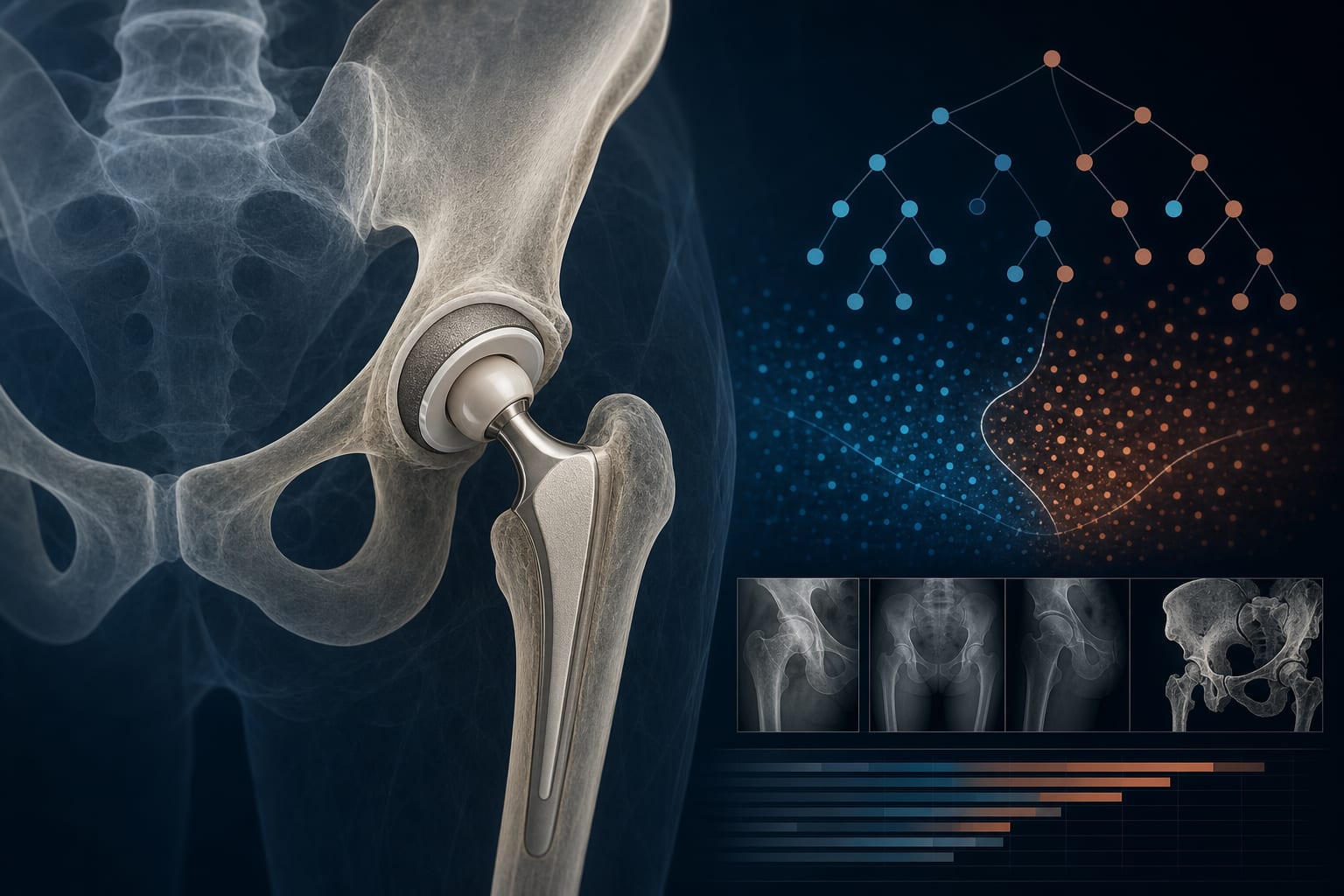
The XGBoost model achieved an area under the curve (AUC) of 0.938 and an accuracy of 90.0% on the test set.
Interpretation:
The study identified several clinical and radiographic factors influencing the choice between DAA and PLA in THA, with machine learning effectively characterizing surgical selection patterns.
Limitations:
The study is retrospective and may not account for all variables influencing surgical approach selection.
The machine learning model does not recommend the optimal surgical approach for individual patients.
Conclusion:
The study successfully identified factors associated with surgical approach selection in THA and demonstrated the potential of machine learning in analyzing surgical decision patterns.