To evaluate the impact of pupil size on the performance of multifocal contact lenses (MFCLs) and visual satisfaction.
Approach:
Variation in Pupil Size: The article discusses how pupil size varies among individuals performing the same visual tasks, affecting MFCL performance.
Impact on Visual Acuity: Studies indicate that MFCLs perform similarly to single vision lenses in high-contrast distance visual acuity across varying pupil sizes.
Low-Contrast Acuity and CSF: A 2-line difference in acuity was noted between 3-mm and 6-mm pupils using low-contrast charts, with a significant decrease in contrast sensitivity function (CSF) at larger pupil sizes.
Pupillary Dynamics: Visual satisfaction with MFCLs correlates with the ability to change pupil size under different lighting conditions.
Tinted Lenses: The use of tints to manipulate pupil size was explored, showing potential benefits for distance optics but not improving distance visual acuity.
Key Findings:
MFCLs are reported to be comparable to single vision lenses in high-contrast visual acuity.
Acuity decreases with larger pupil sizes when measured with low-contrast charts.
Higher-order aberrations in MFCLs have a greater impact on visual performance with larger pupils.
Visual satisfaction is linked to pupillary dynamics, suggesting other measures may predict MFCL acceptance better.
Limitations:
The studies primarily focus on high-contrast visual acuity, which may not fully represent real-world visual performance.
The impact of tinted lenses on visual acuity needs further investigation.
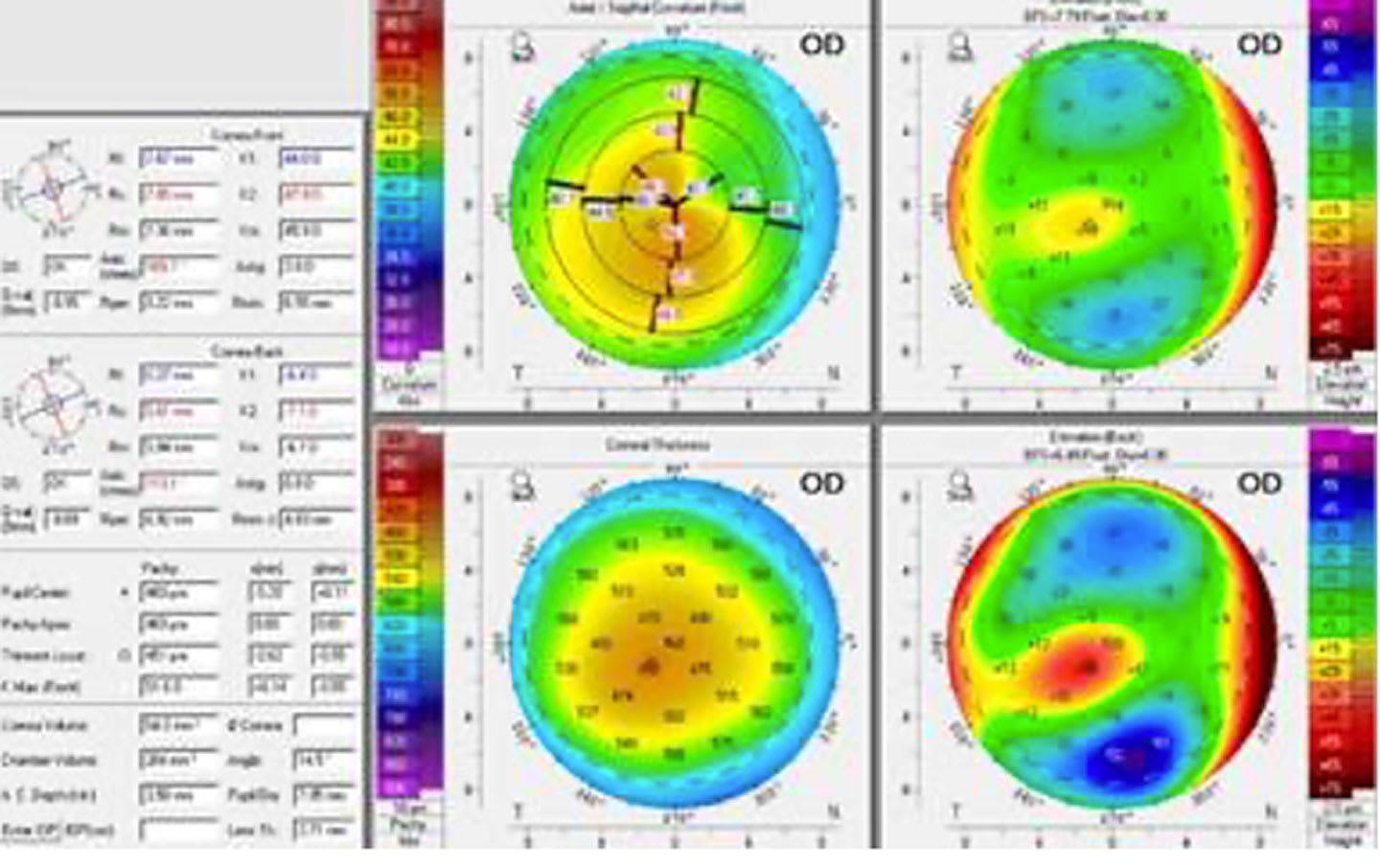
Recognizing the signs of corneal ectasia can help with prevention of vision loss, and may decrease the emotional impact and functional deficits that can follow.