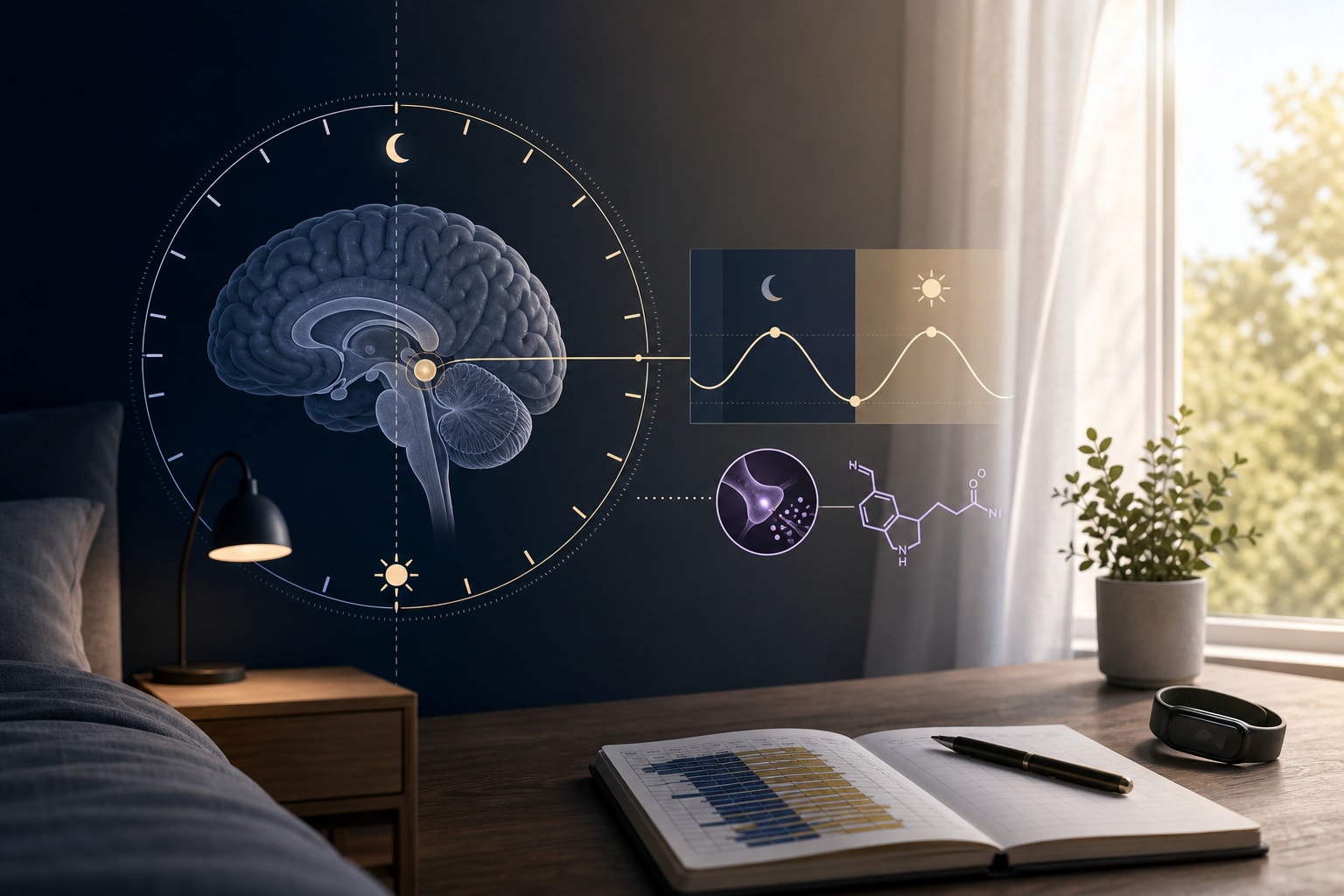
Circadian dimensions in insomnia disorder: mechanistic evidence, candidate phenotypes, and a phenotype-stratified research framework - Summary - MDSpire
Advertisement
Circadian dimensions in insomnia disorder: mechanistic evidence, candidate phenotypes, and a phenotype-stratified research framework
To integrate clinical, measurement, mechanistic, and intervention evidence on circadian dimensions in insomnia disorder and propose a candidate circadian phenotyping framework for future validation.
Approach:
Review Methodology: The article is a narrative review that develops a phenotype-stratified research framework, utilizing searches from PubMed, Web of Science, and Google Scholar.
Key Findings:
Insomnia disorder is characterized by difficulty initiating or maintaining sleep and is prevalent among individuals with mental health disorders.
Circadian factors such as misalignment between endogenous circadian phase and intended sleep window may contribute to insomnia symptoms.
Some patients exhibit delayed sleep timing, reduced rest-activity amplitude, and abnormal light exposure patterns.
Cognitive behavioral therapy for insomnia (CBT-I) remains the first-line treatment.
The review proposes a framework combining various assessment methods to distinguish different insomnia phenotypes.
Interpretation:
The findings suggest that circadian factors may act as modifiers of insomnia symptoms and treatment responses, rather than being a unified cause.
Limitations:
The review does not provide a systematic review or clinical guidelines.
Conclusions are based on narrative synthesis without formal risk-of-bias assessment or quantitative synthesis.
Conclusion:
The review translates circadian evidence in insomnia into testable propositions and emphasizes the need for phenotype-stratified trials.