Single-cell and spatial multi-omics reveal estrogen-mediated vaginal wall microenvironment remodeling and a perivascular reparative niche in postmenopausal pelvic organ prolapse - Summary - MDSpire
Advertisement
Single-cell and spatial multi-omics reveal estrogen-mediated vaginal wall microenvironment remodeling and a perivascular reparative niche in postmenopausal pelvic organ prolapse
To clarify the tissue-specific mechanisms of estrogen action in postmenopausal women with pelvic organ prolapse (POP) using single-cell RNA sequencing and spatial transcriptomics.
Approach:
Methodology: Combined single-cell RNA sequencing and high-resolution Visium HD spatial transcriptomics to profile postmenopausal vaginal wall tissues.
Computational Analysis: Performed computational pharmacology analysis to predict distinct responses of the vaginal wall tissue niche to different estrogen subtypes.
Key Findings:
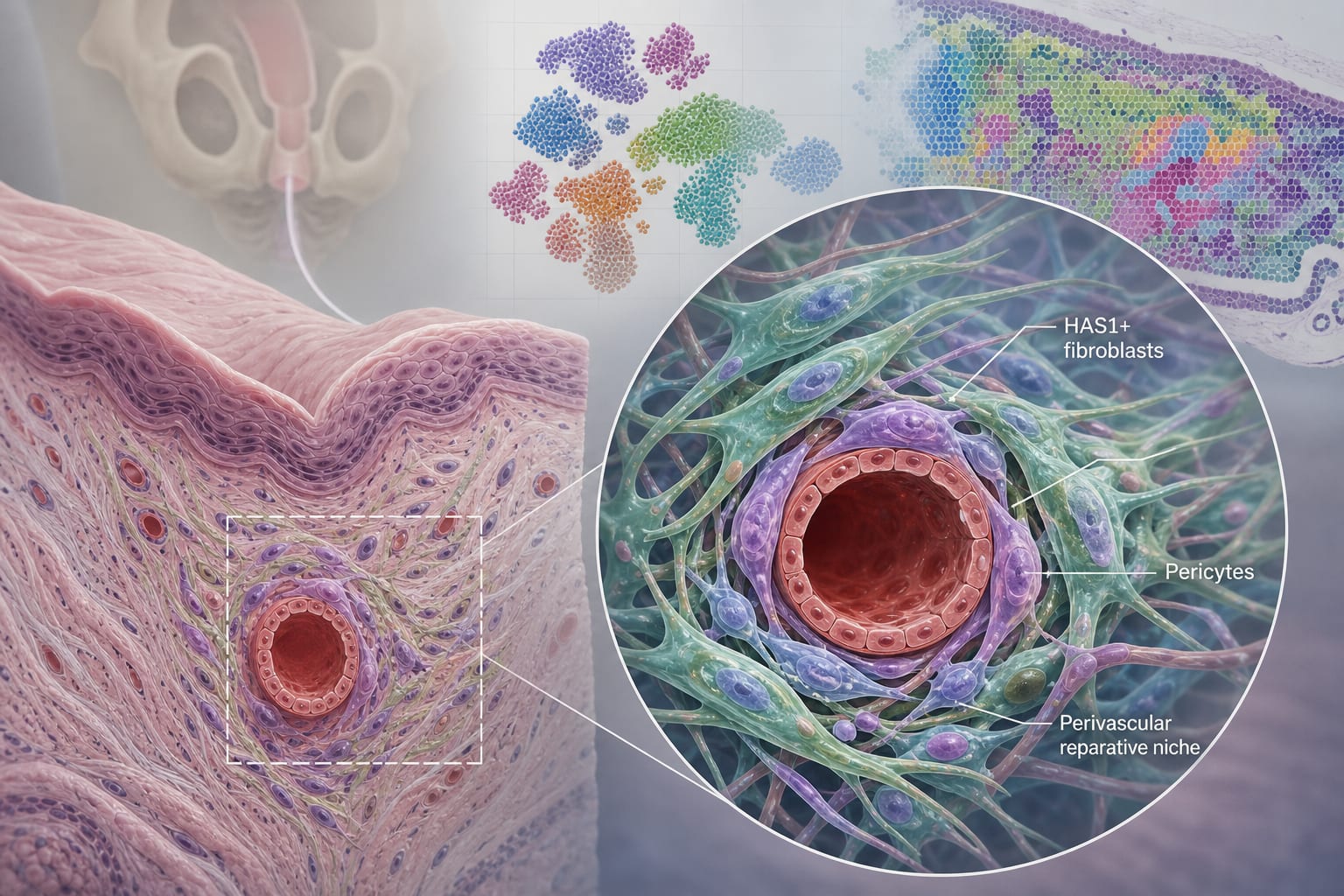
Estrogen drives selective expansion and spatial redistribution of HAS1+ fibroblasts.
Fibroblasts aggregate with pericytes to form a structured perivascular niche.
Spatial co-localization enhances fibroblast-pericyte crosstalk and activates pro-repair signaling cascades.
Interpretation:
Estrogen functions by forming spatially organized multicellular reparative niches.
Limitations:
Further experimental verification is needed to confirm findings.
Conclusion:
Further experimental verification is needed to confirm findings.