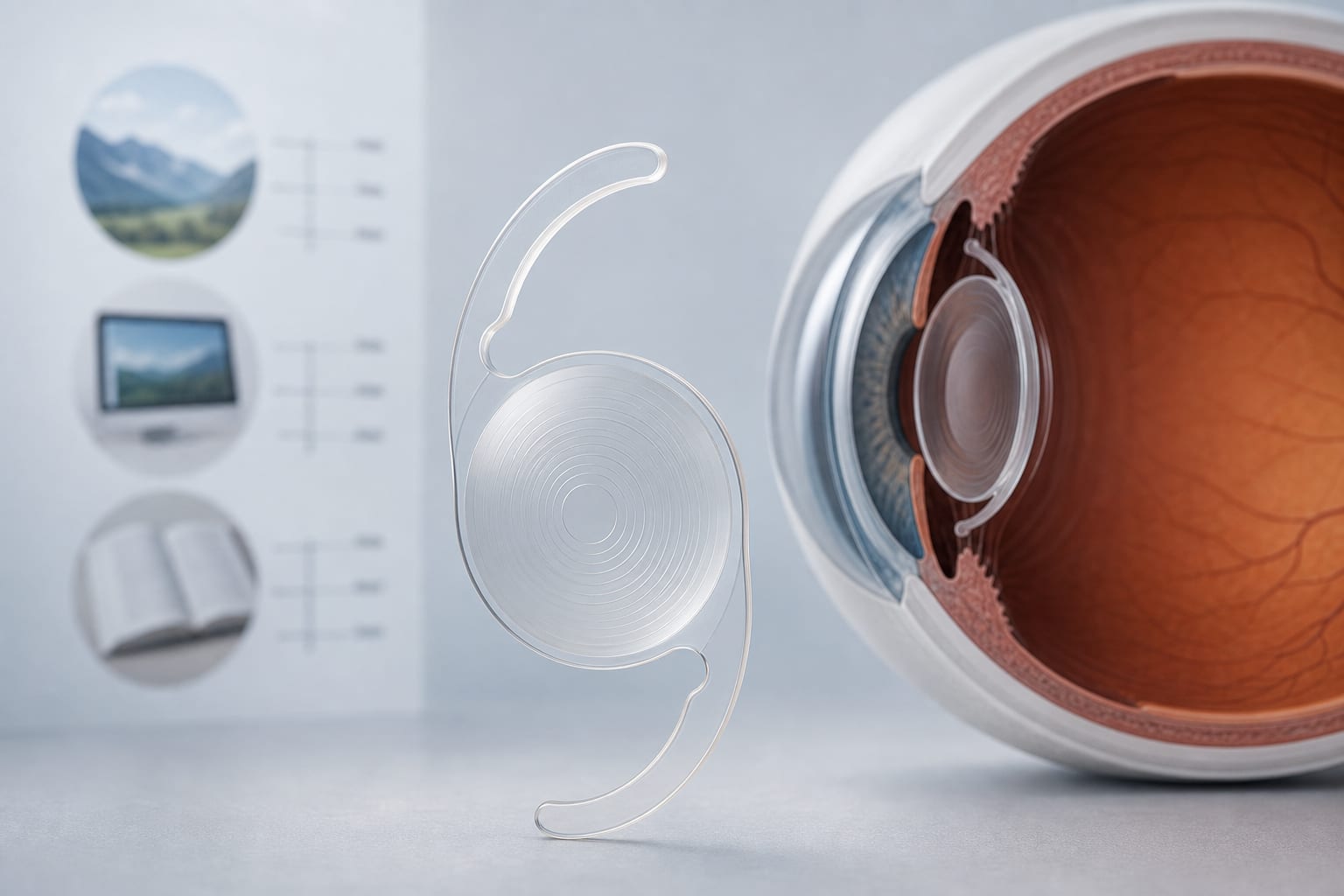
To evaluate the durability of intraocular lens (IOL) materials after exposure to space conditions for approximately 6 months.
Approach:
Study Design: The Joint Assessment Of Material Exposure In Space (JAMES) project sent 135 unpackaged IOLs to the International Space Station (ISS) for exposure to atomic oxygen and solar ultraviolet radiation.
Analysis: 61 space-exposed lenses were analyzed alongside 20 terrestrial controls upon return to Earth.
Key Findings:
42 of the 61 lenses exposed to space showed no notable exposure-associated findings.
19 lenses exhibited changes, with 8 of 9 from the most exposed location developing cracks and surface roughening.
5 space-exposed IOLs showed yellow discoloration and reduced light transmission between 400 and 500 nm.
All 6 light-adjustable lenses developed a distinctive cobblestone surface appearance.
Interpretation:
Some IOLs may be susceptible to damage from space exposure, necessitating further research.
Limitations:
Sample sizes were small.
IOLs were deliberately unpackaged, raising concerns about handling and contamination.
The study was not designed to compare lens manufacturers or models.
Conclusion:
Further mechanical, optical, and clinical-performance testing is required, with future studies potentially involving phacoemulsification systems under microgravity conditions.
Ophthalmologists caring for adults with this condition may encounter persistent inflammation, treatment dependence, and the cumulative ocular effects of childhood disease.