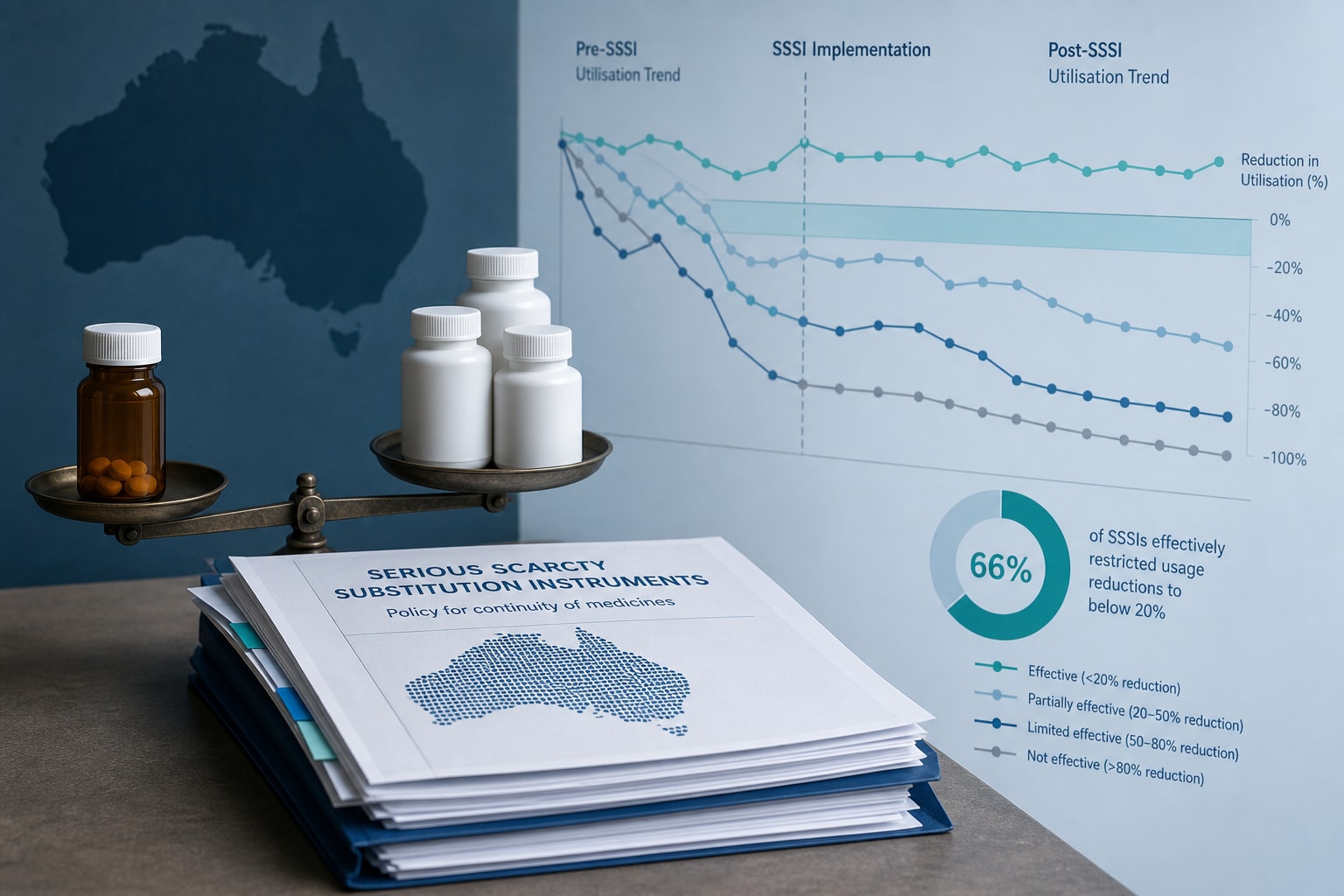
To evaluate the effectiveness of Australia’s Serious Scarcity Substitution Instruments (SSSIs) in mitigating medicine shortages using national dispensing data.
Approach:
Data Analysis: Utilized interrupted time series analysis on Pharmaceutical Benefits Scheme (PBS) data to assess monthly medicine utilization before and after SSSI implementation.
SSSI Examination: Examined 12 medicines subject to SSSIs implemented between August 2021 and December 2023.
Key Findings:
Two-thirds of SSSIs limited utilization declines to less than 20%.
Effectiveness of SSSIs was strongly linked to the availability of substitute products.
Variable utilization outcomes across medicines were observed.
Interpretation:
SSSIs are a valuable policy tool for maintaining continuity of care during shortages, but their effectiveness is contingent on timely implementation and the availability of substitutes.
Limitations:
The study only analyzed a limited number of medicines, which may affect the generalizability of the results.
Results may not be generalizable beyond the Australian context.
Conclusion:
SSSIs may function best when supported by robust supply intelligence.
Screening data from a UK clinical trial found low vitamin D levels in 55% of older patients and 72% of ethnic patients, with little variation despite summer months.