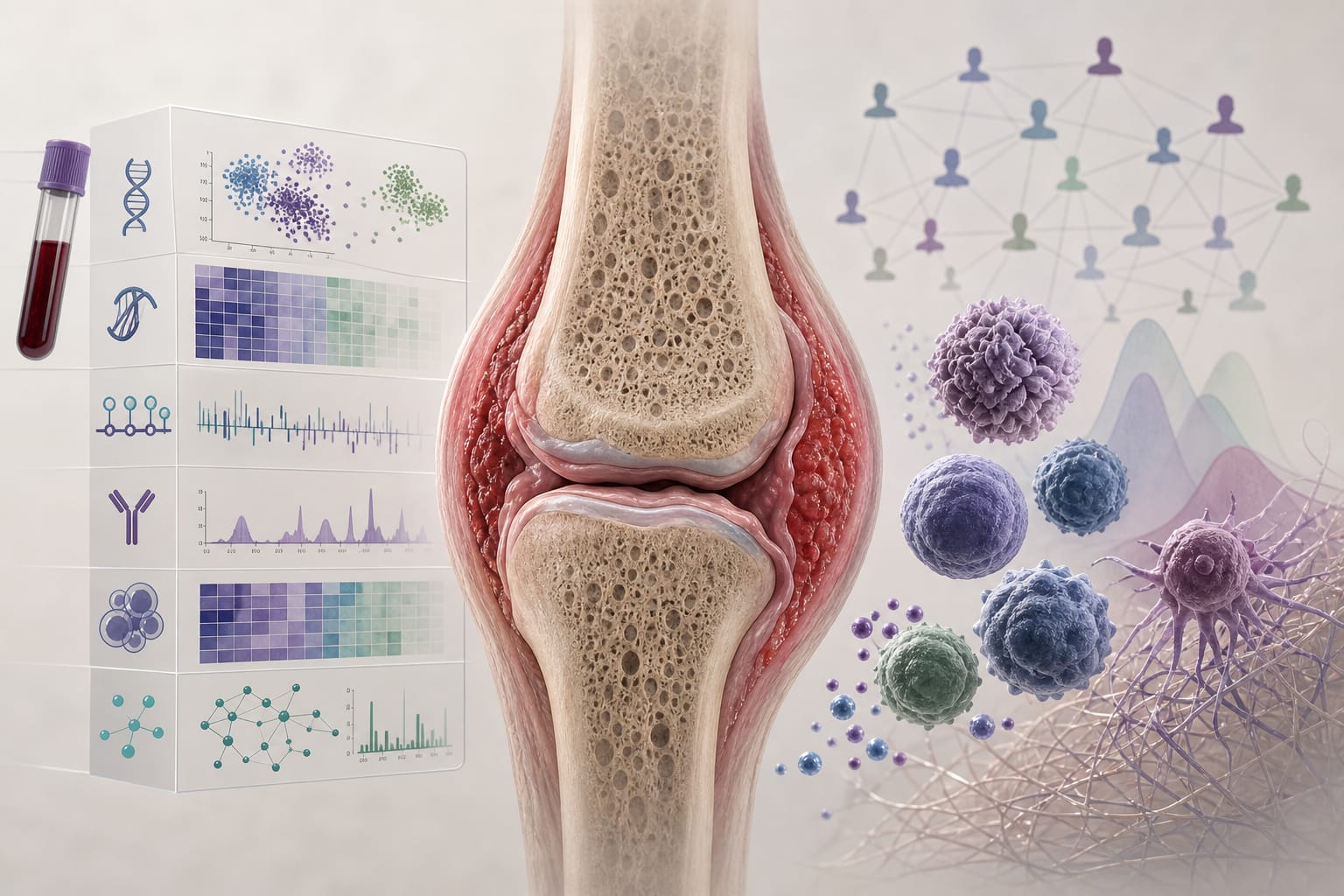
Immunological heterogeneity in rheumatoid arthritis: challenges in early-stage stratification, non-response to targeted therapy, and the restoration of immune tolerance - Summary - MDSpire
Advertisement
Immunological Diversity in Rheumatoid Arthritis: Addressing Early Stratification Challenges, Targeted Therapy Non-Response, and Immune Tolerance Restoration
To examine the mechanisms underlying immunological heterogeneity in rheumatoid arthritis (RA) and discuss their implications for patient stratification and treatment response.
Approach:
Mechanisms of Heterogeneity: The review explores genetic susceptibility, epigenetic regulation, autoantibody diversification, synovial pathotypes, and gut-joint axis-related immune-metabolic interactions.
Clinical Implications: It discusses how multi-omics, synovial molecular pathology, and biopsy-driven trials can inform early stratification and predict treatment non-response based on current evidence.
Emerging Strategies: Evaluates investigational strategies such as pharmacomicrobiomics, local drug delivery, nanomedicine, and cell-based therapies.
Key Findings:
RA is characterized by significant inter-patient heterogeneity in disease course and treatment response.
Genetic factors, particularly HLA and non-HLA loci, influence disease risk and immune phenotype diversity.
Current evidence does not support a simple one-marker-one-drug model for treatment response prediction.
Interpretation:
A critical understanding of RA heterogeneity may enhance patient stratification and therapeutic selection.
Limitations:
The causal role of gut-joint axis and microbiome in RA remains incompletely defined.
Current therapeutic strategies require further validation based on ongoing research.
Conclusion:
A more integrated approach to understanding RA immunological diversity is necessary for improving treatment outcomes.
Combined rheumatoid factor and anticitrullinated protein antibody status appeared to modify the association between baseline rheumatoid arthritis disease activity and subsequent cardiovascular events in an international observational cohort.