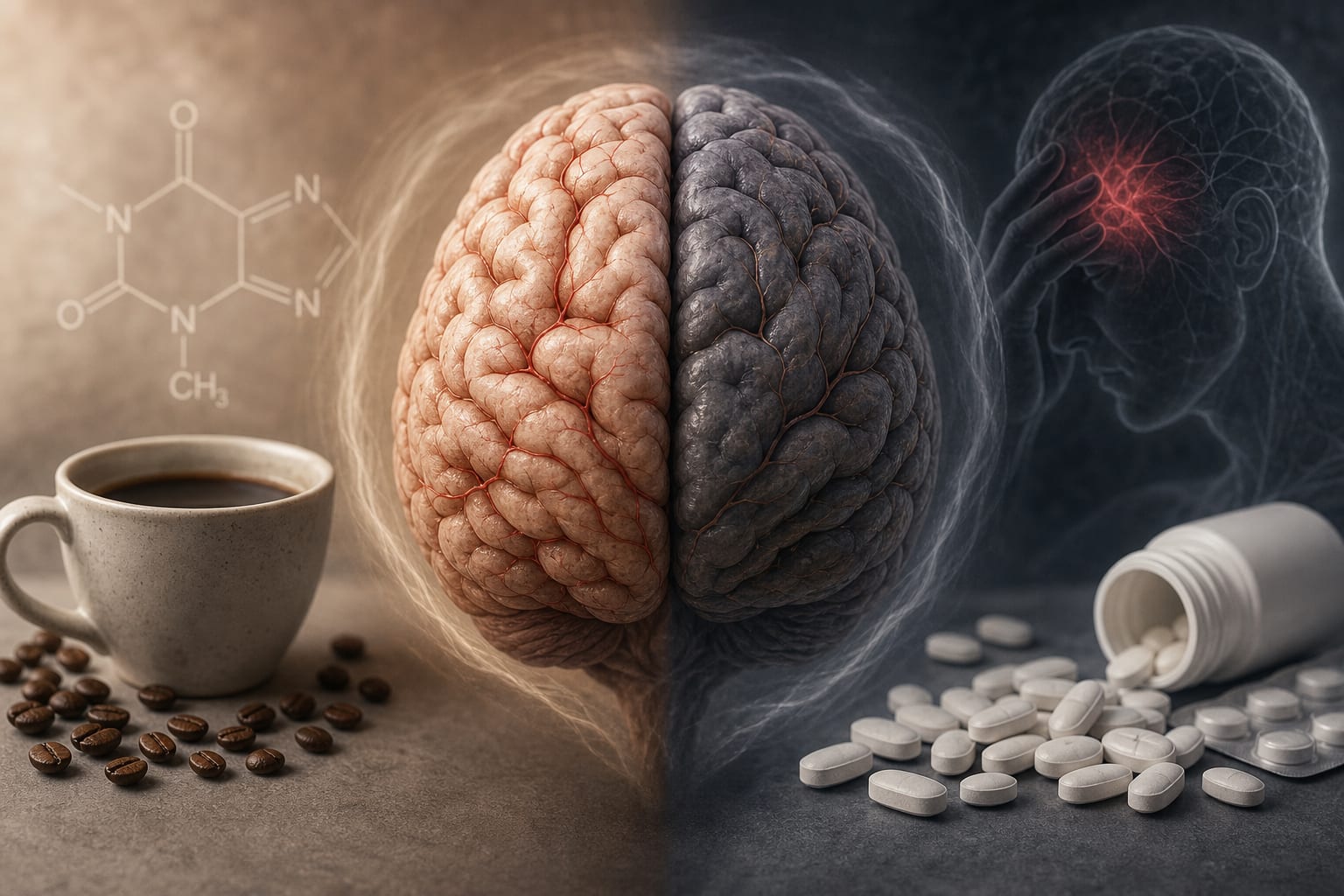
To compare headache burden, psychological characteristics, and caffeine use between patients with medication-overuse headache (MOH) and non-MOH patients, and to assess the association between caffeine use disorder and severity of analgesic dependence in MOH.
Approach:
Study Design: Cross-sectional study conducted on adults with primary headache disorders, utilizing validated questionnaires to assess caffeine consumption, headache impact, and psychological characteristics.
Participants: 482 patients with primary headache disorders were recruited from four specialized headache clinics in Egypt.
Data Collection: Participants completed questionnaires including caffeine food frequency (C-FFQ), caffeine use disorder (CUDQ), headache impact test-6 (HIT-6), Severity of Dependence Scale (SDS), and Depression Anxiety Stress Scales–12 (DASS-12).
Key Findings:
33.2% of participants met ICHD-3 criteria for MOH.
MOH patients had significantly higher monthly headache days (MHD), acute medication days (AMD), and psychological distress scores compared to non-MOH patients (all p < 0.001).
Heavy caffeine consumption was more prevalent in MOH patients (23.8% vs. 9.3%).
Caffeine use disorder scores correlated positively with MHD, AMD, psychological distress scores, and SURPS scores (all p < 0.001).
In MOH patients, dependence severity (SDS scores) correlated with MHD, AMD, caffeine use disorder scores, and SURPS scores (all p < 0.05).
Interpretation:
Limitations:
The study was cross-sectional, limiting causal inferences.
Participants were recruited from specialized clinics, which may not represent the general population of headache sufferers.
Conclusion:
Patients with MOH exhibit greater headache burden, psychological distress, and caffeine consumption compared to non-MOH patients.
by Rehab Magdy, Amr Hassan, Mona Hussein, Alaa Elmazny, Osama Yacoub, Mohamed Abdelghaffar, Nourhan Abdelmohsen Taha, Ahmed Essmat, May M. Fayez, Nahla Merghany, Anas Elgenidi, Ahmed Dahshan
Pediatric migraine has historically been managed in fragments – symptoms recalled across months of episodic appointments. At Phoenix Children's, digital tools are reshaping care from episodic to continuous.