Developmental exposure to a human-relevant PCB mixture: impacts on PCB congeners, metabolites, and drug-metabolizing enzymes in the bladder of post-weaning mice - Summary - MDSpire
Advertisement
Developmental exposure to a human-relevant PCB mixture: impacts on PCB congeners, metabolites, and drug-metabolizing enzymes in the bladder of post-weaning mice
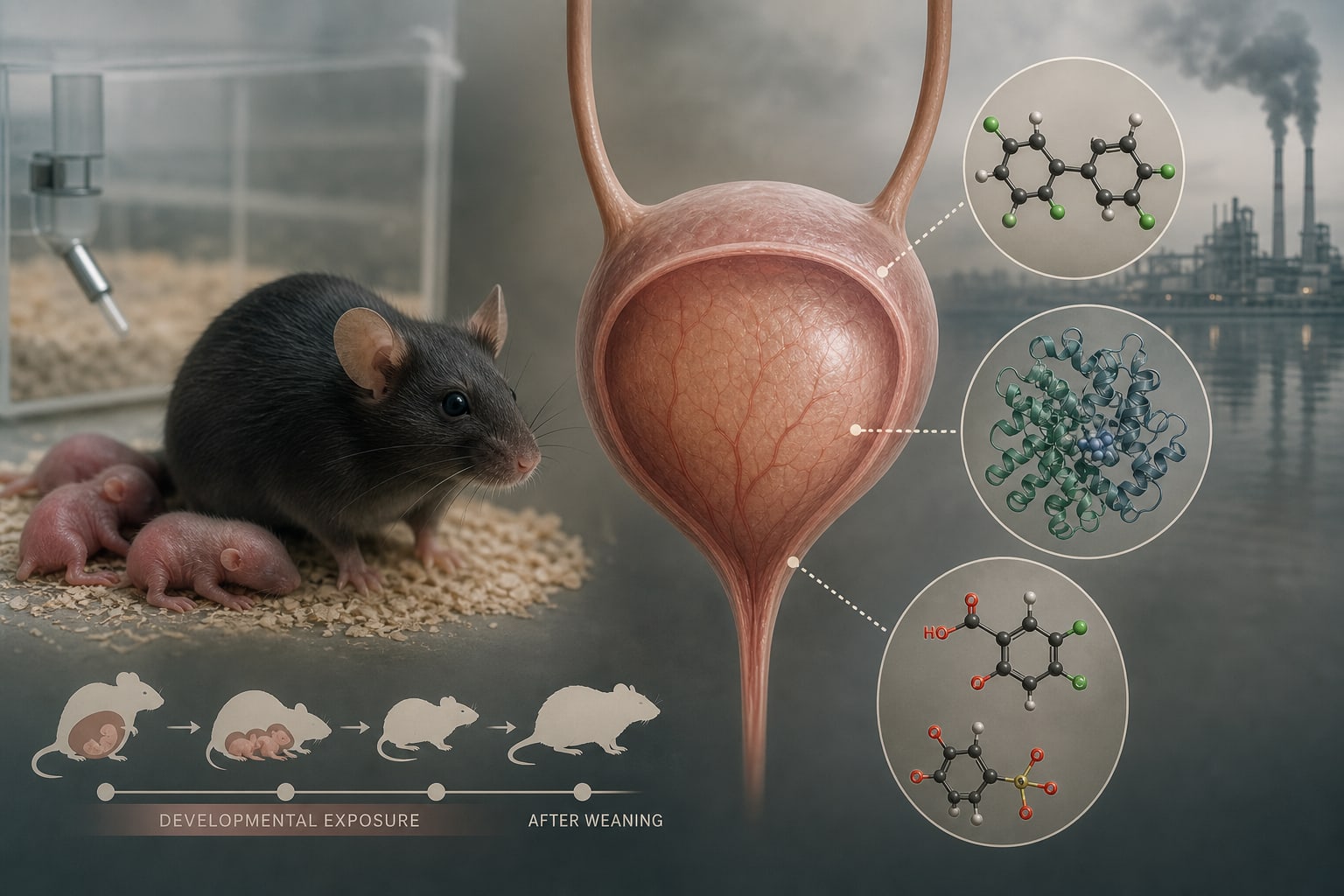
To investigate the accumulation of PCBs and their metabolites in the bladder of post-weaning female mice exposed to a PCB mixture during gestation and lactation, and to assess the regulation of bladder-specific CYP enzymes.
Approach:
Exposure Method: Female mice were exposed to the MARBLES PCB mixture via diet starting two weeks before mating and continuing through gestation and lactation.
Measurement Techniques: PCB and OH-PCB levels were measured in various tissues using gas chromatography-tandem mass spectrometry (GC-MS/MS), and CYP expression was assessed with real-time quantitative PCR (RT-qPCR).
Key Findings:
PCBs and OH-PCBs were detected in the tissues of post-weaning female mice.
Cyp1a2 levels increased following PCB exposure.
Interpretation:
Developmental exposure to a PCB mixture alters maternal PCB metabolism and bladder-specific responses.
Conclusion:
Further investigation is warranted to understand the implications of PCB exposure on urinary dysfunction.