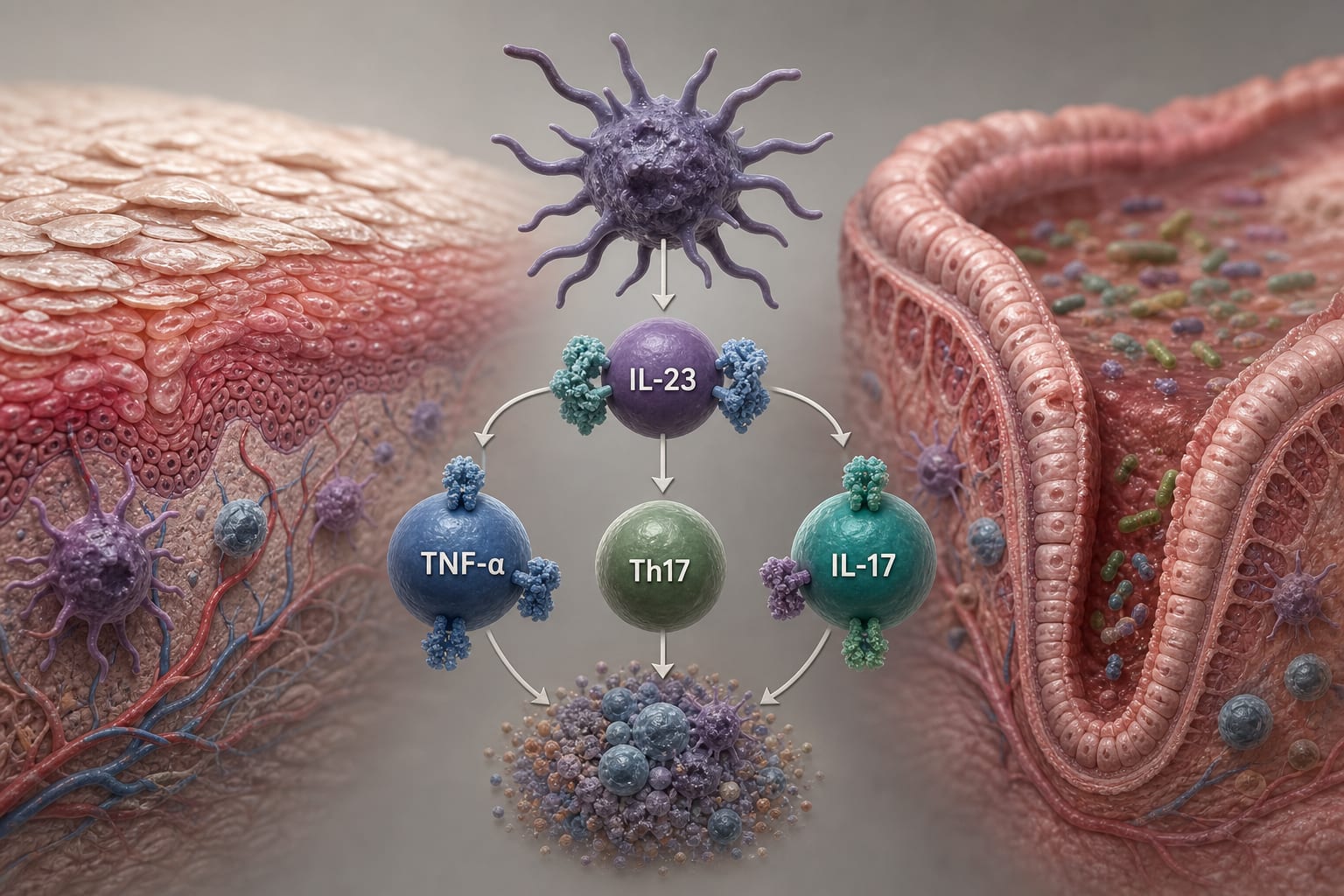
To explore the relationship between psoriasis and Crohn’s disease, highlighting shared immune pathways and treatment challenges.
Approach:
Epidemiological Evidence: Population-based studies indicate increased prevalence of Crohn’s disease among psoriasis patients, particularly with severe skin disease.
Genetic and Transcriptomic Evidence: Shared genetic signals and immune-related pathways identified through GWAS support immune convergence between the two diseases.
Therapeutic Considerations: Discussion of treatment options like TNF inhibitors and IL-23 blockers, while noting organ-specific therapeutic tensions.
Key Findings:
Psoriasis and Crohn’s disease exhibit partial immune convergence rather than being a single disease.
TNF-α and IL-23-centered type 17 immunity are key shared pathways.
Epidemiological data show a bidirectional association between the two conditions.
Interpretation:
The relationship between psoriasis and Crohn’s disease is complex, influenced by tissue context and immune mechanisms.
Limitations:
Observational nature of studies does not establish causality.
Limited direct causal evidence connecting skin and intestinal inflammation in humans.
Conclusion:
The relationship between psoriasis and Crohn’s disease reflects partial immune convergence shaped by tissue context.
Investigational inhibitor was not associated with treatment-related serious adverse events and produced biomarker changes consistent with pathway inhibition in healthy volunteers.