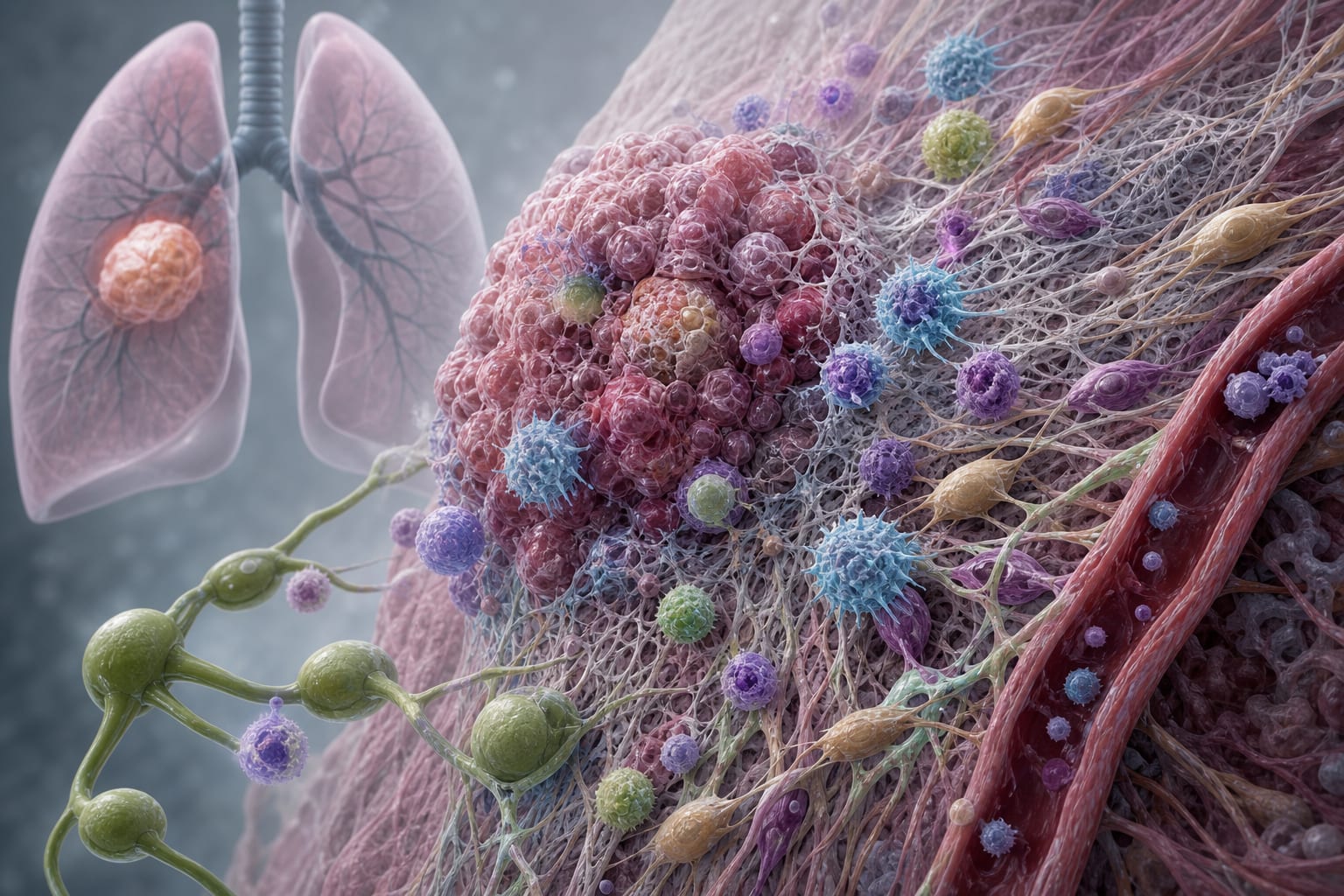
To explore the role of the tumor microenvironment in resectable lung cancer and its implications for treatment and prognosis.
Key Findings:
The tumor microenvironment significantly influences clinical outcomes in resectable lung cancer.
Traditional pathological response metrics may not adequately capture immune-mediated changes.
Integrating multiple prognostic parameters enhances predictive accuracy for treatment outcomes.
The stromal compartment actively contributes to tumor progression and metastasis.
Non-invasive imaging can effectively characterize the tumor microenvironment and correlate with treatment response.
Interpretation:
Clinical outcomes in lung cancer are shaped by the interplay between tumor cells and their microenvironment, necessitating a shift in assessment and treatment strategies.
Limitations:
Lack of standardized immune-adapted criteria for pathological assessment.
Need for prospective validation of imaging biomarkers.
Challenges in translating microenvironmental complexity into actionable therapeutic strategies.
Conclusion:
A comprehensive understanding of the tumor microenvironment is essential for improving lung cancer management, integrating various clinical perspectives into a unified framework.