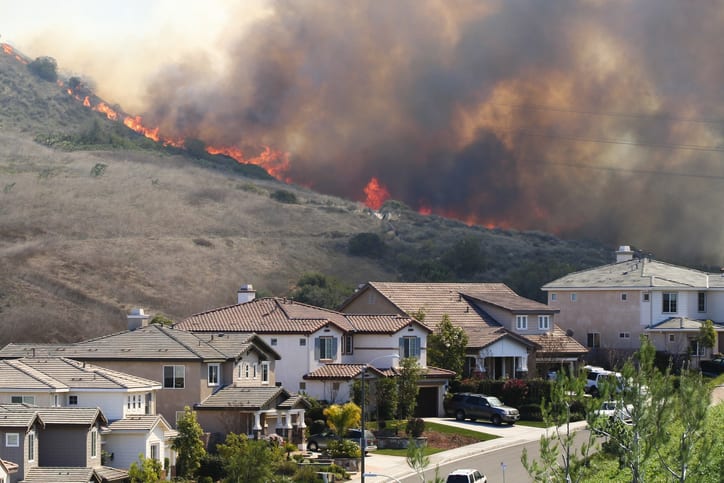
To assess associations between prenatal exposure to wildfire-related fine particulate matter (PM2.5) and childhood autism spectrum disorder (ASD) and attention-deficit/hyperactivity disorder (ADHD).
Approach:
Design and population: Population-based retrospective cohort study of 893,212 mother-child pairs enrolled in US Medicaid, using births from 2007–2014 and follow-up through December 2018.
Exposure and outcomes: Researchers estimated wildfire-related PM2.5 exposure by residential ZIP code and assessed incident ASD and ADHD using validated claims-based algorithms.
Analysis: Cox models assessed cumulative prenatal exposure and gestational timing, adjusting for maternal, socioeconomic, geographic, pollution, and temperature factors.
Key Findings:
For each 0.75 μg/m³ increase in cumulative prenatal wildfire PM2.5 exposure, ASD relative hazard was 30% higher.
Associations were stronger from midpregnancy through late gestation, particularly after approximately 15 weeks.
Non-wildfire background PM2.5 was associated with a 10% higher ASD relative hazard.
Neither wildfire-related nor background PM2.5 showed a meaningful association with ADHD.
Among 893,212 children, 8,357 received an ASD diagnosis and 22,302 an ADHD diagnosis; cumulative incidence by age 8 was 1.9% and 10.4%, respectively.
Sensitivity analyses generally supported the primary findings. Subgroup analyses did not establish meaningful differences by sex or race and ethnicity; regional estimates were too imprecise to establish differences.
Interpretation:
The observational study found an association between prenatal wildfire PM2.5 exposure and ASD, but it does not establish causation. The authors called for further research to confirm the findings and investigate biological mechanisms and combined environmental and social stressors.
Limitations:
ZIP-code exposure estimates did not capture individual activity, indoor air quality, or smoke mitigation, and weekly estimates may have missed short-term peaks.
Claims-based diagnoses may be affected by geographic differences in access to specialists.
Residual confounding is possible despite adjustment.
The Medicaid population may not represent families with different socioeconomic or health care characteristics; historical exposure patterns may not reflect current wildfire conditions.
The primary gestational analysis assessed exposure only through week 33.
Conclusion:
The authors called for further research to confirm the findings. They also noted that reducing pregnancy exposure through improved air-quality forecasting and measures to limit indoor smoke infiltration may be important for maternal and child health.
Claims-based target trial emulation found no clear association between continued GLP-1 receptor agonist use in early pregnancy and nonlive birth, fetal growth abnormalities, or major congenital malformations.
Investigators found that adding pregnancy-related and female-specific factors modestly improved postpartum cardiovascular risk prediction compared with traditional risk factors alone.