Identification of integrated stress response-related prognostic genes in high-grade serous ovarian cancer using Mendelian randomization, single-cell RNA sequencing, and bulk RNA sequencing - Summary - MDSpire
Advertisement
Identification of integrated stress response-related prognostic genes in high-grade serous ovarian cancer using Mendelian randomization, single-cell RNA sequencing, and bulk RNA sequencing
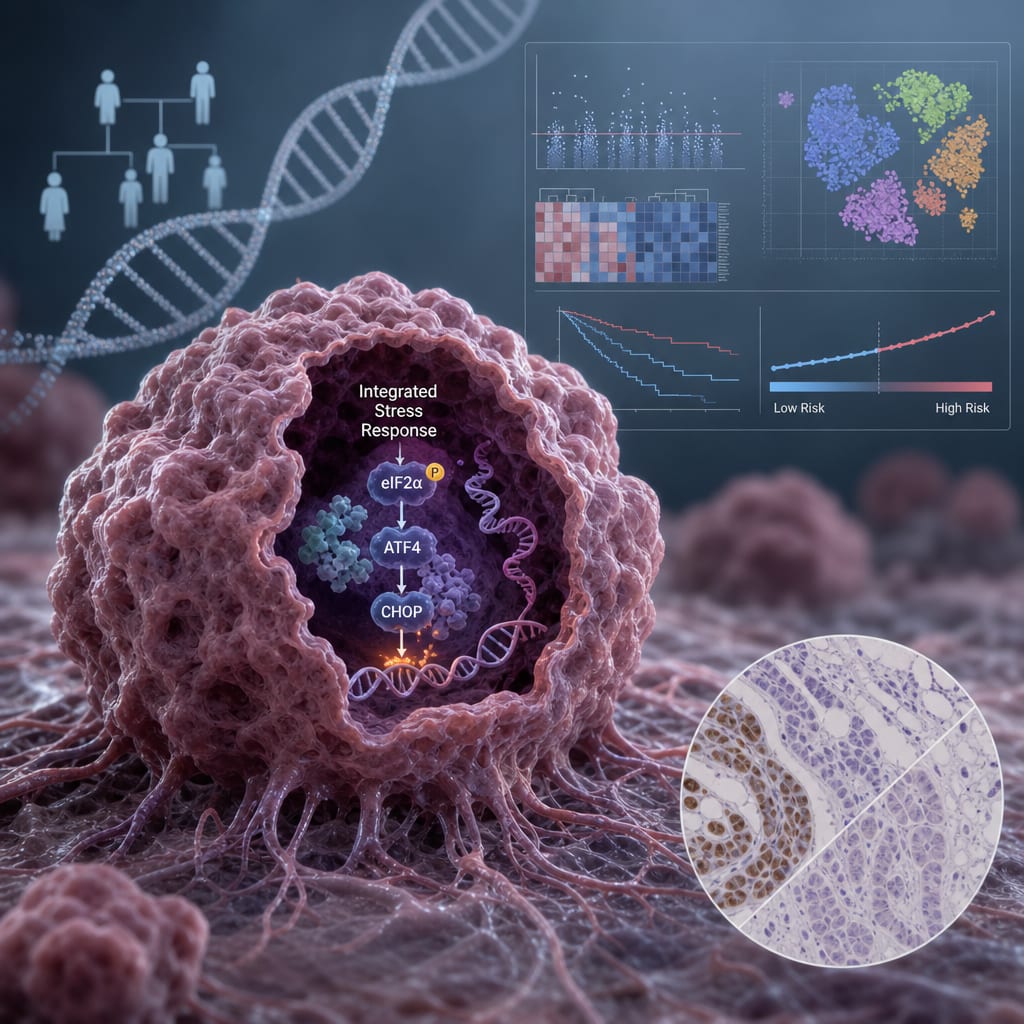
To identify prognostic genes related to the integrated stress response (ISR) in high-grade serous ovarian cancer (HGSOC) and develop a risk model that enhances patient prognosis.
Key Findings:
Four prognostic genes (NUP35, CASP3, BAG5, and DNAJB1) were identified for HGSOC.
The risk model accurately predicted patient prognoses by classifying them into high- and low-risk groups.
The PPAR signaling pathway was significantly enriched in both risk groups, indicating its potential role in HGSOC progression.
BAG5 and DNAJB1 expression varied during epithelial cell differentiation.
NUP35, CASP3, and BAG5 were upregulated in HGSOC tissues.
Interpretation:
The study highlights the potential of ISR-related genes as prognostic markers in HGSOC, suggesting that targeting these genes may improve patient outcomes through tailored therapies.
Limitations:
The study relies on data from existing databases, which may limit the generalizability of findings to broader populations.
Further functional studies are needed to validate the roles of identified genes in HGSOC and their potential as therapeutic targets.
Conclusion:
An ISR-associated prognostic model for HGSOC was developed, which could enhance patient prognosis and inform targeted therapies.