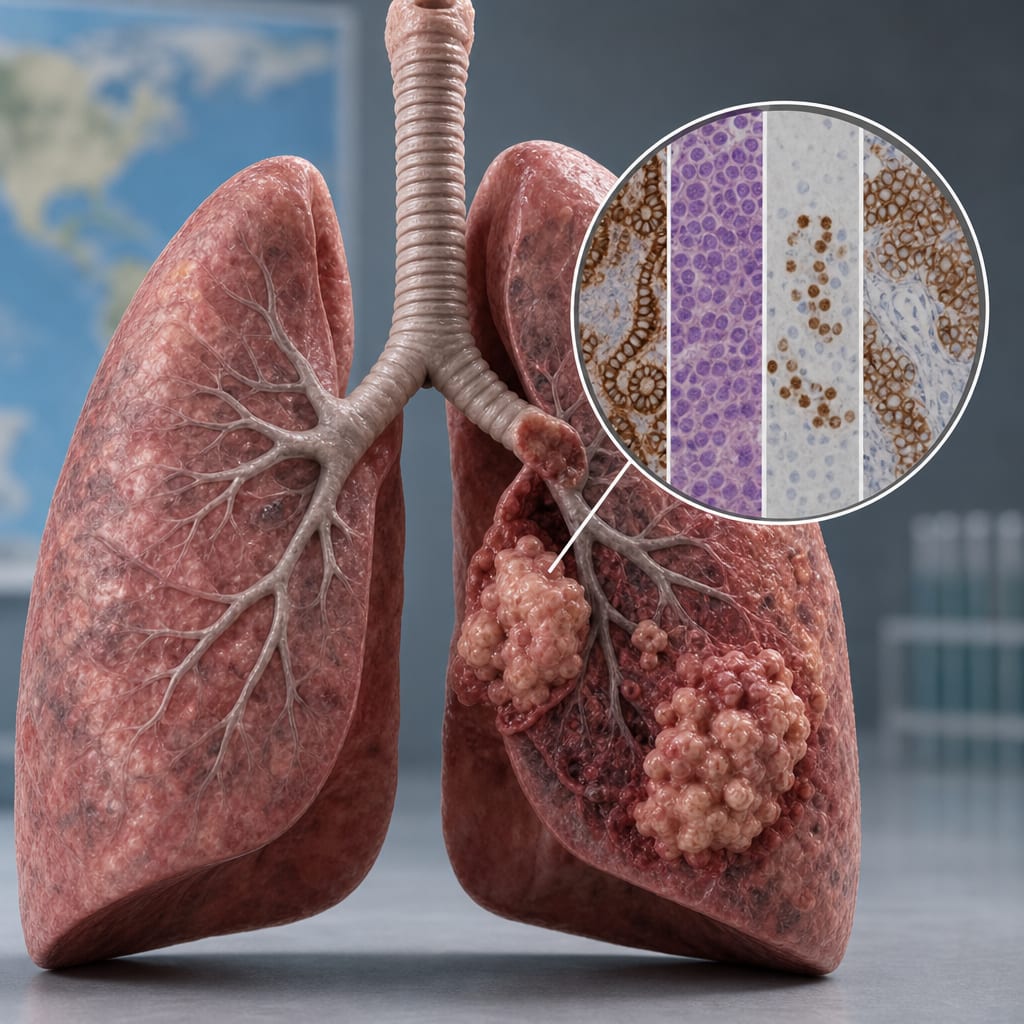
High prevalence of targetable drivers but poor outcomes in lung adenocarcinoma: a real-world cohort from the French West Indies - Summary - MDSpire

High prevalence of targetable drivers but poor outcomes in lung adenocarcinoma: a real-world cohort from the French West Indies

  • By

  • Régine Marlin

  • Emeline Colomba

  • Sabrina Pennont

  • Adel Zouzou

  • Marlyne Moranton

  • Nassim Boukadoum

  • Heriniaina Randriamiarisoa

  • Jean-Marc Rakotonarivo

  • Stefanos Bougas

  • Karim Fard

  • Soizic Masson

  • Moustapha Dramé

  • Jacques Jougon

  • Mihaela Aldea

  • Moustapha Agossou

  • May 4, 2026

  • 0 min

Share

Objective:

To characterize the molecular profiles of lung adenocarcinoma cases diagnosed in Martinique and assess the impact of systematic molecular testing on therapeutic management and survival outcomes, particularly in relation to treatment initiation.

Key Findings:
  • 62% of tumors had actionable oncogenic drivers, with EGFR mutations in 33% and KRAS mutations in 18%.
  • 61% of patients exhibited PD-L1 expression ≥1%.
  • Median overall survival was 19.3 months, with longer progression-free survival for targeted therapies compared to immunotherapy, highlighting the need for tailored treatment strategies.
Interpretation:

The study highlights significant diagnostic delays and early mortality in lung adenocarcinoma patients in Martinique, emphasizing the need for improved access to molecular testing and timely treatment initiation to enhance patient outcomes.

Limitations:
  • The study's monocentric design may limit generalizability to other populations.
  • Retrospective nature may introduce biases in data collection and analysis, particularly regarding patient selection and treatment decisions.
Conclusion:

This study underscores the urgent need for enhanced early diagnosis and treatment strategies for lung adenocarcinoma in underserved Caribbean populations.

Original Source(s)

Related Content