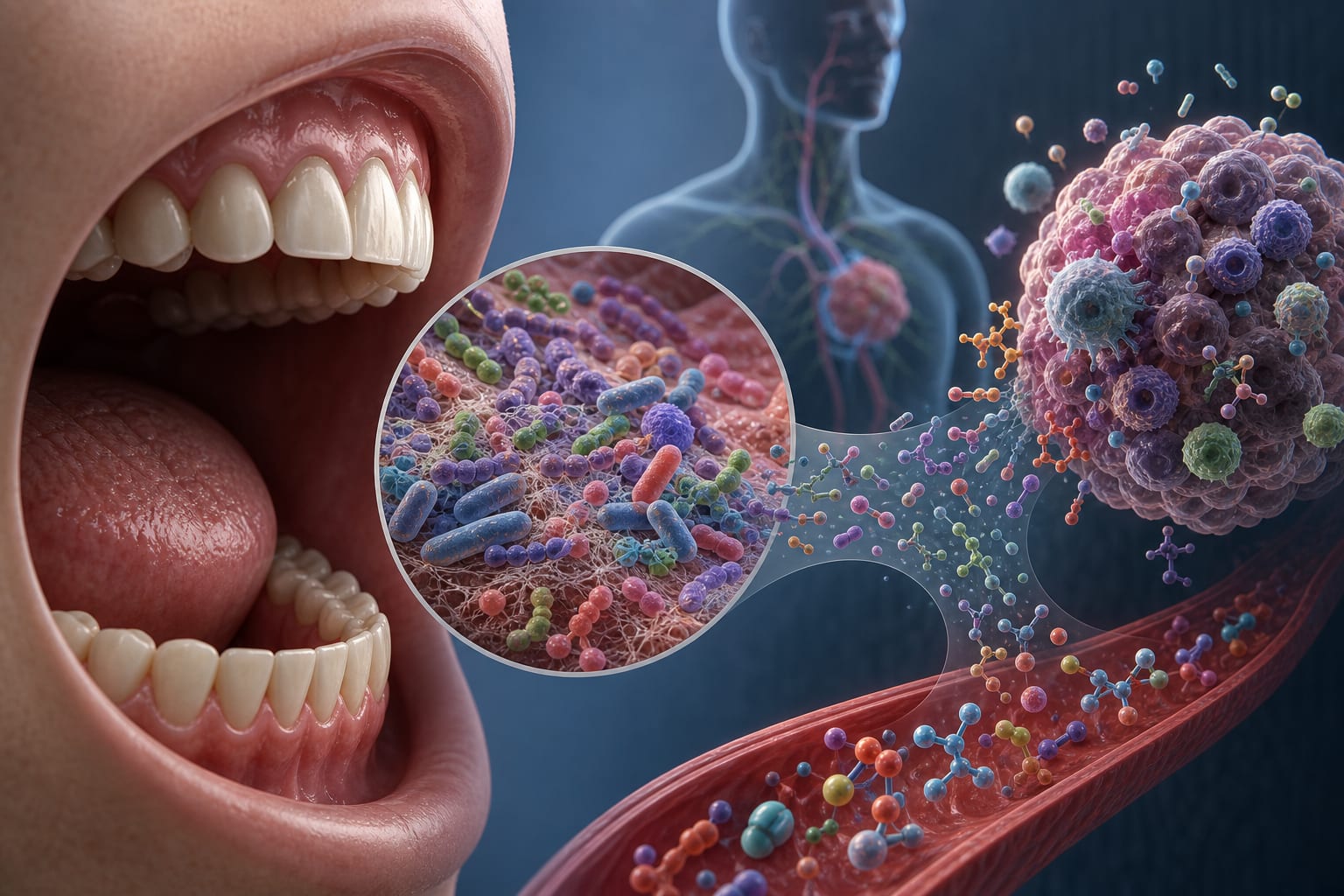
To discuss the oral health challenges faced by pediatric and adult cancer patients and the implications for treatment.
Approach:
Key Findings:
Specific oral microbial signatures can predict responses to neoadjuvant chemotherapy in triple-negative breast cancer.
Telemedicine significantly reduces the frequency and severity of oral mucositis compared to conventional care.
MRI techniques provide high diagnostic accuracy for detecting iron deposition in pediatric patients, unlike serum ferritin levels.
The DENTALE tool effectively assesses late dental and skeletal alterations in pediatric cancer survivors.
Interpretation:
The integration of microbiological stratification, digital monitoring, and advanced imaging is essential for improving long-term outcomes in cancer patients.
Limitations:
Conventional monitoring with plasma biomarkers for iron overload is insufficient.
The reliance on telemedicine may not be universally applicable to all patient populations.
Conclusion:
A comprehensive approach linking microbiological assessment, real-time digital support, and radiological monitoring is necessary for personalized cancer care.