A phase 1 trial of HPV16 E7 T-cell receptor-engineered T cells in patients with relapsed/refractory HPV16-positive cancers (KITE-439 trial) - Summary - MDSpire

A phase 1 trial of HPV16 E7 T-cell receptor-engineered T cells in patients with relapsed/refractory HPV16-positive cancers (KITE-439 trial)

  • By

  • Kedar Kirtane

  • Jiaxin Niu

  • George Blumenschein

  • Erminia Massarelli

  • Glenn J. Hanna

  • Sylvia Lee

  • Michael R. Bishop

  • Gottfried E. Konecny

  • Daqin Mao

  • Yan Zheng

  • Katherine Rodriguez

  • Jenny J. Kim

  • Chad Williams

  • Colleen Schweitzer

  • Sabina Adhikary

  • A. Scott Jung

  • Christopher A. Klebanoff

  • May 21, 2026

  • 0 min

Share

Objective:

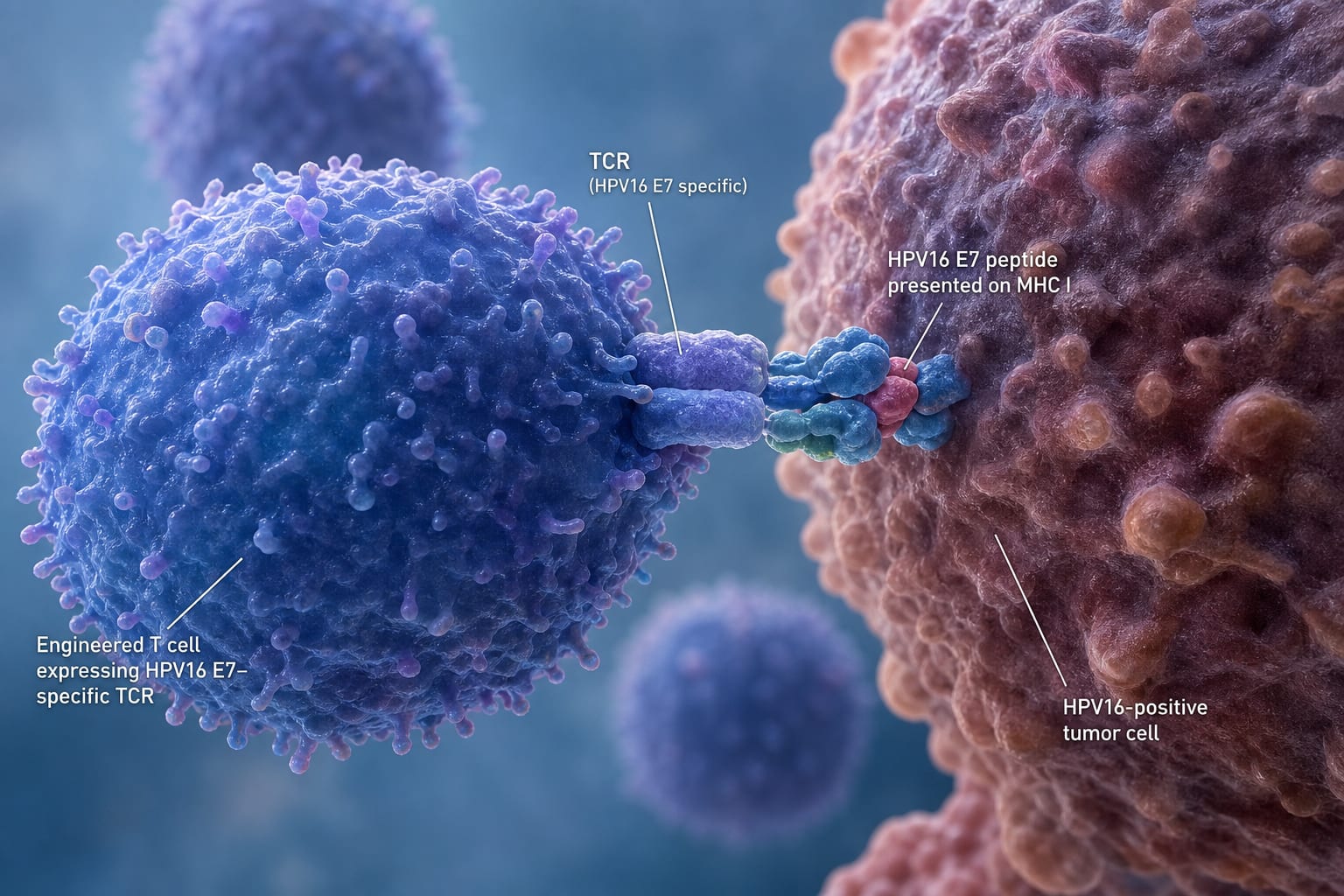
To evaluate the safety, tolerability, and efficacy of KITE-439, an autologous T-cell product expressing TCR specific for HPV16 E7 in patients with relapsed/refractory HPV16-positive epithelial cancers, with a primary endpoint of dose-limiting toxicities (DLTs).

Key Findings:
  • No dose-limiting toxicities (DLTs) were observed during the trial, indicating a favorable safety profile.
  • KITE-439 cells were detected in peripheral blood within 7 days post-infusion, suggesting effective engraftment.
  • Three patients experienced Grade 1–2 cytokine release syndrome, and four had Grade 1–2 neurologic events, all resolved quickly, highlighting manageable side effects.
  • One patient achieved a partial response, and seven had stable disease, indicating potential efficacy that warrants further investigation.
Interpretation:

KITE-439 demonstrates an acceptable safety profile and potential efficacy in treating patients with HPV-associated epithelial cancers, warranting further investigation to optimize treatment protocols.

Limitations:
  • Small sample size of only eight patients, limiting generalizability.
  • Short follow-up duration to assess long-term efficacy and safety, necessitating longer studies to confirm findings.
Conclusion:

KITE-439 shows promise as a treatment for r/r HPV16+ epithelial cancers, but further studies are needed to optimize T-cell characteristics and treatment protocols for enhanced antitumor activity.

Original Source(s)

Related Content