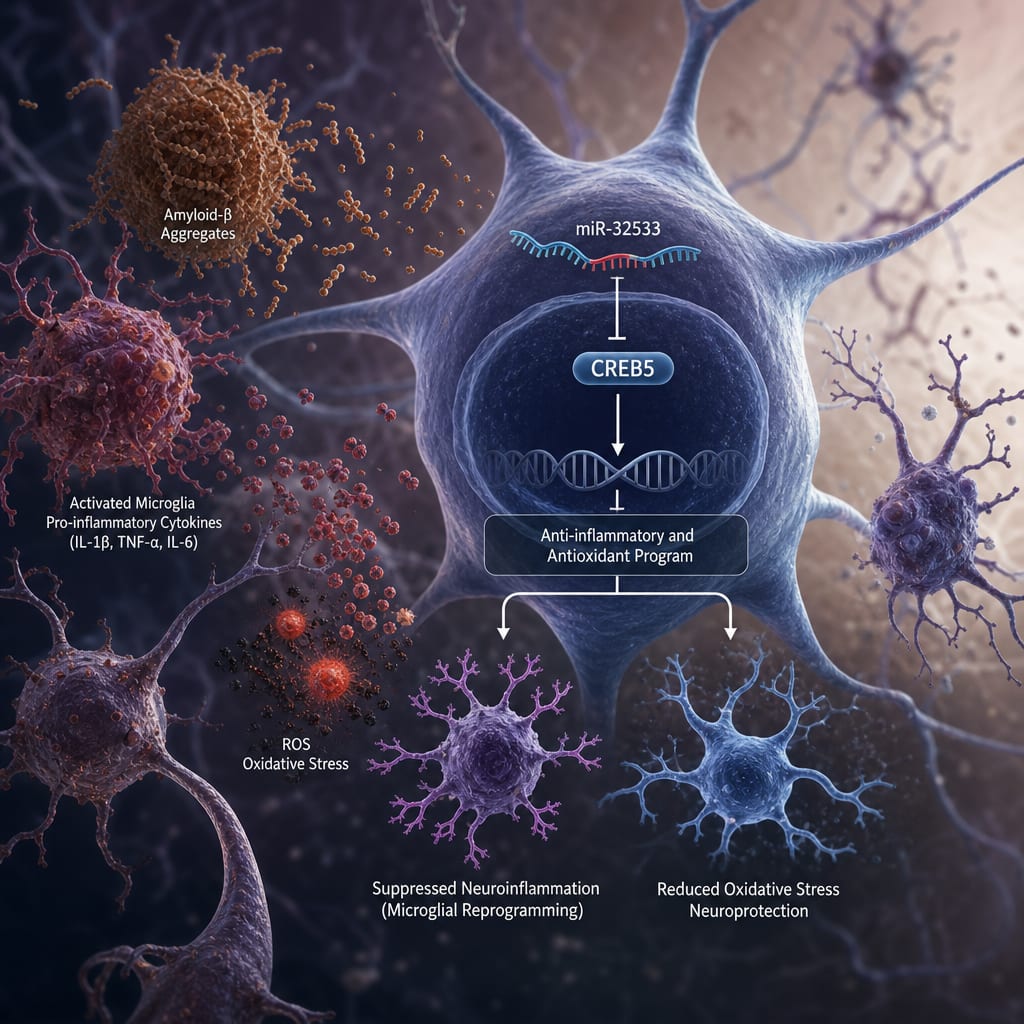
To explore the role of miR-32533 in Alzheimer's disease (AD) and its potential as a therapeutic target through the CREB5 pathway, emphasizing its implications for multifaceted treatment strategies.
Key Findings:
miR-32533 is predominantly expressed in the brain and decreases in AD models, suggesting its role as an early biomarker.
Plasma levels of miR-32533 correlate with clinical parameters, including cognitive function and amyloid pathology.
Overexpression of miR-32533 protects against Aβ-induced neurotoxicity and modulates inflammatory responses.
CREB5 is identified as a direct target of miR-32533, influencing Aβ metabolism and neuroinflammation.
Interpretation:
The findings suggest that targeting the miR-32533/CREB5 pathway could provide a novel therapeutic strategy for AD by addressing multiple disease mechanisms.
Limitations:
The study primarily focuses on animal models, which may not fully replicate human AD pathology, limiting the generalizability of the findings.
Further clinical validation is needed to establish the diagnostic and therapeutic potential of miR-32533, particularly in diverse patient populations.
Conclusion:
miR-32533 represents a promising target for immunomodulation and treatment in Alzheimer's disease, warranting further investigation into its clinical applications and potential integration with existing therapies.