Predictive value of routine ultrasound indicators in the second trimester for gestational diabetes mellitus: a retrospective cohort study - Summary - MDSpire
Advertisement
Predictive value of routine ultrasound indicators in the second trimester for gestational diabetes mellitus: a retrospective cohort study
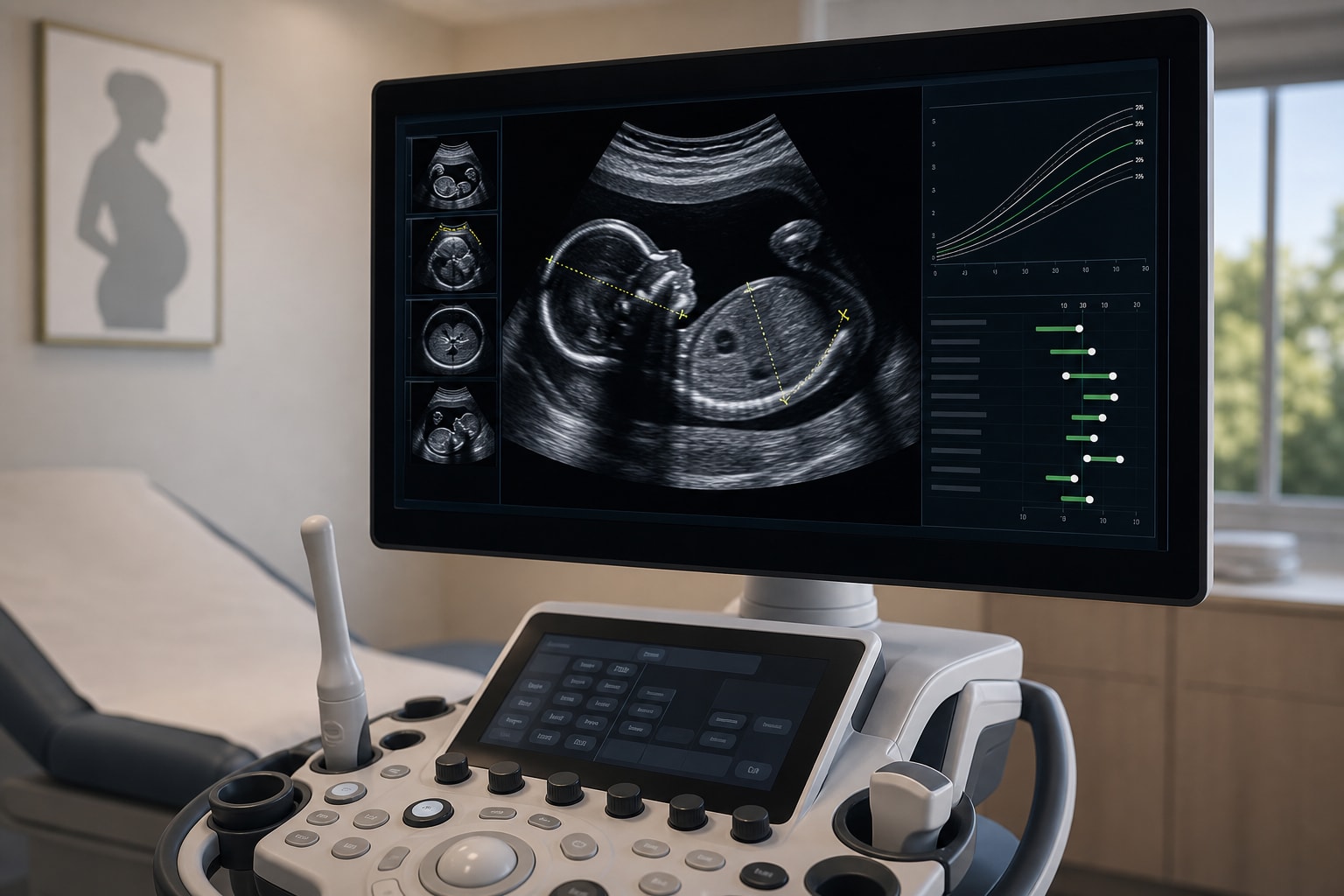
To systematically evaluate the ability of common fetal ultrasound indices measured at 19–24 weeks to predict gestational diabetes mellitus (GDM).
Approach:
Study Design: Retrospective cohort study analyzing 241 women (117 with GDM, 124 controls) after exclusions from an initial enrollment of 254 singleton pregnancies.
Ultrasound Parameters: Nine ultrasound parameters were converted to gestational age-adjusted Z-scores for analysis.
Statistical Analysis: Predictive performances were assessed using ROC curves, multivariable logistic regression, calibration curves, and decision curve analysis (DCA).
Key Findings:
Only amniotic fluid depth showed statistical significance as a predictor of GDM with a modest AUC of 0.588 (95% CI: 0.517–0.658, P = 0.017).
After adjusting for pre-pregnancy BMI, amniotic fluid depth was inversely associated with GDM (OR = 0.754, 95% CI: 0.575–0.989, P = 0.041).
The combined model including pre-pregnancy BMI and six ultrasound Z-scores achieved an AUC of 0.692 (95% CI: 0.625–0.758, P< 0.001).
Interpretation:
Routine fetal ultrasound parameters at 19–24 weeks have very limited predictive value for GDM, and the combined model did not reach a clinically useful AUC of 0.70.
Limitations:
The study's predictive models did not achieve clinically useful thresholds for GDM screening.
Findings may not be generalizable beyond the studied population.
Conclusion:
Current routine ultrasound indices are not recommended for GDM screening before 24 weeks.