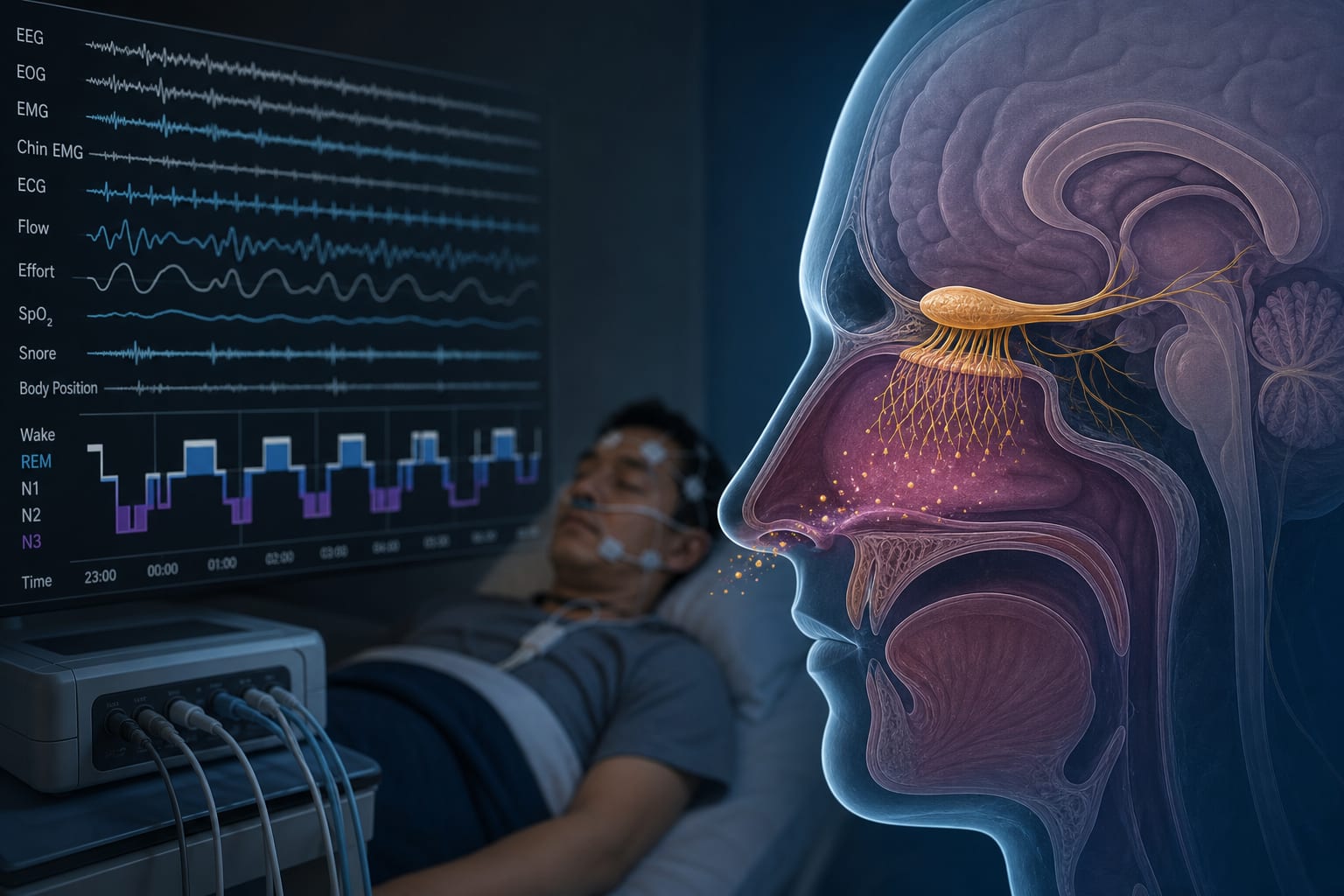
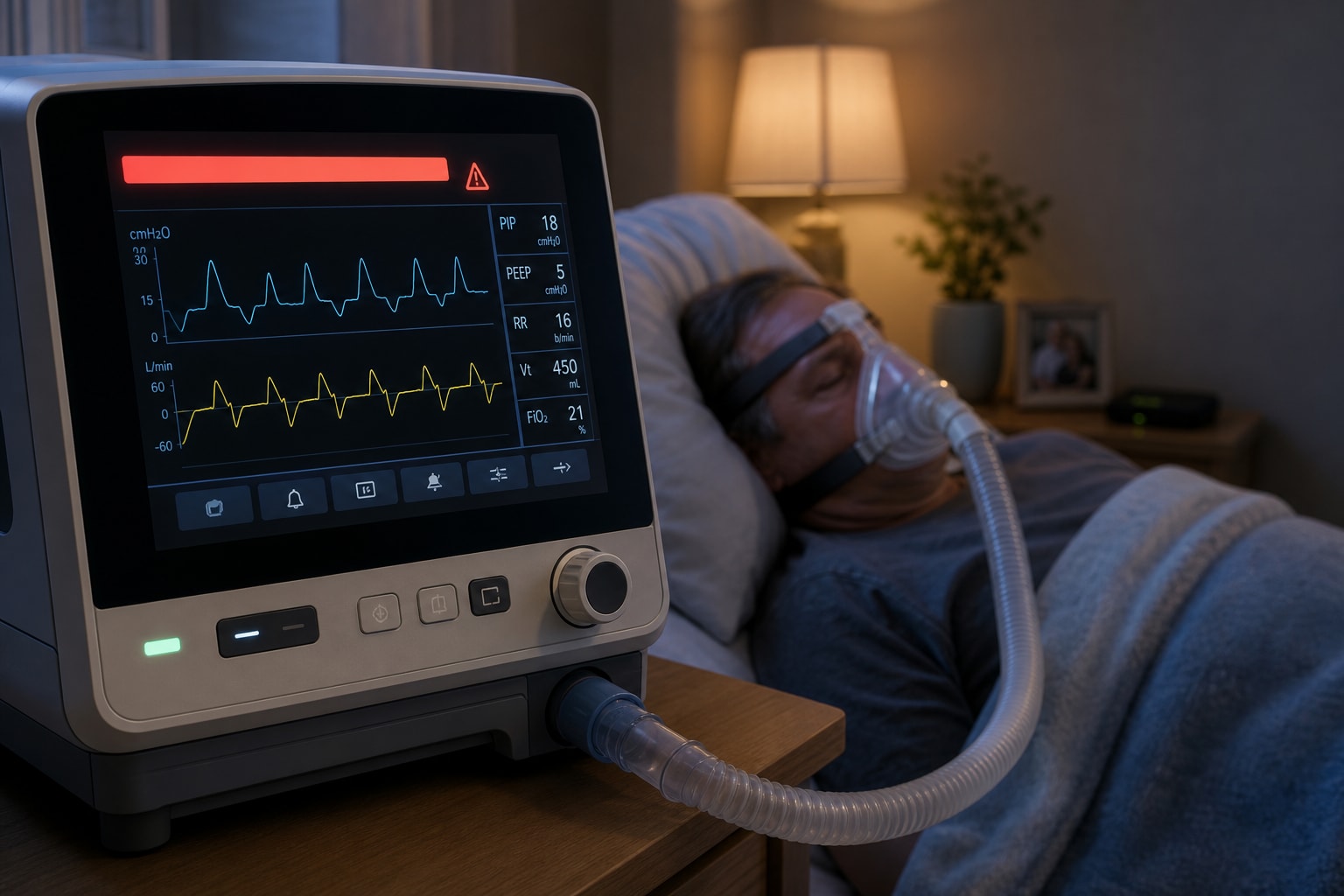
To investigate the association between olfactory dysfunction and sleep architecture parameters in patients with obstructive sleep apnea-hypopnea syndrome (OSAHS) and identify independent factors influencing olfactory function.
Key Findings:
Male patients showed a higher proportion in the olfactory dysfunction group compared to the normal olfaction group (p < 0.05).
The olfactory impairment group had significantly reduced total microarousals during REM and NREM sleep, N3/TST%, and REM/TST% (p < 0.05).
AHI and wake after sleep onset (WASO) were increased in patients with olfactory impairment (p < 0.05).
Olfactory threshold, discrimination, identification, and total TDI scores were significantly lower in patients with olfactory dysfunction (p < 0.05).
Negative correlations were found between total TDI scores and age, AHI, and WASO, while positive correlations were observed with TST, SE, total REM sleep microarousals, and REM/TST%.
Logistic regression identified age, AHI, and REM/TST% as independent predictors influencing TDI scores.
Interpretation:
Limitations:
The study is retrospective and cross-sectional, limiting causal inferences.
Exclusion of patients with nasal structural/pathological conditions and neurodegenerative diseases may affect generalizability.