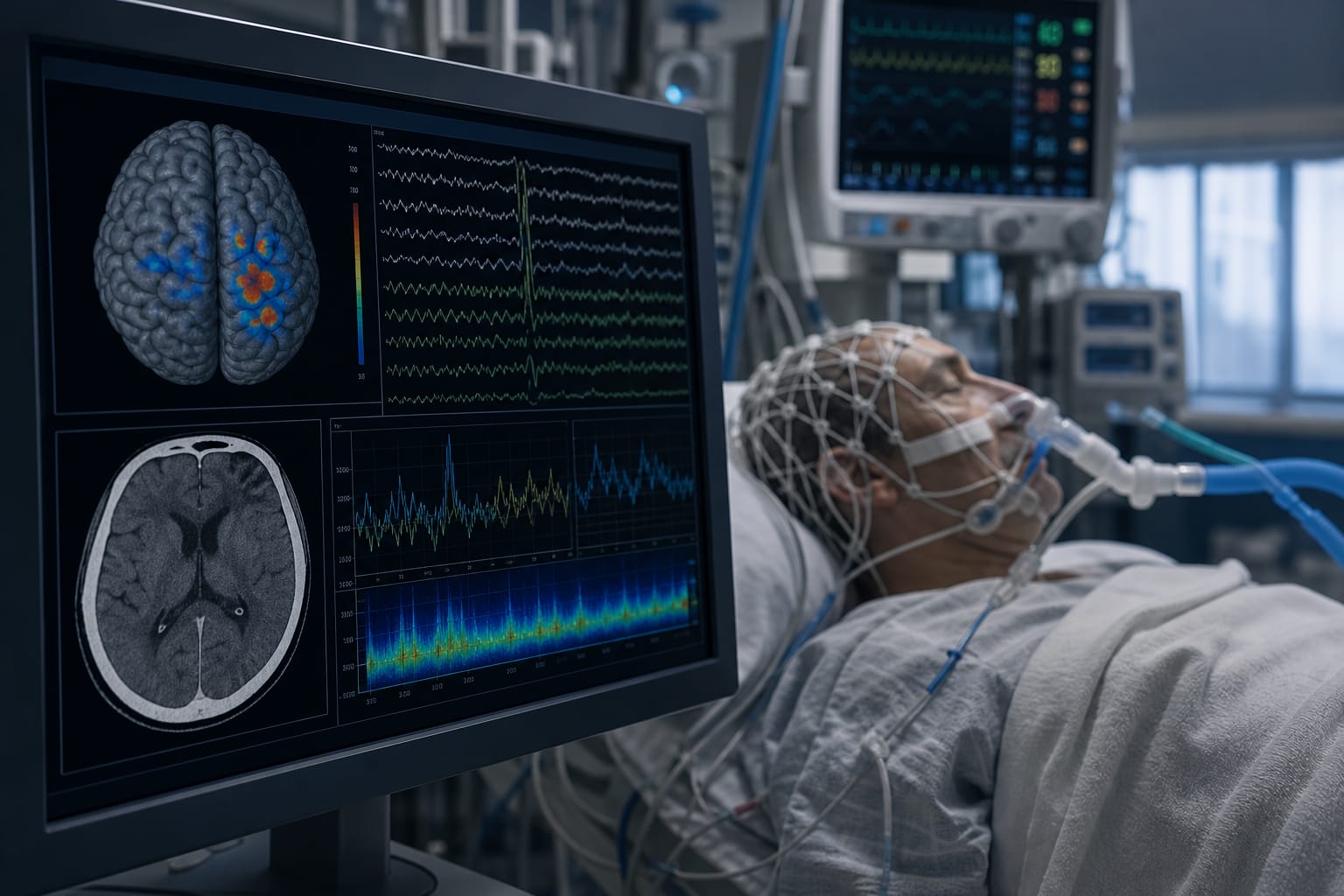
To synthesize evidence on the burden, risk factors, and management of neurological complications in critically ill patients without primary neurological disease.
Approach:
Evidence Synthesis: A structured search of PubMed, Embase, and the Cochrane Library was conducted for studies from January 2000 to March 2026, focusing on adult ICU populations without primary neurological diagnoses.
Key Findings:
Neurological complications are common in critically ill patients and associated with increased mortality and prolonged ICU stays.
Delirium occurs in approximately one-third of ICU patients, exceeding 50% in mechanically ventilated cohorts.
Neuropathological data indicate that the prevalence of acute brain injury may be significantly higher than clinically recognized.
Ischemic stroke is the most frequent lesion found in postmortem studies, highlighting a gap in clinical recognition.
Interpretation:
The burden of neurological complications in critically ill patients is likely underestimated due to inconsistencies in definitions and surveillance practices. The high incidence of delirium and acute brain injuries suggests that these conditions may often go undiagnosed or misdiagnosed, leading to inadequate management. Furthermore, the presence of neurological complications can complicate the clinical picture, making it challenging to distinguish between primary critical illness effects and secondary neurological injuries. Enhanced awareness and standardized assessment protocols are essential to improve early detection and intervention, which could potentially mitigate long-term cognitive and functional impairments in survivors.
Limitations:
Variability in case definitions and diagnostic criteria across studies limits comparability.
Underrecognition of subtle or fluctuating neurological manifestations may contribute to the underestimation of complications.
Conclusion:
Neurological complications in critically ill patients require improved recognition and management strategies. Given their significant impact on patient outcomes, it is crucial to implement standardized screening tools and protocols to identify these complications early. Additionally, further research is needed to explore the underlying mechanisms of neurological injuries in this population, which may inform targeted therapeutic approaches. By addressing these gaps, healthcare providers can enhance the quality of care and improve long-term outcomes for critically ill patients.
by Victoria A. McCredie, Thomas P. Bleck, Sherry Hsiang-Yi Chou, E. Wesley Ely, Margaret S. Herridge, Julie Kromm, Pedro Kurtz, Nicola Latronico, Mypinder S. Sekhon, Gentle Sunder Shrestha, Romain Sonneville, Robert D. Stevens, Shawniqua Williams Roberson, Tarek Sharshar