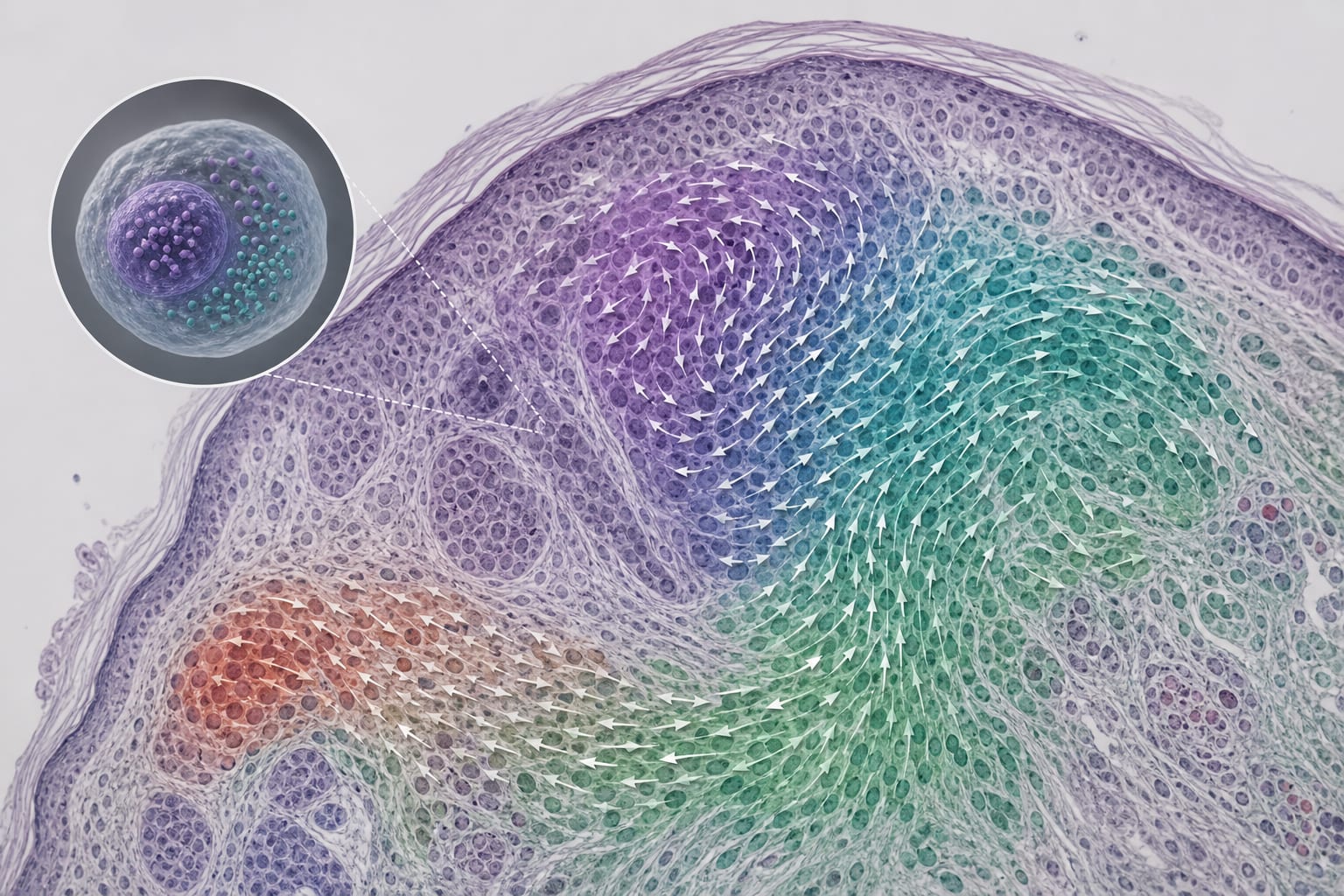
To develop a computational framework for spatial RNA velocity analysis that infers transcriptional dynamics from high-resolution spatial transcriptomics in melanoma.
Approach:
Key Findings:
Cluster-specific dynamic genes were identified that are significantly associated with patient prognosis.
Dynamic genes formed protein-protein interaction networks enriched for immune-related pathways.
Distinct spatially patterned progressions were observed within malignant cells and T cell trajectories.
Interpretation:
The study provides a computational strategy to decode spatiotemporal dynamics from spatial transcriptomic data, linking cellular state, spatial context, and clinical phenotype.
Limitations:
The proxy-based approach relies on assumptions regarding RNA processing and localization.
Careful interpretation is required when inferring transcriptional dynamics from spatial data.
Conclusion:
The study offers an analytical approach to connect tissue architecture, cellular dynamics, and clinical outcomes in melanoma.