Development and internal validation of a nomogram for early prediction of hospital-acquired ESKAPE colonization or infection in very preterm infants using indicators available within 24 hours - Summary - MDSpire
Advertisement
Development and internal validation of a nomogram for early prediction of hospital-acquired ESKAPE colonization or infection in very preterm infants using indicators available within 24 hours
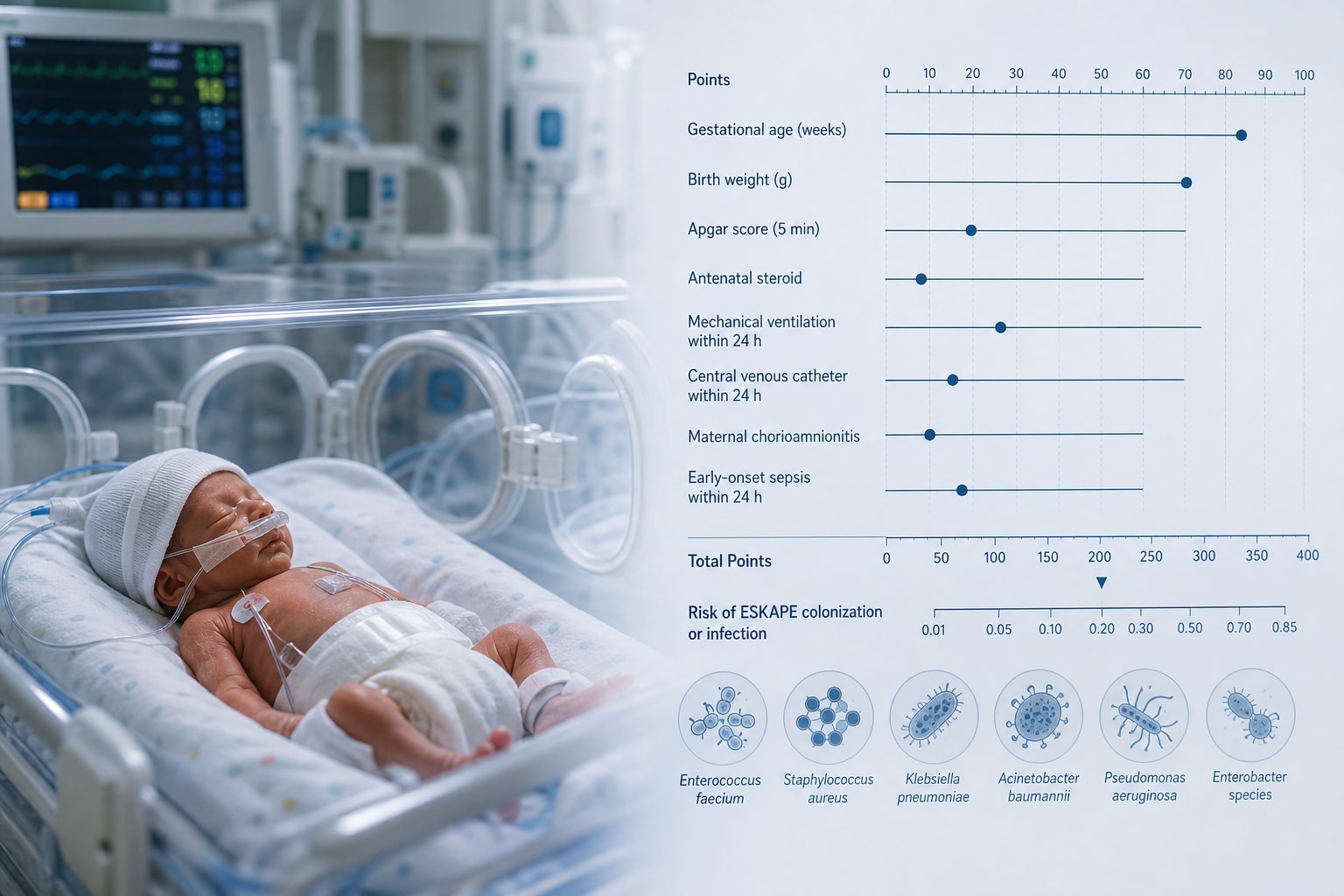
To develop and internally validate a nomogram for early prediction of hospital-acquired ESKAPE colonization or infection in very preterm infants using clinical indicators available within 24 hours after birth, thereby improving outcomes through timely intervention.
Key Findings:
16.56% of infants developed hospital-acquired ESKAPE colonization or infection, with 67.5% identified within 14 days after birth, highlighting the importance of early detection.
Predominant pathogens included Acinetobacter baumannii (34.86%) and Klebsiella pneumoniae (28.44%), primarily from respiratory specimens (82.57%).
Four predictors retained in the final model: GA at birth, initial invasive mechanical ventilation, vasoactive exposure within the first 24 hours, and 5-minute Apgar score.
The nomogram showed an AUC of 0.786 in the training cohort and 0.770 in the internal validation cohort, indicating moderate discrimination.
Interpretation:
The nomogram can support early risk stratification and infection control prioritization in the NICU.
Limitations:
The study is limited to a single center, which may affect generalizability and applicability of the findings.
External validation and prospective implementation studies are required before routine clinical adoption.
Conclusion:
The developed nomogram utilizes routine clinical indicators to predict hospital-acquired ESKAPE colonization or infection in very preterm infants, emphasizing the need for external validation.