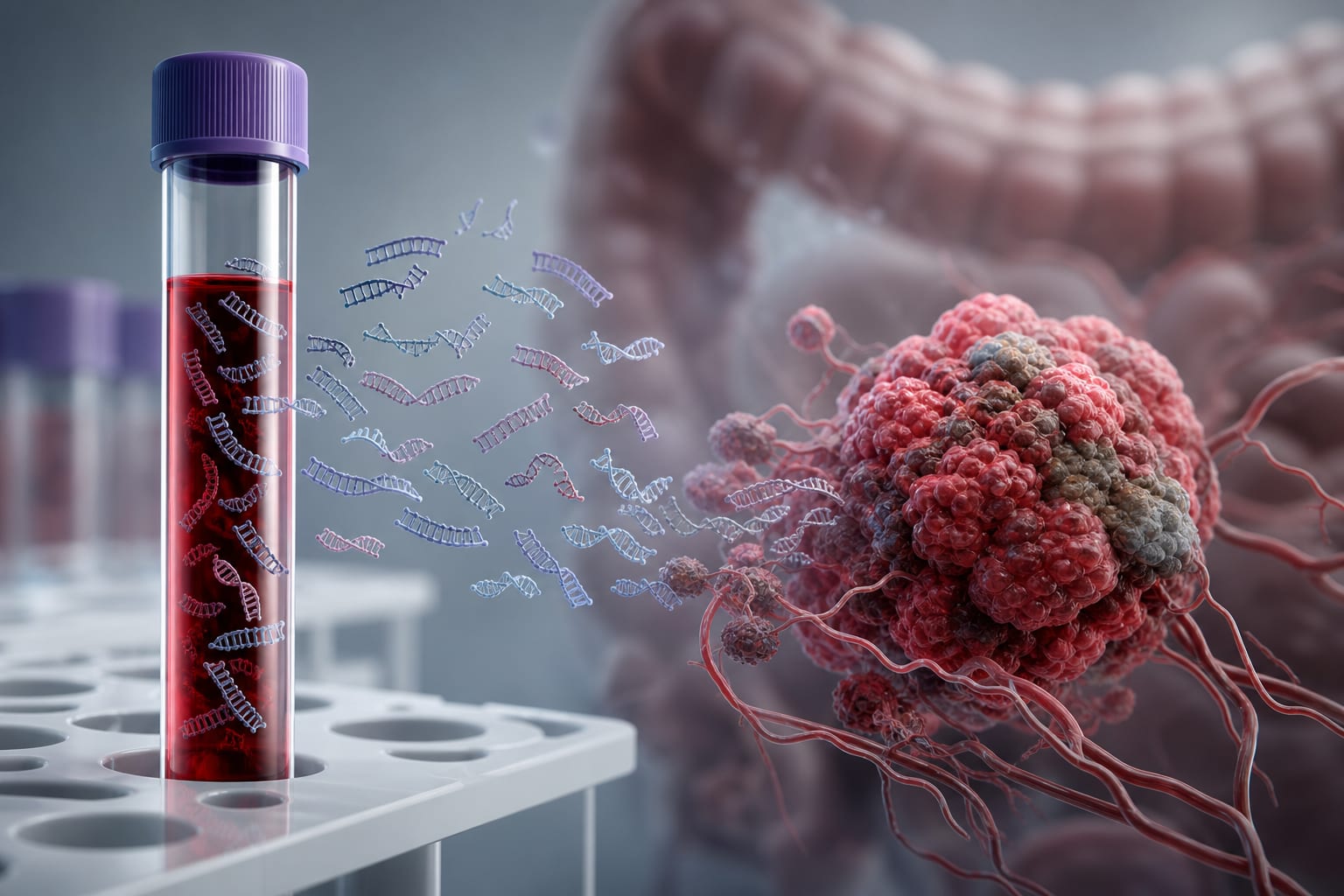
To evaluate whether early dynamics of circulating tumor DNA predict efficacy and prognosis during fruquintinib treatment in patients with refractory metastatic colorectal cancer.
Approach:
Key Findings:
Among 120 enrolled patients, 107 completed day-28 circulating tumor DNA testing.
Day-28 dynamics showed clearance in 17.8% and a decrease in 43.9%.
Clearance and decrease groups had higher disease control rates (adjusted odds ratios of 6.92 and 3.45; both P < 0.01) and lower progression risk (adjusted hazard ratios of 0.41 and 0.62; both P < 0.05).
Adding circulating tumor DNA stratification improved model discrimination for progression-free survival (ΔC-index = 0.07) and overall survival (ΔC-index = 0.06).
Common adverse events included hypertension (46.7%), hand-foot skin reaction (40.8%), and fatigue (36.7%).
Interpretation:
Limitations:
Modest discriminative performance (C-index 0.69) indicates that prospective validation is required before clinical implementation.