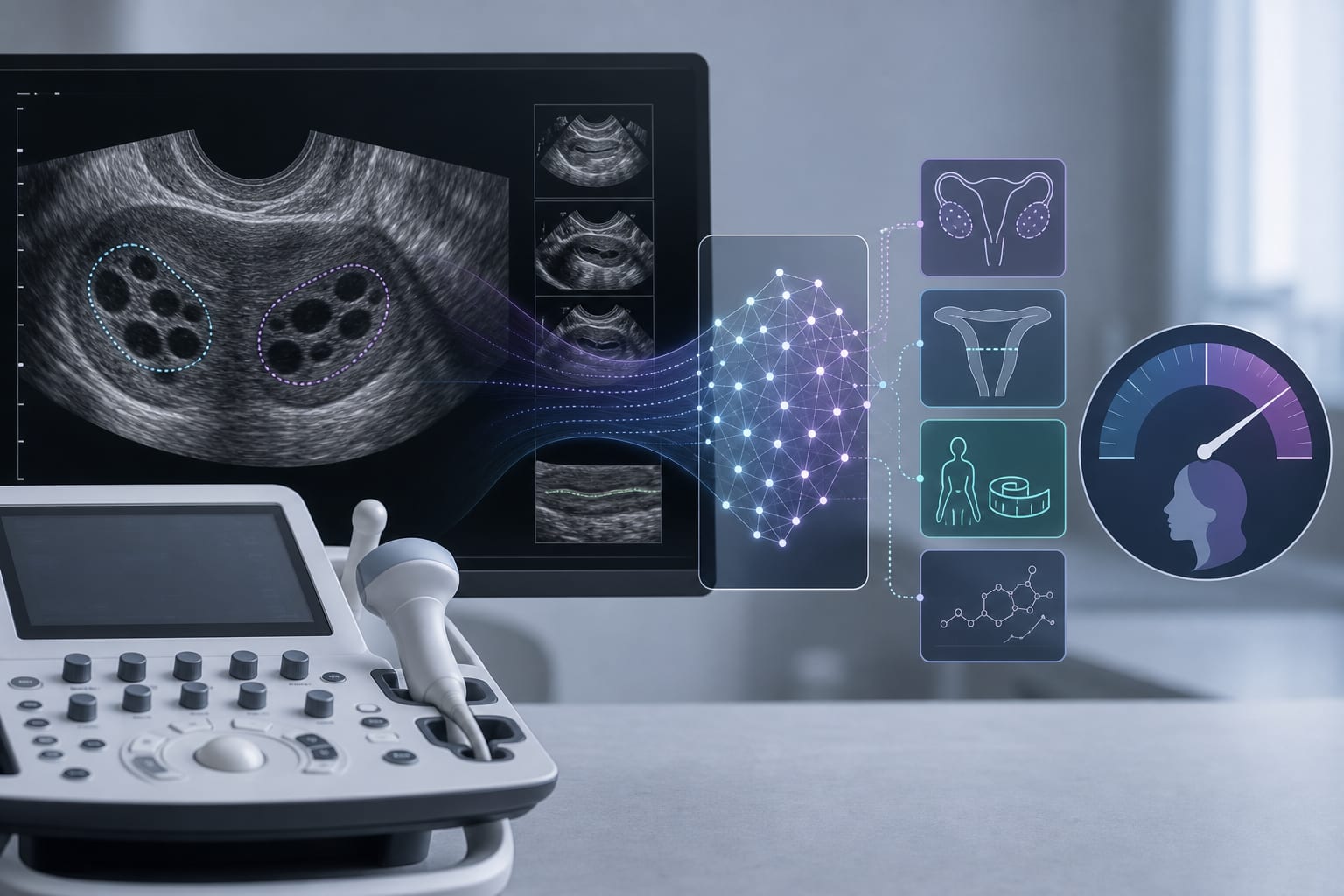
To develop a multimodal prediction model for menopausal status using ultrasound features extracted by large language models (LLM) from unstructured reports, combined with anthropometric data.
Approach:
Study Design: Included 713 Chinese women from Hangzhou Red Cross Hospital as a training set and 284 from the Second Affiliated Hospital of Zhejiang University as an independent validation set.
Key Findings:
The highest AUC of 0.984 was achieved by integrating anthropometric and hormone features in the validation set.
An AUC of 0.935 was obtained by combining anthropometric features with ultrasound morphological features.
The qwen-plus model with the largest number of LLM parameters showed the best feature extraction performance.
Interpretation:
LLM can extract structured morphological features from ultrasound reports, which may enhance menopausal status assessment.
Limitations:
The study is limited to a specific population in China, which may affect the generalizability of the findings.
The reliance on LLM for feature extraction may introduce variability based on the performance of the model.
Conclusion:
The integration of ultrasound morphological features with anthropometric data provides a method for assessing menopausal status, particularly in scenarios where hormone data is unavailable.
In a target-trial emulation of more than 600,000 veterans, GLP-1 RA initiators saw fewer new substance use disorders—and patients with existing SUDs had fewer overdoses, hospitalizations, and deaths.