Integrative functional bioinformatic analysis of NAD+-associated protein coding genes in adipose tissue (dys)function – evidence from targeted rodent transcriptomic studies - Summary - MDSpire

Comprehensive Bioinformatic Evaluation of NAD+-Related Protein-Coding Genes in Adipose Tissue Dysfunction: Insights from Targeted Transcriptomic Research in Rodents

  • By

  • Filip Postolov

  • Dragan Milenkovic

  • Tatjana Ruskovska

  • July 21, 2026

Share

Objective:

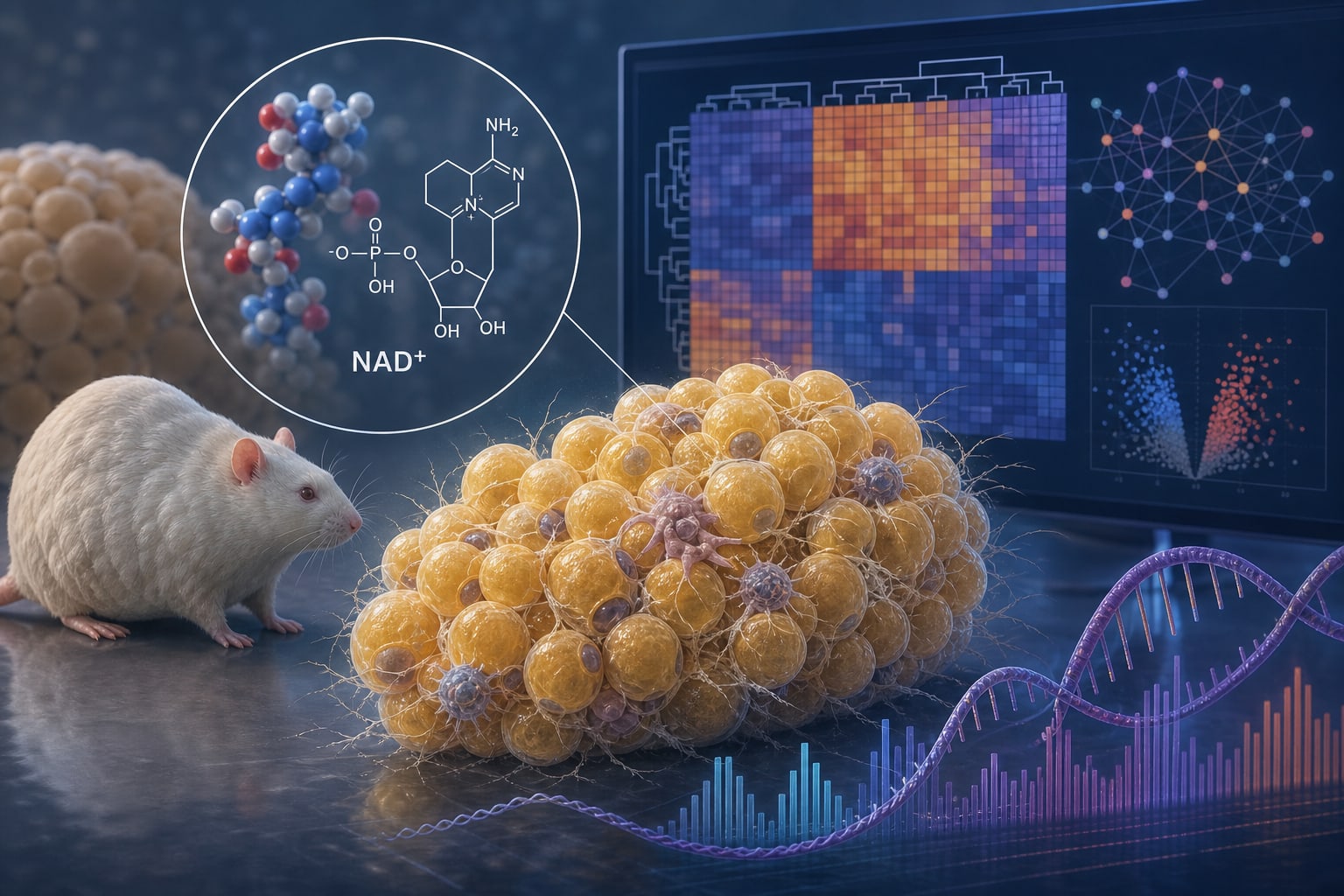
To conduct a systematic literature search to identify rodent studies reporting significant modulation of NAD+ levels in adipose tissue and associated changes in gene expression.

Approach:
  • Literature Search: Identified 17 studies reporting significant modulation of NAD+ levels in adipose tissue.
  • Gene Extraction: Extracted 113 unique NAD+-associated protein coding genes from the identified studies.
  • Functional Bioinformatic Analyses: Conducted pathway enrichment analysis, protein-protein interaction analysis, and master regulator analysis.
Key Findings:
  • Multiple canonical pathways significantly associated with NAD+-related genes include thermogenesis, PPAR signaling, AMPK signaling, and adipogenesis.
  • Identified cellular pathways with currently lacking direct experimental evidence of NAD+ involvement, such as apelin and relaxin signaling pathways.
  • Protein-protein interaction analysis revealed clusters related to cold-induced thermogenesis, inflammation, and cellular respiration.
  • Master regulator analysis identified known regulators like leptin and PRDM16, as well as unexplored regulators in NAD+ function.
Interpretation:

Limitations:
  • Notable lack of studies employing global transcriptomic approaches.
  • Absence of multi-omics studies with coupled bioinformatic analyses.
Conclusion:

The study identifies potential targets for future experimental investigation regarding the role of NAD+ in adipose biology.

Original Source(s)

Related Content