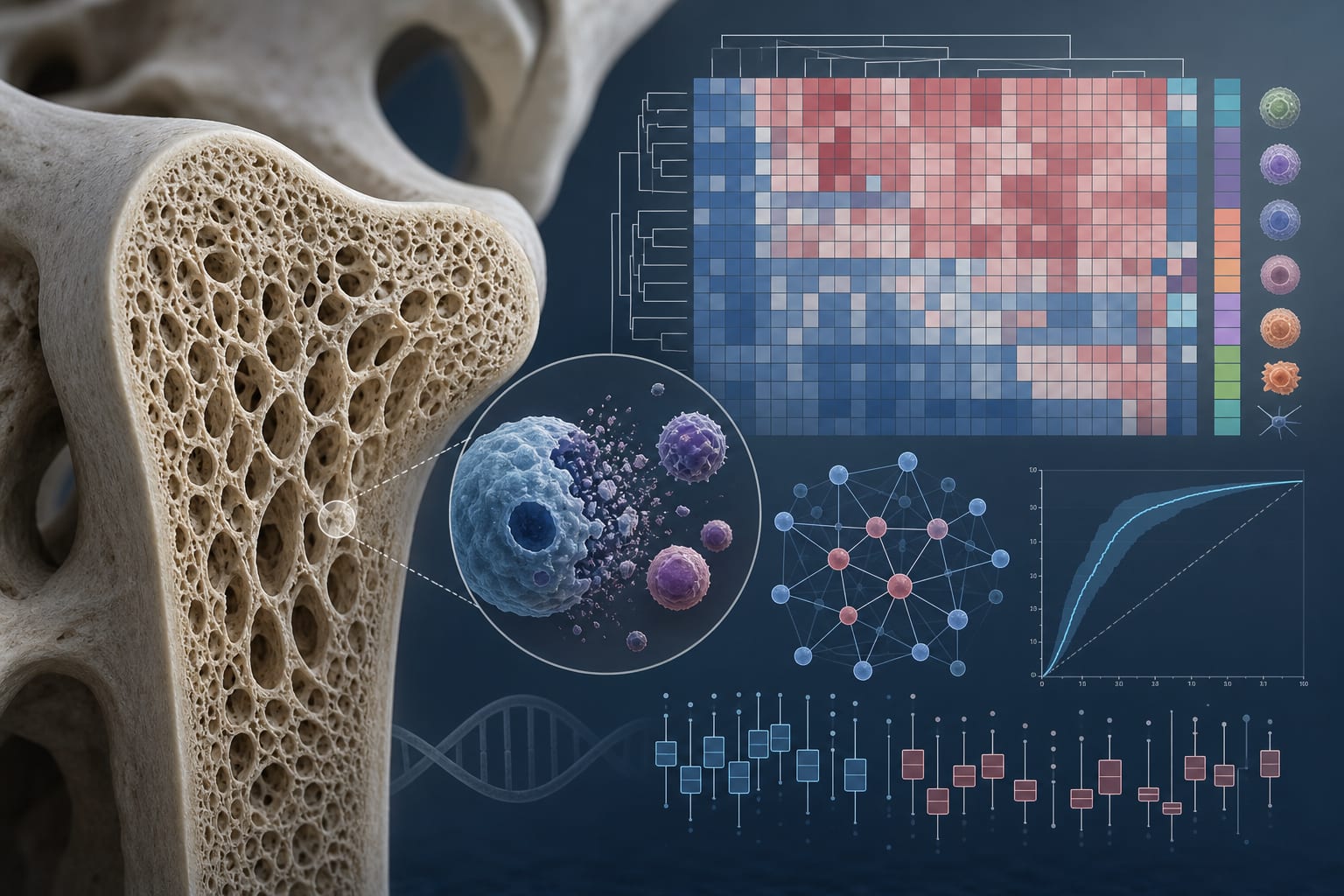
To develop and validate a machine learning-based prediction model that integrates multidimensional clinical features for estimating osteoporotic fracture risk in postmenopausal women, addressing the limitations of existing methods.
Key Findings:
Random Forest model showed the best performance (AUC = 0.872), indicating its potential as a reliable tool for clinical use.
Key predictors identified include BMD, serum chloride, age, albumin-to-globulin ratio, and neutrophil percentage, which could guide clinical assessments.
Osteocalcin N-mid fragment was a significant contributor among BTMs, suggesting its importance in fracture risk evaluation.
Interpretation:
Integrating BMD with biochemical and clinical indicators enhances fracture risk prediction and supports clinical screening and risk stratification, potentially improving patient outcomes.
Limitations:
Retrospective design may introduce bias, particularly in data collection methods.
Limited generalizability due to single-region study, which may not reflect broader populations.
Potential variability in BTM measurements, which could affect the reliability of results.
Conclusion:
The machine learning model effectively identifies key risk factors for osteoporotic fractures, suggesting that a multidimensional approach improves risk assessment and could transform clinical practice.