Epstein-Barr virus reactivation triggers selective IL-6/IL-10 axis inflammation and CD3+CD8+ T-cell activation leading to severe leukopenia, hyperinflammatory shock, and myocardial injury: a case report - Summary - MDSpire
Advertisement
Epstein-Barr virus reactivation triggers selective IL-6/IL-10 axis inflammation and CD3+CD8+ T-cell activation leading to severe leukopenia, hyperinflammatory shock, and myocardial injury: a case report
To report a case of severe Epstein-Barr virus (EBV) reactivation leading to life-threatening complications and to highlight the atypical manifestations of EBV reactivation, including hyperinflammatory shock and myocardial injury.
Approach:
Case Presentation: A 24-year-old female presented with persistent high fever for 5 days, severe leukopenia, hyperinflammatory shock, and myocardial injury without typical HLH features. She had no significant medical history or recent medication use.
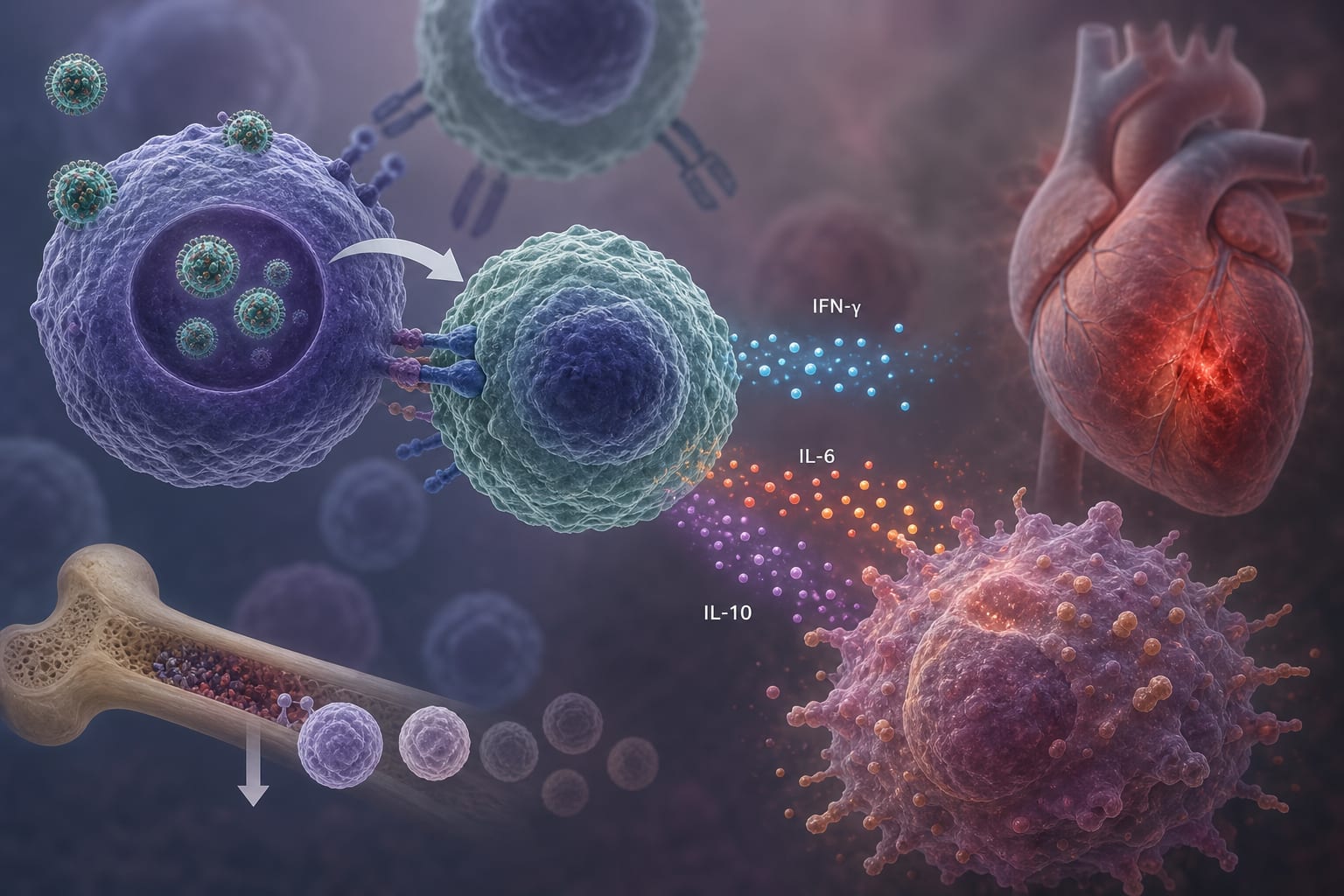
Laboratory Findings: Laboratory tests showed elevated CD3+CD8+ T cells (49.18%), increased IFN-γ (21.8 pg/ml), IL-6 (26.2 pg/ml), IL-10 (19.9 pg/ml), and high-sensitivity troponin (1.13 ng/mL). Normal levels of IL-2 and TNF-α were noted.
Treatment: The patient was treated with glucocorticoids and ganciclovir, leading to rapid resolution of symptoms and normalization of laboratory markers.
Key Findings:
Severe EBV reactivation can occur without typical HLH features.
The inflammatory response involved a targeted IL-6/IL-10 axis and activation of CD3+CD8+ T cells.
Prompt treatment with glucocorticoids and ganciclovir led to complete resolution of symptoms and laboratory markers.
Interpretation:
This case illustrates the heterogeneity of EBV inflammatory responses and emphasizes the need for clinicians to recognize atypical manifestations for timely intervention.
Limitations:
The study is based on a single case report, limiting generalizability to broader populations.
There is a lack of long-term follow-up data on the patient's health post-treatment.
Conclusion:
Early recognition and individualized treatment are crucial in managing severe EBV reactivation cases, particularly when atypical manifestations are present.