The future of neurosurgical oncology lies in cognitive neurosciences: understanding brain processing is much more valuable than surgical technology - Summary - MDSpire
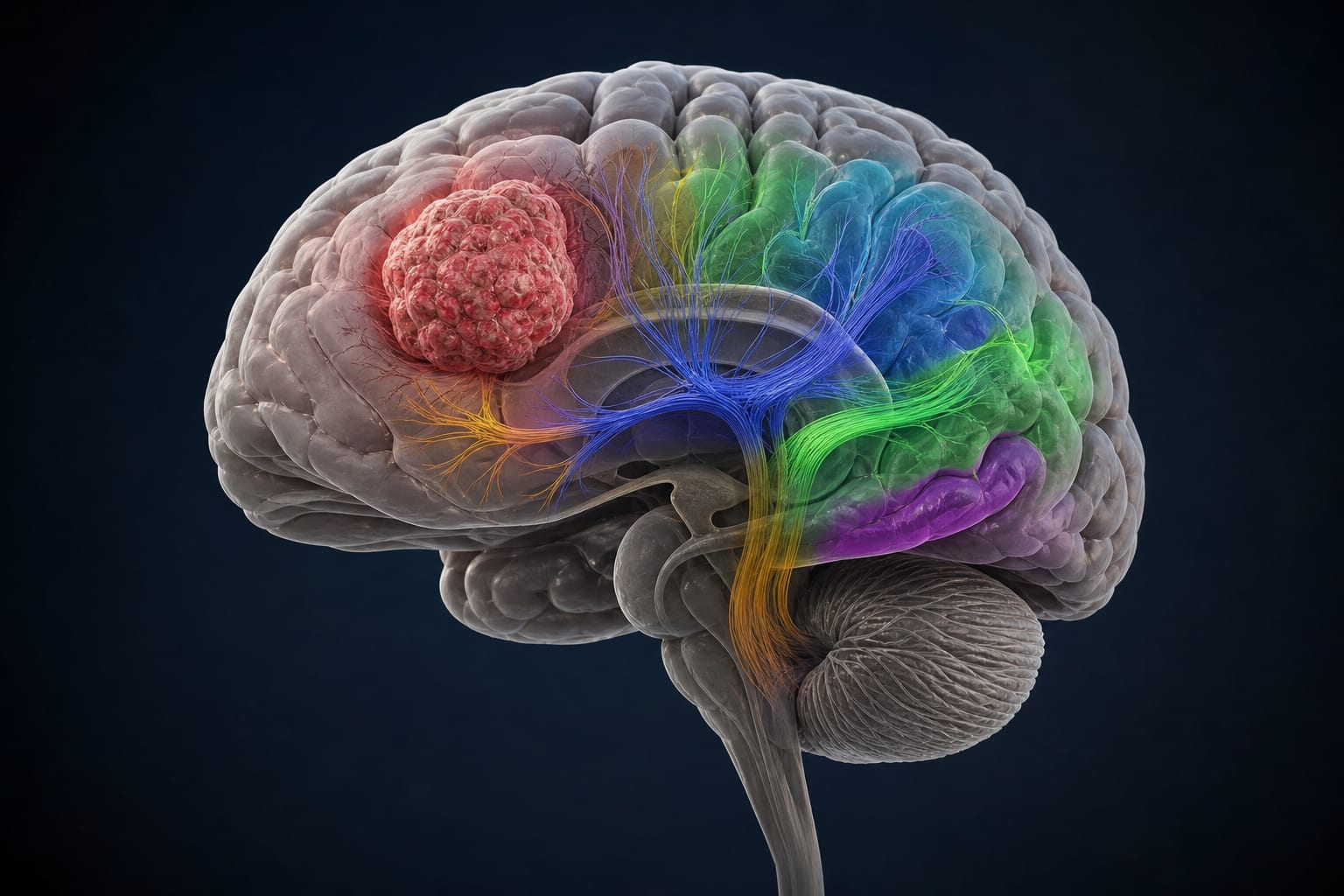
To suggest new directions in surgical neurooncology by integrating cognitive neurosciences to optimize both quality of life (QoL) and overall survival (OS) for glioma patients, emphasizing the mechanisms through which this integration can be achieved.
Approach:
Key Findings:
Surrogates like progression-free survival (PFS) and time to next intervention (TNI) are not consistently predictive of OS, as evidenced by recent trials.
Technological advancements have not led to clear improvements in long-term QoL or OS for glioma patients, highlighting the need for a new approach.
Awake mapping for right-sided gliomas can lead to better preservation of cognitive functions compared to surgery under general anesthesia, demonstrating the importance of functional considerations in surgical planning.
Interpretation:
A rigid focus on tumor removal has limited the understanding of brain function in glioma surgery, necessitating a paradigm shift towards a more integrated approach that prioritizes cognitive neuroscience to enhance patient outcomes.
Limitations:
Current imaging techniques do not adequately account for the dynamic nature of neural networks, often leading to misinterpretations in surgical planning.
The reliance on static preoperative imaging may overlook the reorganization of brain functions over time, which can significantly impact surgical outcomes.
Conclusion:
Integrating cognitive neuroscience into surgical planning may enhance both QoL and OS for glioma patients by preserving critical brain functions, ultimately leading to better patient-centered care.