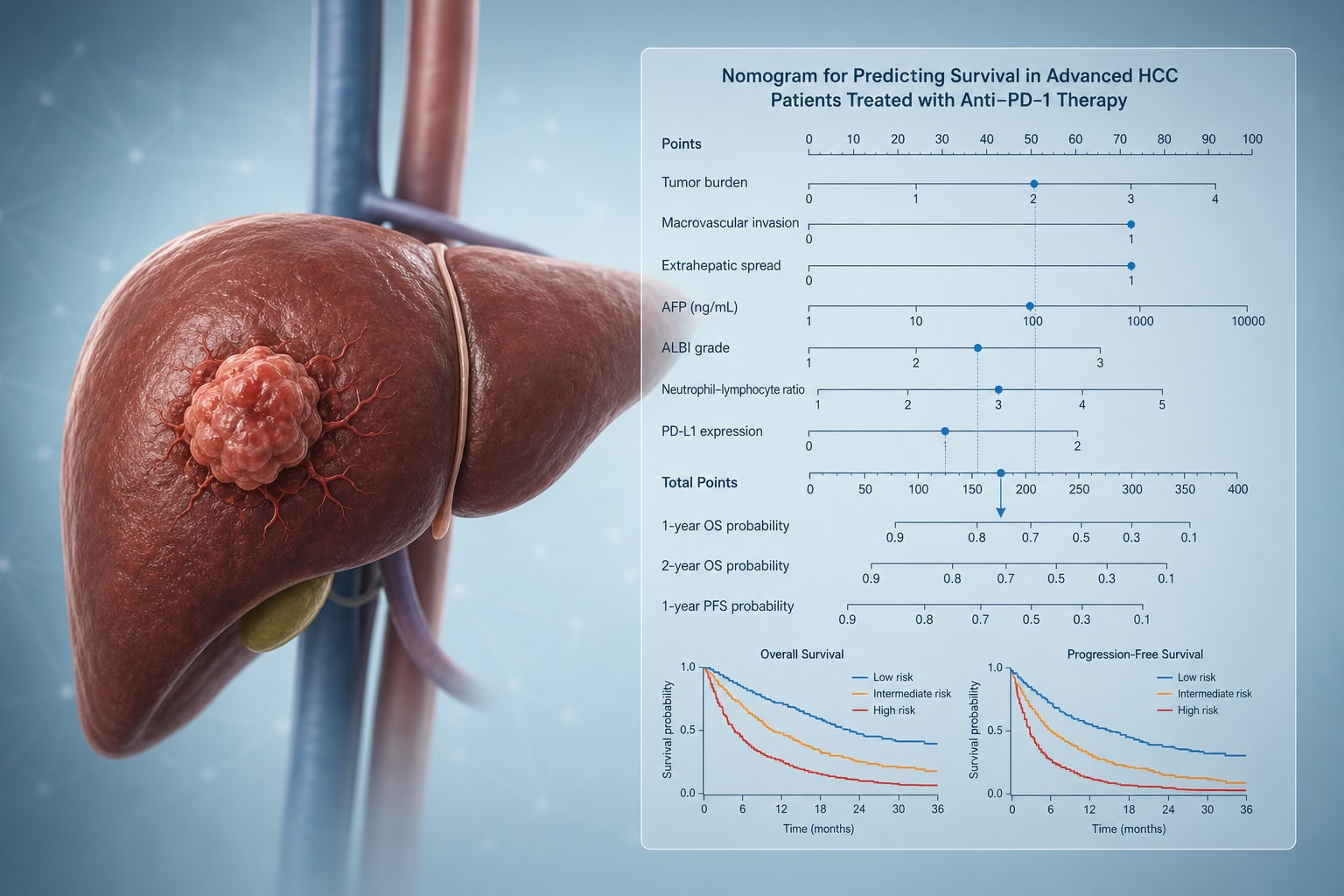
To develop a nomogram that effectively differentiates hepatocellular carcinoma (HCC) patients for immunotherapy and categorizes their risk levels based on identified prognostic factors.
Key Findings:
Prognostic factors for PFS included treatment sequence, disease progression with bone or lymph node, and Child-Pugh classification.
Prognostic factors for OS included BCLC stage, Child-Pugh stage, ascites, ECOG PS, surgery, disease progression with lymph node, and neutrophil-to-lymphocyte ratio (NLR).
The PFS model had a C-index of 0.657 for both training and validation sets.
The OS model C-indices were 0.787 for training and 0.671 for validation cohorts.
Significant differences in OS and PFS were observed between low- and high-risk groups.
Interpretation:
Limitations:
Retrospective design may introduce selection bias.
Findings may not be generalizable to all HCC populations.
Conclusion:
The study presents a nomogram for prognostic stratification in HCC patients receiving immunotherapy, based on identified factors.