Identification of potential vinorelbine-associated prognostic genes in breast cancer through integrative bioinformatics and experimental validation - Summary - MDSpire
Advertisement
Identification of potential vinorelbine-associated prognostic genes in breast cancer through integrative bioinformatics and experimental validation
To explore vinorelbine-related prognostic genes and their mechanisms for breast cancer treatment.
Approach:
Data Collection: BC-related data were collected from public databases, including TCGA and GEO.
Gene Screening: Differentially expressed genes (DEGs) were identified, and candidate genes were selected by intersecting with vinorelbine-related genes (Vino-RGs).
Prognostic Analysis: Cox regression and machine learning algorithms were used to determine prognostic genes, followed by the construction of a random survival forest (RSF) model and a nomogram.
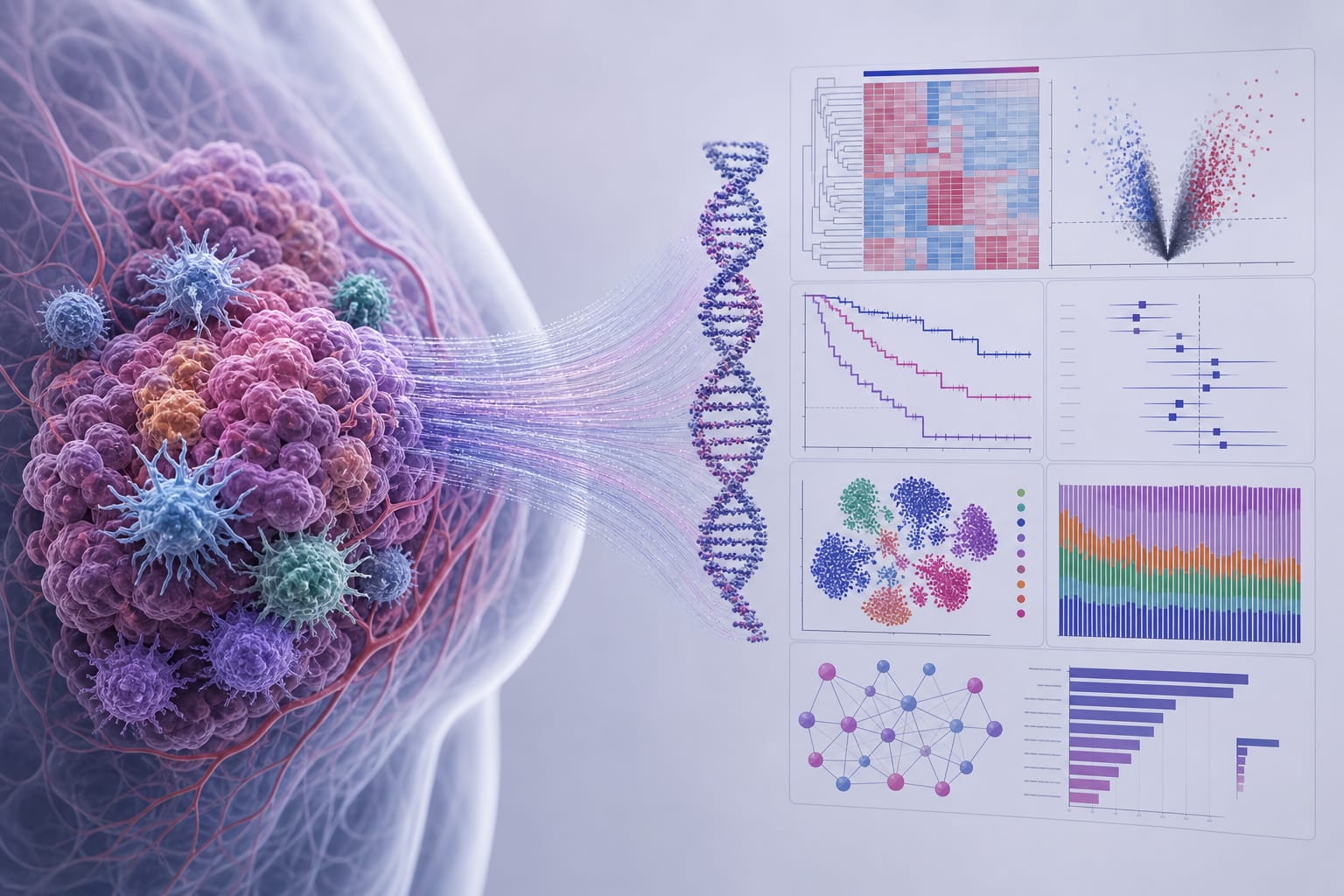
Enrichment and Immune Analysis: Enrichment analysis and immune microenvironment analysis were conducted, alongside single-cell analysis.
Experimental Validation: RT-qPCR was performed to validate the expression of prognostic genes.
Key Findings:
TUBA1C, BRCA1, TGFB1, TUBA1B, XRCC1, PTGS2, IL7, and TUBB2B were identified as prognostic genes for BC.
The RSF model and nomogram demonstrated good predictive accuracy for BC prognosis.
Immune microenvironment analysis indicated correlations between risk scores and immune cells, with poor prognosis linked to lower tumor microenvironment scores.
Macrophages were identified as crucial cells in BC development, showing active communication with other cells.
Interpretation:
The study identifies specific prognostic genes associated with vinorelbine treatment in breast cancer.
Limitations:
The study relies on data from public databases, which may have inherent biases.
Further validation in larger, independent cohorts is necessary.
Conclusion:
The identified prognostic genes may assist in understanding the prognosis of patients undergoing vinorelbine treatment.