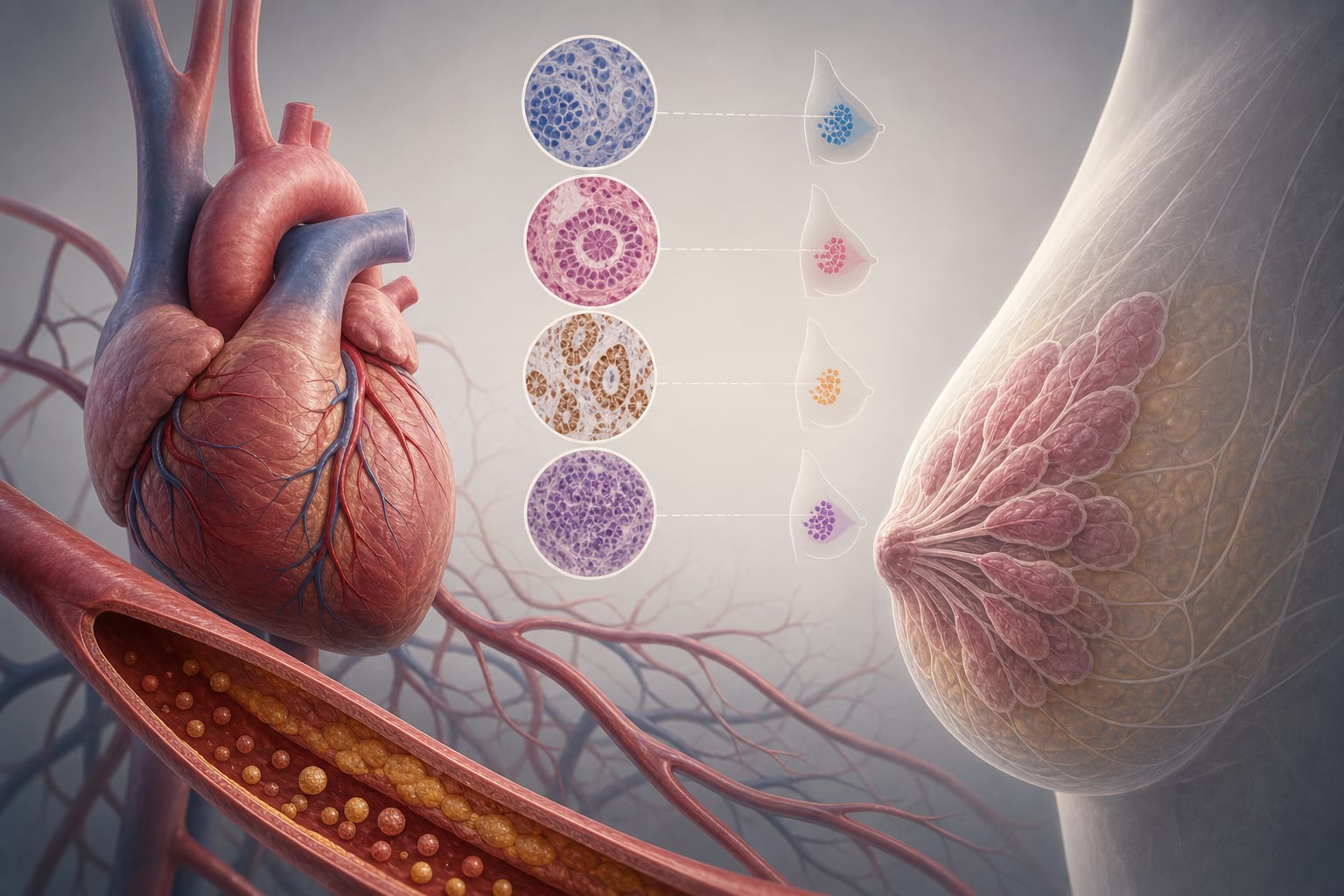
To describe the prevalence and subtype-specific patterns of baseline cardiovascular comorbidities and lipid abnormalities in newly diagnosed breast cancer patients, highlighting their clinical significance.
Key Findings:
Overall dyslipidemia prevalence was 54.1%, highest in Luminal A and lowest in Luminal B (HER2 negative), indicating a need for tailored screening strategies.
Intravascular tumor thrombus was independently associated with dyslipidemia across all subtypes, with the strongest association in triple-negative breast cancer, suggesting a potential target for intervention.
Lymph node metastasis correlated with dyslipidemia only in Luminal B subtypes, indicating subtype-specific risk factors.
Interpretation:
Dyslipidemia is common at baseline in treatment-naive breast cancer patients and varies by molecular subtype, with tumor-related features associated with dyslipidemia, underscoring the need for personalized risk assessments.
Limitations:
The study is limited to a single-center cohort, which may affect generalizability and introduce selection bias.
Retrospective design may introduce biases in data collection and analysis, limiting causal inferences.
Conclusion:
Early lipid screening and cardiovascular risk assessment may optimize cardio-oncology care, particularly in high-risk subtypes.