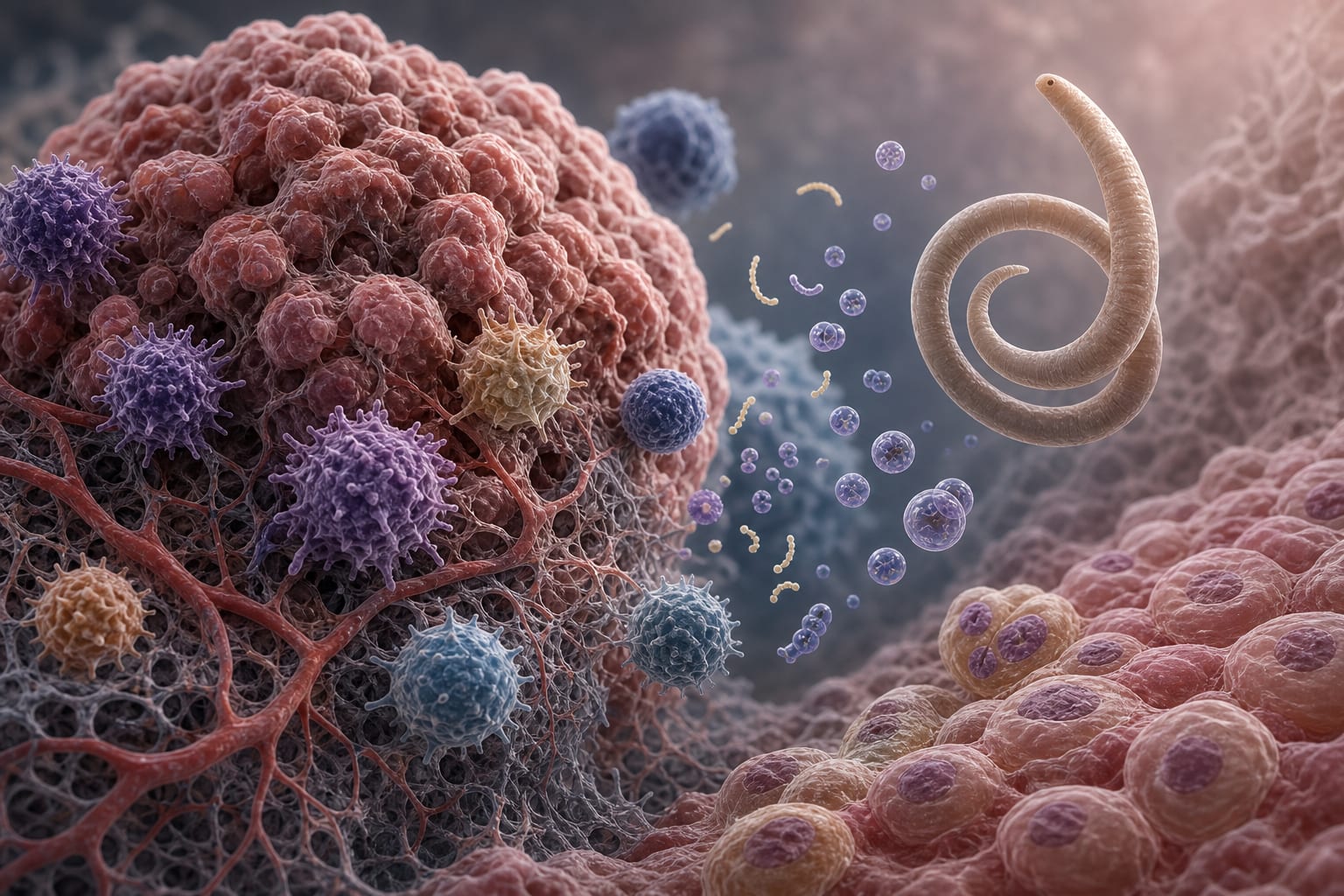
To evaluate the mechanistic pathways underlying both pro-tumour and anti-tumour effects of parasites or parasite-derived products across different experimental models and to identify shared versus tumour-specific biological patterns across cancer types.
Approach:
Systematic Review: A total of 34 studies were reviewed, focusing on whole parasites and parasite-derived molecules, including vesicles, peptides, proteins, and miRNAs, across various cancer types.
Literature Search: The search was conducted using PubMed/MEDLINE, EMBASE, and the Cochrane Library, employing specific keywords related to parasites and cancer outcomes.
Eligibility Criteria: Included studies investigated the direct effects of parasites or their molecules on cancer initiation, progression, or regression using in vitro or in vivo models.
Key Findings:
Pro-tumour effects are linked to chronic inflammation, oxidative stress, epithelial proliferation, and immune modulation.
Anti-tumour effects are associated with direct cytotoxicity, inhibition of migration, and immune activation.
Certain parasite-derived molecules exhibit anti-tumour effects beyond their usual sites of infection.
Interpretation:
The review discusses the dual influence of parasites and their products on cancer progression, indicating both potential cancer-promoting factors and anticancer therapeutic candidates.
Limitations:
Limited studies have investigated direct interactions between secretory molecules and cancer cells.
Existing studies are scattered across individual experimental models, lacking comprehensive understanding of common mechanistic pathways.
Conclusion:
Further mechanistic and translational studies are necessary to explore the roles of parasites and their products in cancer biology.
by Faisal Minshawi, Maimonah Alghanmi, Hassan Alwafi, Amal Mohammad Dustakir, Bayan Al Zoabi, Saleha Khan, Hattan S. Gattan, Isra M. Alsaady, Sarah A. Altwaim, Tope Oyelade, Ayat Zawawi