ERCC6L in human cancers: oncogenic functions, molecular mechanisms, and clinical implications as a prognostic biomarker and therapeutic target - Summary - MDSpire
Advertisement
ERCC6L in human cancers: oncogenic functions, molecular mechanisms, and clinical implications as a prognostic biomarker and therapeutic target
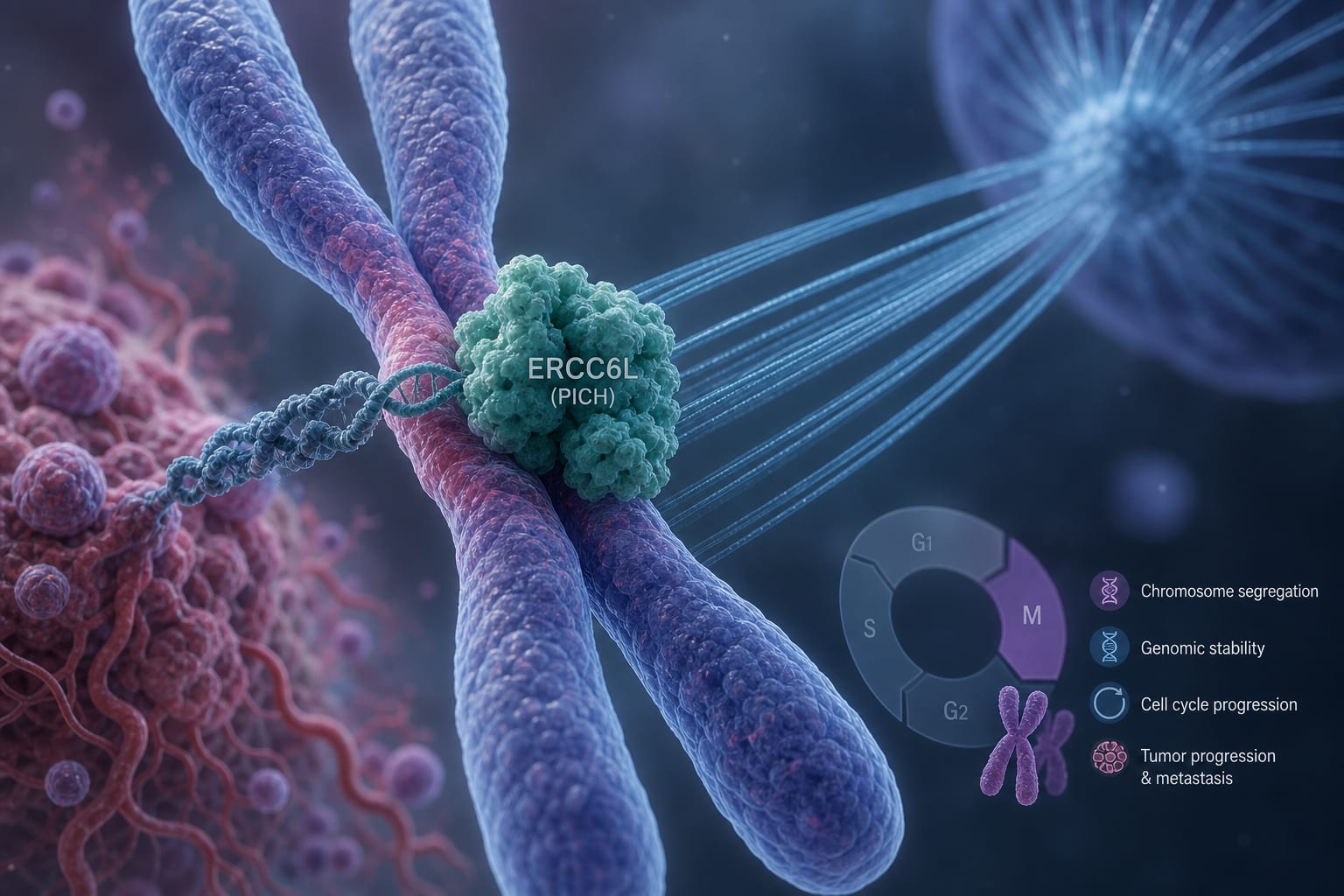
To synthesize current knowledge on the expression landscape, oncogenic functions, molecular mechanisms, and clinical significance of ERCC6L in cancer.
Approach:
Literature Review: A structured literature search was conducted using PubMed and Web of Science databases for articles published up to May 2026.
Key Findings:
ERCC6L is frequently overexpressed in most tumor types, including breast cancer, hepatocellular carcinoma, lung adenocarcinoma, and gastric cancer, compared to normal tissues, driven by DNA amplification and promoter hypomethylation.
High ERCC6L expression correlates with aggressive clinicopathological features, including advanced tumor stage, metastasis, and poor prognosis.
ERCC6L promotes malignant phenotypes by accelerating cell cycle, exerting anti-apoptotic effects, and enhancing invasion and metastasis.
Mechanistically, ERCC6L interacts with mitotic regulators and activates pro-survival signaling pathways, linking it to radio- and chemoresistance.
ERCC6L is associated with an immunosuppressive tumor microenvironment, suggesting its potential as a predictive biomarker for immunotherapy.
Interpretation:
The consistent association of ERCC6L with aggressive tumor behavior positions it as a valuable prognostic biomarker and a promising therapeutic target.
Limitations:
Current evidence is limited to in vitro and xenograft models, and further validation is required before clinical translation.