Adjunctive regenerative therapies in hair transplantation: a comprehensive review of platelet-rich plasma, exosomes, and emerging methods - Summary - MDSpire
Advertisement
Adjunctive regenerative therapies in hair transplantation: a comprehensive review of platelet-rich plasma, exosomes, and emerging methods
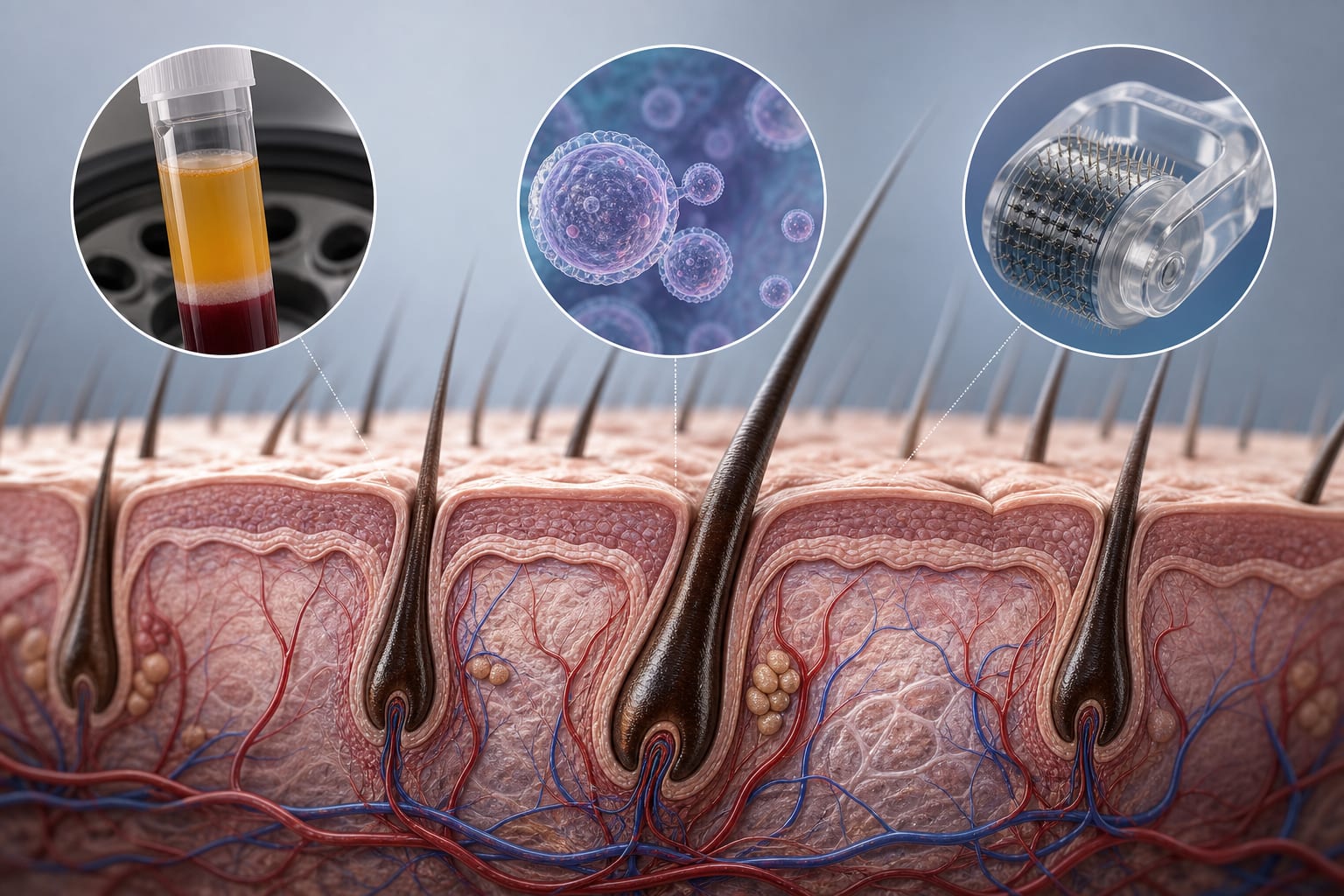
To provide a structured, evidence-based narrative review of platelet-rich plasma (PRP), extracellular vesicles/exosomes, and emerging adjunctive therapies in the context of hair transplantation.
Approach:
Literature Search: A structured literature search was conducted in PubMed/MEDLINE, Scopus, and Google Scholar databases from inception to February 2025, focusing on English-language studies evaluating regenerative therapies in hair loss and hair transplantation.
Key Findings:
PRP shows moderate to strong evidence in androgenetic alopecia; increases in hair density of approximately 10–30 hairs/cm2 have been reported in randomized trials, but evidence specific to transplantation is limited and heterogeneous.
Exosome-based approaches show preclinical effects on dermal papillary cell proliferation and angiogenesis, but lack robust clinical validation and standardized characterization.
Emerging adjuvant therapies, including low-level laser therapy, microneedling-assisted application, and photoactivated PRP, exhibit variable efficacy with limited transplantation-specific data.
Interpretation:
PRP is the most evidence-supported adjuvant therapy in hair transplantation, while exosome-based and emerging regenerative approaches are still under investigation.
Limitations:
Heterogeneity in preparation protocols and outcome reporting for PRP.
Limited standardization and variability in sourcing and characterization of exosomes.
Fragmented evidence base for emerging therapies with significant differences in study design and outcome measures.
Conclusion:
Standardization of protocols, quantitative outcome reporting, and transplantation-specific endpoints are necessary to improve clinical translation and quality of evidence.
The expanded indication is supported by pharmacokinetic, safety, tolerability, exploratory efficacy, and long-term safety data from studies in children aged 2 to 5 years.