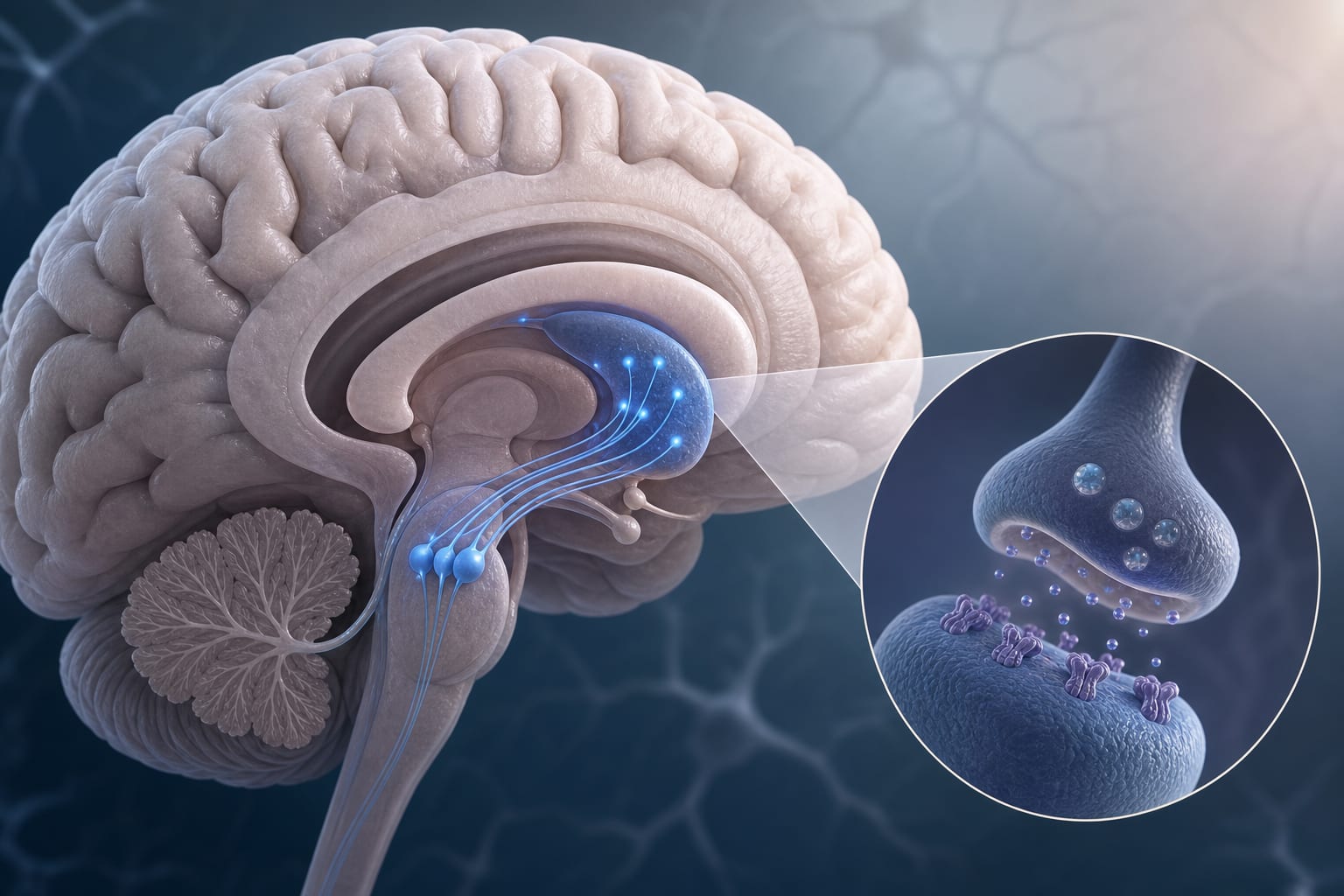
To investigate the degeneration of cholinergic neurons in the basal forebrain and its relationship with brain morphometric changes and clinical symptoms in prodromal Lewy body disorders, emphasizing its significance in understanding disease progression.
Key Findings:
Ch4 volumes were significantly reduced in iRBD patients compared to controls, indicating early cholinergic degeneration.
Ch4 volume reduction correlated positively with limbic regions and was associated with faster progression of limb bradykinesia, suggesting a link to motor symptoms.
Ch1–3 volume reductions were linked to higher incidence of dementia and faster memory impairment progression, highlighting cognitive risks.
Monoaminergic deficits were predominant in iRBD patients converting to PD, while cholinergic deficits were more pronounced in those converting to dementia with Lewy bodies, indicating different pathways of disease progression.
Interpretation:
Cholinergic degeneration in the basal forebrain is associated with cognitive decline and motor symptoms in the prodromal phase of Lewy body disorders, highlighting its critical role in disease progression and potential targets for intervention.
Limitations:
The study's cross-sectional design limits causal inferences and may not capture the dynamic nature of degeneration.
Sample sizes for some subgroups may limit generalizability, and potential biases in patient selection should be acknowledged.
Conclusion:
This study enhances understanding of cholinergic degeneration's role in the clinical and structural changes during the prodromal phase of Lewy body disorders, with implications for early diagnosis and treatment strategies.
Novo Nordisk’s Parkinson’s cell therapy finds a new home at Cellular Intelligence, while base editing, prime editing, and large-insertion genome writing push forward