Development and Internal Validation of a Perioperative Nomogram for Predicting Postoperative Delirium in Geriatric Patients with Intertrochanteric Fractures Undergoing Internal Fixation with Preoperative Low-Dose Dexamethasone - Summary - MDSpire
Advertisement
Development and Internal Validation of a Perioperative Nomogram for Predicting Postoperative Delirium in Geriatric Patients with Intertrochanteric Fractures Undergoing Internal Fixation with Preoperative Low-Dose Dexamethasone
To develop and internally validate a nomogram specifically for predicting postoperative delirium (POD) in elderly patients undergoing internal fixation for intertrochanteric fractures, all of whom received a standardized preoperative low-dose intravenous dexamethasone.
Approach:
Key Findings:
Incidence of POD was 12.5% (31/248).
Three independent predictors identified: age (OR = 1.102), preoperative monocyte count (OR = 7.566), and postoperative transfer to ICU (OR = 2.923).
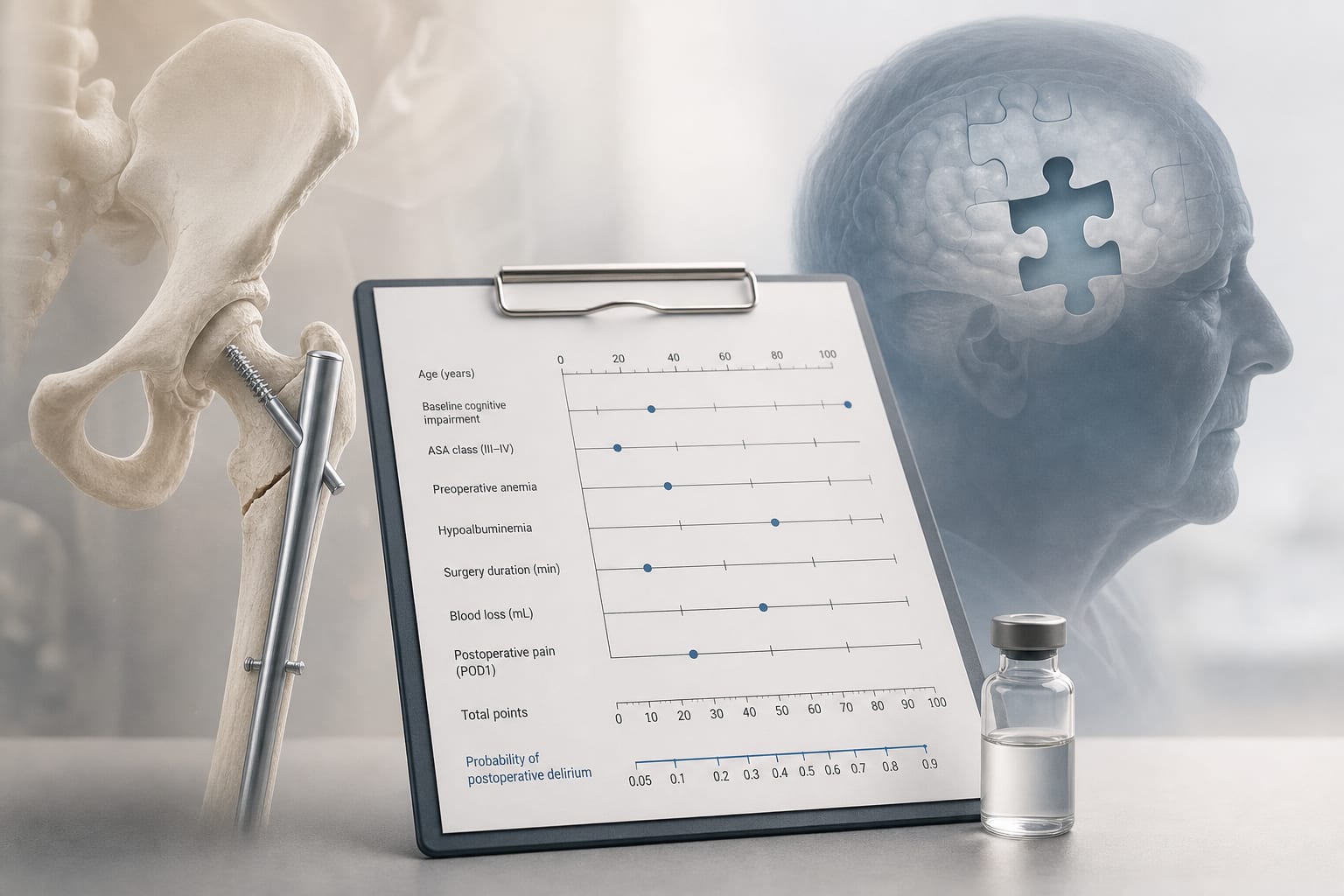
Nomogram demonstrated good discriminative ability with an AUC of 0.803, accuracy of 0.843, sensitivity of 0.821, and specificity of 0.847.
Interpretation:
The nomogram may facilitate early identification of high-risk individuals within this patient subset and support targeted preventive strategies immediately following surgery.
Conclusion:
This model is the first perioperative nomogram incorporating three perioperative variables to predict POD in geriatric intertrochanteric fracture patients undergoing a standardized preoperative dexamethasone regimen.