Association of metabolic dysfunction-associated steatotic liver disease trajectories with incident liver cancer: a UK Biobank cohort study - Summary - MDSpire
Advertisement
Association of metabolic dysfunction-associated steatotic liver disease trajectories with incident liver cancer: a UK Biobank cohort study
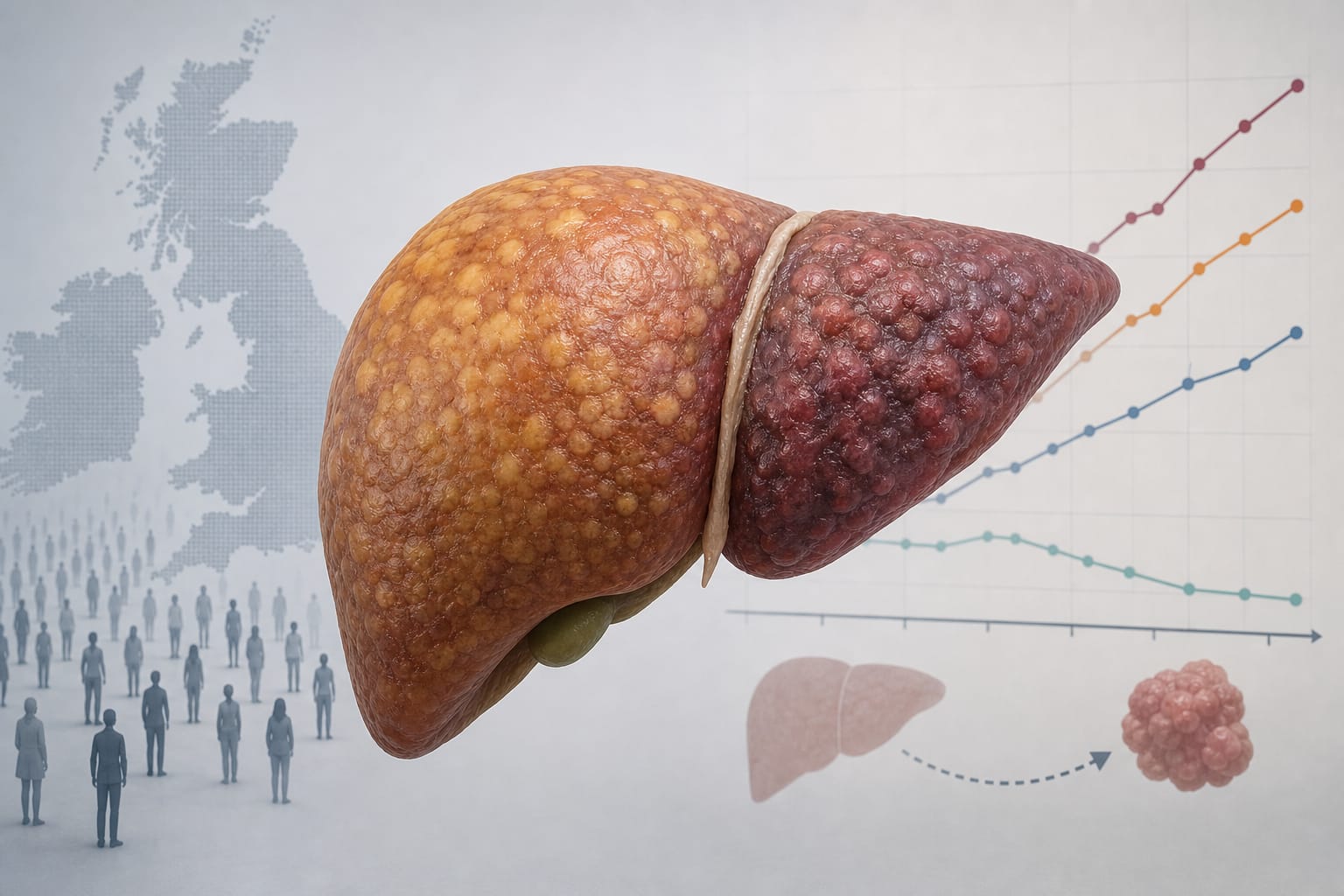
To examine the association between metabolic dysfunction-associated steatotic liver disease (MASLD) status at baseline and follow-up with incident liver cancer, and to assess the prognostic value of changes in MASLD status.
Approach:
Key Findings:
At baseline, 4,008 participants (33.1%) had MASLD.
MASLD at period 1 was associated with a higher risk of incident liver cancer (aHR, 2.81; 95% CI, 1.20–6.58).
MASLD at period 2 also showed a similar association with liver cancer risk (aHR, 2.61; 95% CI, 1.12–6.06).
Trajectory analysis indicated that both MASLD → no MASLD (aHR, 4.00; 95% CI, 1.01–15.80) and MASLD → MASLD (aHR, 3.51; 95% CI, 1.31–9.44) were linked to higher liver cancer risk.
Interpretation:
The findings suggest that MASLD at either assessment is associated with increased liver cancer risk, and changes in MASLD status may provide important prognostic information.
Limitations:
The study may not account for all confounding factors influencing liver cancer risk, such as lifestyle factors and comorbidities.
The cohort is limited to participants from the UK Biobank, which may affect generalizability.
Conclusion:
Persistent MASLD and prior MASLD exposure may both carry prognostic importance for liver cancer risk.