Effect of Remote Ischemic Preconditioning on the Risk of Contrast-Induced Acute Kidney Injury in Patients with Coronary Heart Disease Undergoing Percutaneous Coronary Intervention - Summary - MDSpire
Advertisement
Effect of Remote Ischemic Preconditioning on the Risk of Contrast-Induced Acute Kidney Injury in Patients with Coronary Heart Disease Undergoing Percutaneous Coronary Intervention
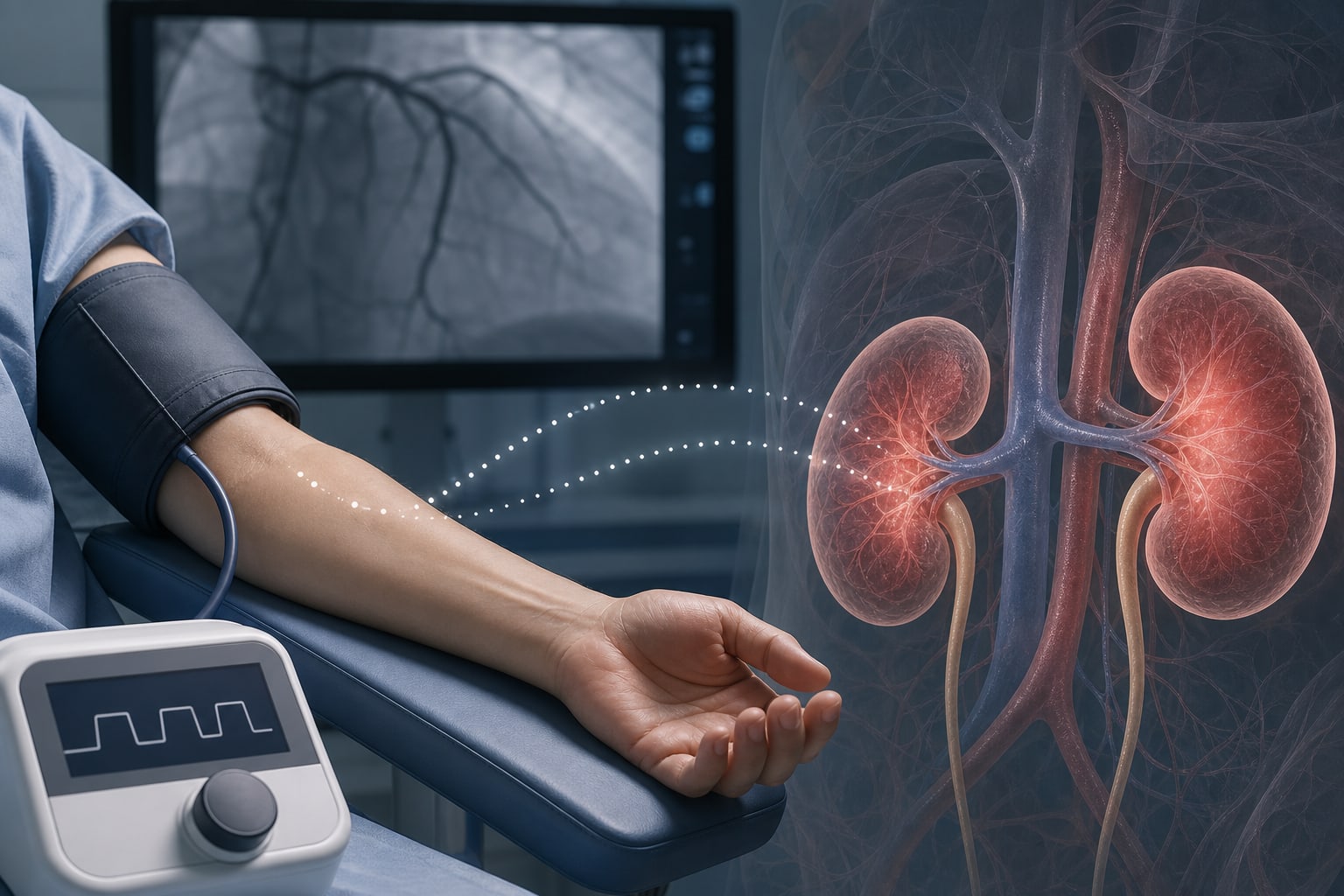
To investigate the impact of remote ischemic preconditioning (RIPC) on the incidence of contrast-induced acute kidney injury (CIAKI) in patients with coronary heart disease (CHD) undergoing percutaneous coronary intervention (PCI).
Approach:
Key Findings:
The incidence of CIAKI was significantly lower in the RIPC group compared to the control group (6.2% vs. 12.0%, P = 0.039).
Multivariate analysis indicated RIPC as an independent protective factor for reducing CIAKI (OR = 0.338, 95% CI: 0.159–0.717, P = 0.005).
No significant difference in the incidence of MACE between the two groups during the follow-up period (Log-rank χ² = 1.665, P = 0.126).
Interpretation:
RIPC appears to reduce the risk of CIAKI in patients with CHD after PCI, offering a simple, cost-effective, and non-pharmacological preventive strategy.
Conclusion:
RIPC may serve as an effective method to mitigate the risk of CIAKI in patients undergoing PCI.
A review of cardiogenic shock studies suggests serial lactate measurements provide more prognostic information than isolated values and may better reflect treatment response.