Association of plasma homocysteine with the atherogenic index of plasma and modification by body mass index: a cross-sectional study - Summary - MDSpire
Advertisement
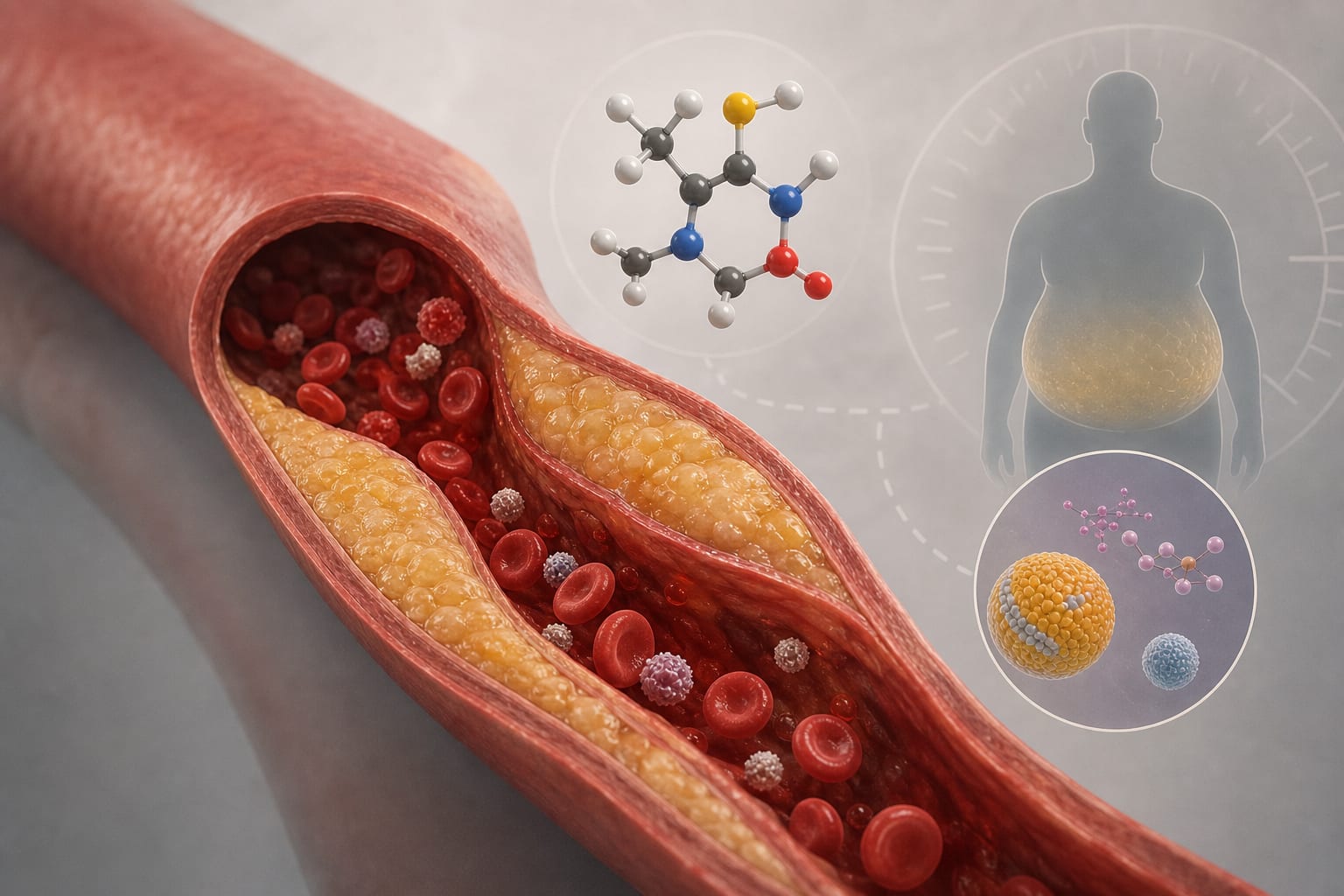
Association of plasma homocysteine with the atherogenic index of plasma and modification by body mass index: a cross-sectional study
To investigate the relationship between plasma homocysteine (HCY) and the atherogenic index of plasma (AIP), and to evaluate the effect of body mass index (BMI) on this relationship.
Approach:
Study Design: Cross-sectional analysis of 887 adults from a health examination database.
Data Analysis: Multiple linear regression for continuous AIP and logistic regression for high AIP risk; mediation analysis using bootstrap method.
Subgroup Analysis: Examined variations in the association between HCY and AIP across different clinical groups.
Key Findings:
Plasma HCY was positively correlated with AIP (r = 0.294, P < 0.001).
Each 1 μmol/L increase in HCY was associated with a 0.0113-unit increase in AIP (P < 0.001).
Logistic regression indicated that each 1 μmol/L increase in HCY increased the likelihood of high AIP risk (OR = 1.282, 95% CI: 1.186–1.387).
The association between HCY and AIP was stronger in participants with BMI ≥ 24 kg/m (P for interaction = 0.006).
Interpretation:
The relationship between plasma HCY and AIP is independent and more pronounced in overweight or obese individuals, with no significant mediation through inflammation or liver function markers.
Limitations:
Cross-sectional design limits causal inferences.
Potential confounding factors not fully adjusted due to lack of socioeconomic data.
Conclusion:
BMI should be considered when evaluating the lipid-related atherogenic risk associated with elevated HCY.
In a randomized crossover trial of insulin-treated patients receiving hemodialysis, real-time continuous glucose monitoring did not improve the primary hypoglycemia outcome but increased time in range and reduced time above range vs capillary testing.