Elastic stable intramedullary nailing vs. hip spica casting management for postoperative femoral fractures in children with developmental dysplasia of the hip - Summary - MDSpire
Conexiant’s news site is now MDSpire News. Learn more
Advertisement
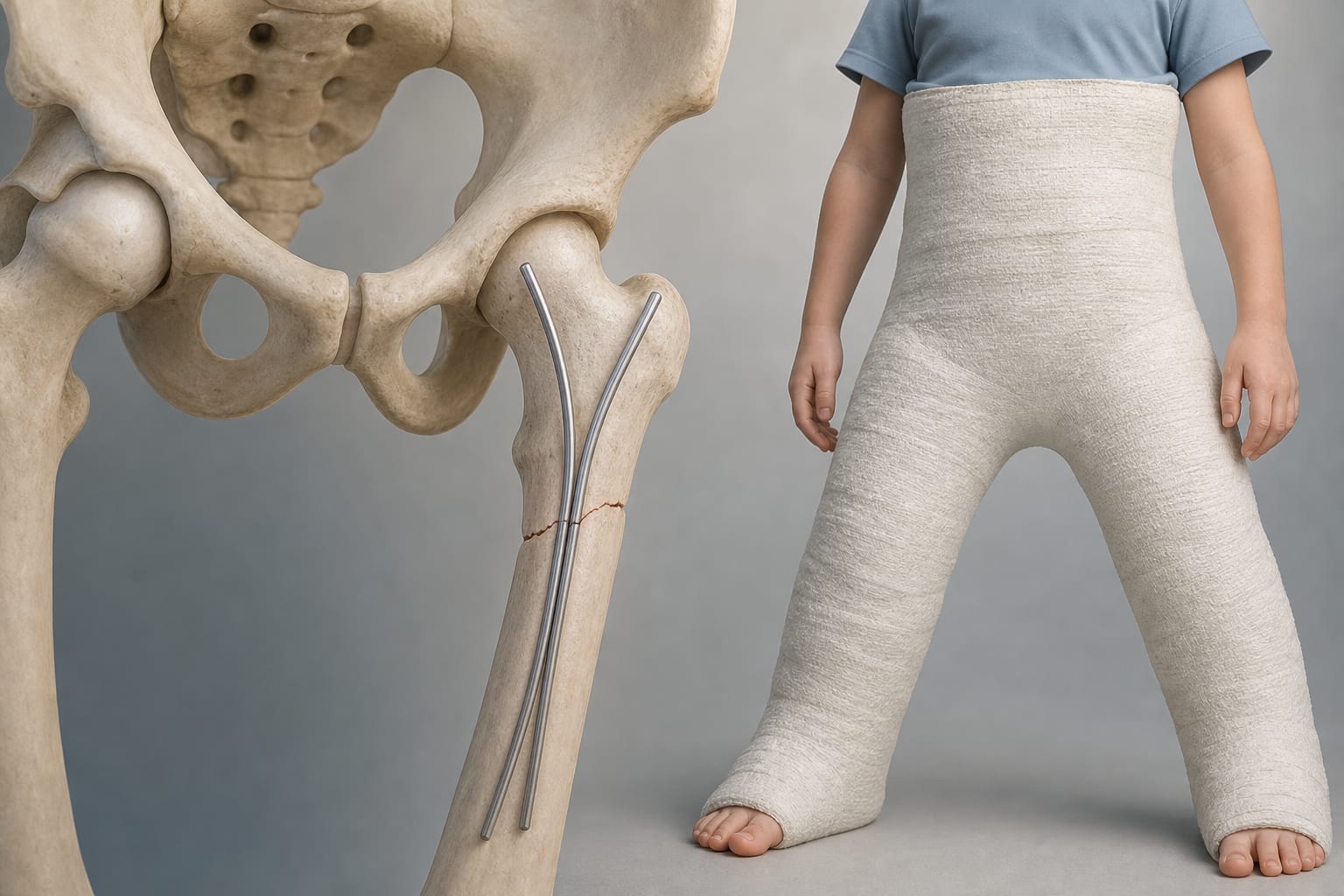
Comparison of Elastic Stable Intramedullary Nailing and Hip Spica Casting for Managing Postoperative Femoral Fractures in Pediatric Patients with Developmental Dysplasia of the Hip
To compare the outcomes of elastic stable intramedullary nailing (ESIN) with hip spica casting for managing postoperative femoral fractures in children with developmental dysplasia of the hip (DDH).
Approach:
Key Findings:
Significant differences in age and fracture pattern were observed between the two groups (P < 0.001).
The average length of hospitalization was longer in the hip spica casting group (9.5 days) compared to the ESIN group (6.4 days, P < 0.001).
Surgical time was shorter in the hip spica casting group (24.8 ± 4.5 min) than in the ESIN group (34.7 ± 5.1 min, P < 0.05).
Interpretation:
Radiological outcomes were generally good after both ESIN and hip spica casting.
Limitations:
Study included a small sample size of 18 patients.
Exclusion of patients with incomplete medical records or follow-up time of <24 months.
Conclusion:
Hip spica casting was indicated for undisplaced femoral fractures in patients aged 2–5 years, while ESIN was indicated for displaced femoral fractures in patients aged 5–8 years.