Clinical guideline highlights for the hospitalist: Evaluation and management of obstructive sleep apnea in adults hospitalized for medical care - Summary - MDSpire
To provide guidelines for the assessment and management of obstructive sleep apnea (OSA) in hospitalized adults.
Approach:
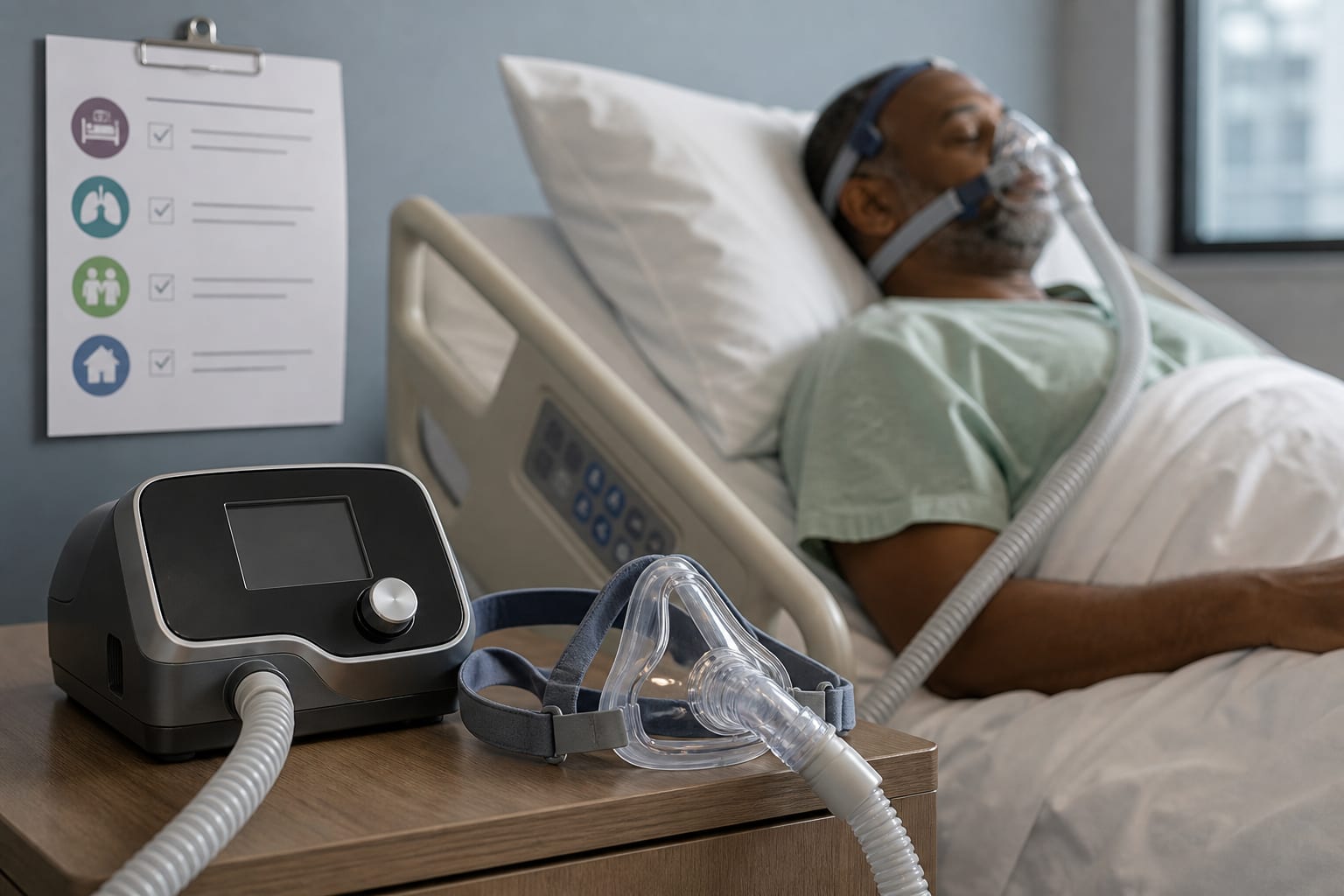
Good Practice Statement: Hospitalized patients receiving active treatment for sleep-disordered breathing should continue that treatment during admission unless contraindicated.
Recommendation 1: Screen hospitalized adults at increased risk for OSA during admission using validated questionnaires or overnight high-resolution pulse oximetry.
Recommendation 2: Start PAP treatment during admission for patients with untreated OSA instead of postponing to outpatient care.
Recommendation 4: Establish a defined plan for outpatient follow-up and continuity of management before discharge for patients at risk for OSA.
Key Findings:
Obstructive sleep apnea affects 25%-77% of hospitalized adults but is often underdiagnosed.
Inpatient PAP continuation rates are as low as 5.8%.
Screening and diagnosis should be connected to treatment pathways to improve outcomes.
Interpretation:
The guideline represents an initial effort to formalize inpatient OSA management but has limitations due to low certainty of evidence supporting the recommendations.
Limitations:
All recommendations are conditional and based on low or very low certainty evidence.
Much of the evidence comes from sleep-specialist settings rather than general hospital medicine.
Screening recommendations may not adequately represent diverse patient subgroups.
Conclusion:
The guideline emphasizes the need for structured management of OSA in hospitalized patients but highlights the necessity for further research.
Investigators examined Life’s Essential 8 scores and carotid ultrasonography measures across cardiovascular-kidney-metabolic stages in 1,283 young adults.