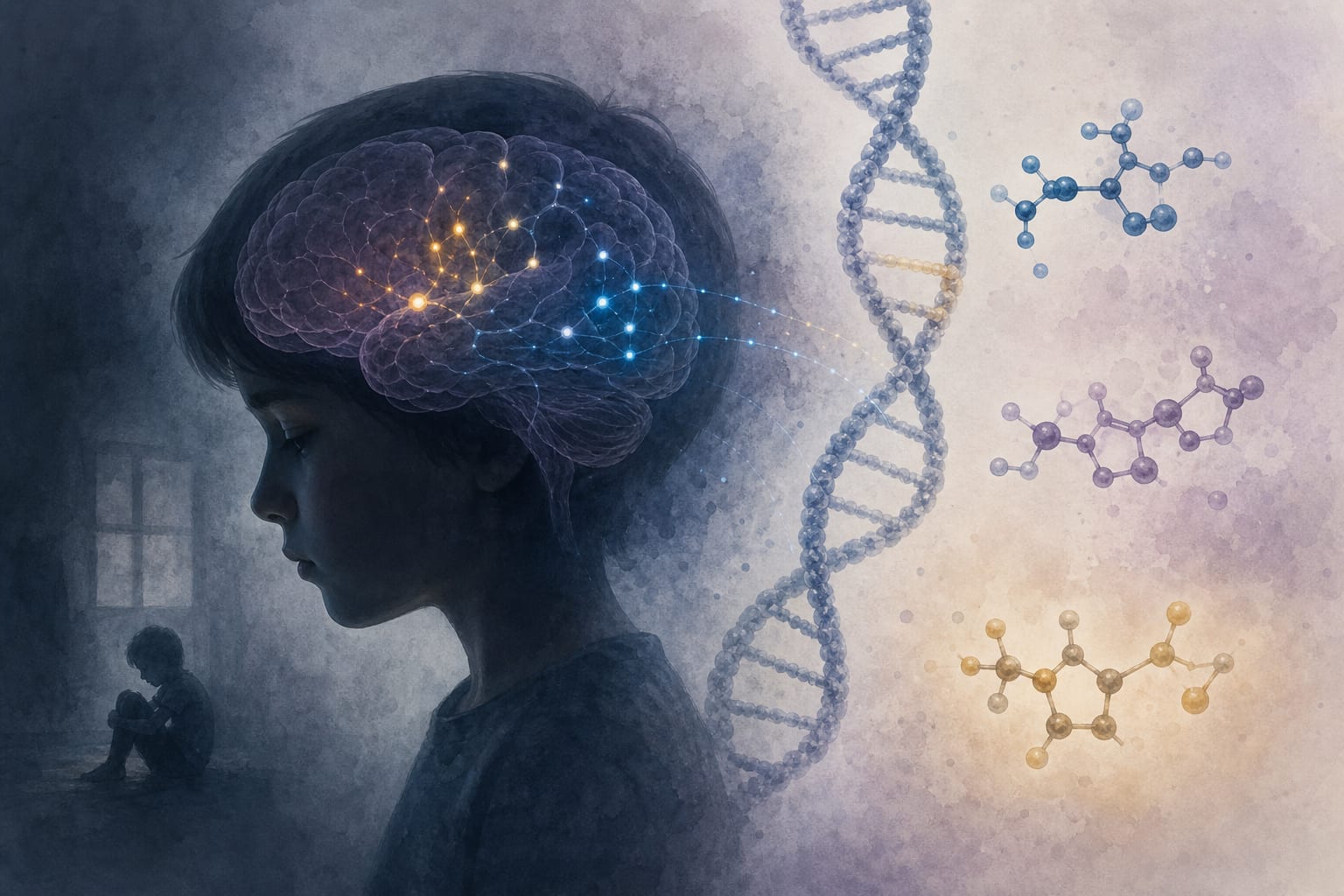
To propose a revised Freudian Drive Theory that explains childhood trauma related depression (CTDD) and its implications for treatment, emphasizing the role of epigenetic changes and neurobiological mechanisms.
Approach:
Model Development: The manuscript develops a model linking childhood trauma to depression through epigenetic changes that affect attachment drives and β-endorphin signaling, highlighting the neurobiological underpinnings.
Key Findings:
Childhood trauma is a transdiagnostic risk factor for affective disorders, particularly in cases where attachment disturbance is prominent.
Reduced serotonergic regulation may be linked to diminished β-endorphin tone, contributing to core depressive symptoms.
Altered β-endorphin activity has been documented in major depressive disorder and related conditions, suggesting a potential mechanism for treatment response variability.
Interpretation:
The revised model suggests that trauma-related depression arises from impaired attachment-related motivation, which impacts β-endorphin mediated satisfaction and highlights the need for integrated treatment approaches.
Limitations:
The model does not treat childhood trauma as a necessary or sufficient cause of depression, acknowledging the complexity of causal relationships between depression and comorbid conditions.
Conclusion:
The proposed model may aid therapeutic decision-making, generate testable predictions, and is open to empirical testing.
National survey findings suggest many US adults report making health decisions based on social media despite widespread concerns about the accuracy of health information shared to the platforms.