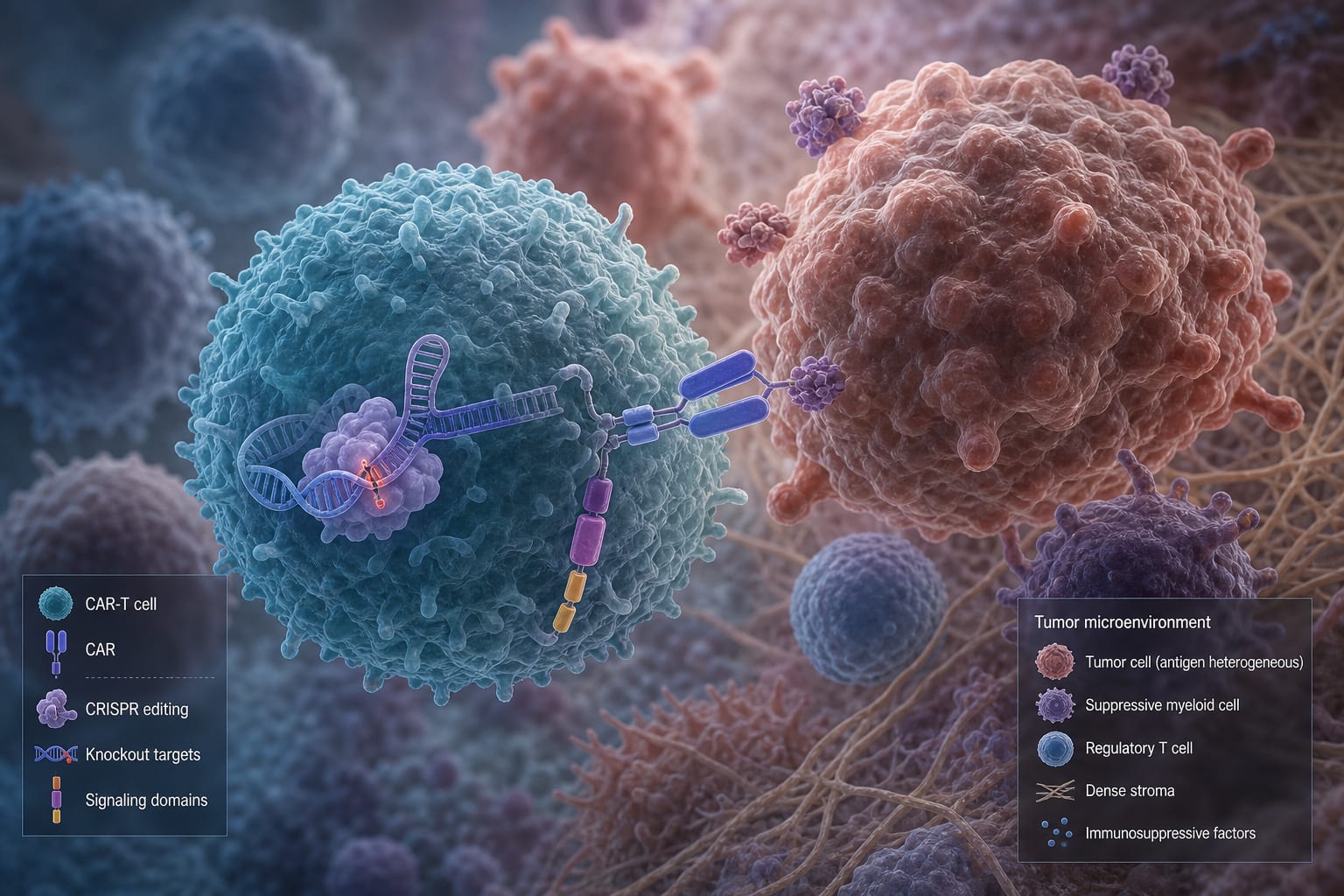
To investigate the role of mucosal-associated invariant T (MAIT) cells in pancreatic ductal adenocarcinoma (PDAC) and their association with tumor progression.
Approach:
Flow Cytometry Analysis: Assessed MAIT cell infiltration in PDAC tissues compared to peripheral blood and non-tumor tissues.
Immunofluorescence Staining: Analyzed the prognostic significance of MAIT cells in tissue microarrays.
Single-Cell RNA Sequencing: Characterized the phenotype and functional properties of MAIT cells in PDAC.
Animal Models: Utilized MAIT-deficient mice to evaluate the impact of MAIT cells on tumor growth and survival.
Key Findings:
Higher MAIT cell infiltration in PDAC tissues is associated with poor prognosis.
MAIT cells in PDAC exhibit an immunosuppressive phenotype with elevated immune checkpoint expression.
Deficiency of MAIT cells leads to reduced tumor growth and prolonged survival in mouse models.
Interpretation:
The study indicates that MAIT cells may contribute to PDAC progression through immunosuppressive mechanisms.
Limitations:
The study primarily focuses on the correlation of MAIT cells with prognosis without establishing direct causation.
Findings from mouse models may not fully translate to human PDAC biology.
Conclusion:
MAIT cells are implicated in the immunosuppressive tumor microenvironment of PDAC.