Navigating the Irregular Road
Recognizing the signs of corneal ectasia can help with prevention of vision loss, and may decrease the emotional impact and functional deficits that can follow.
Objective: To discuss the role of specialty contact lenses and early diagnosis in managing corneal ectasia, particularly keratoconus.
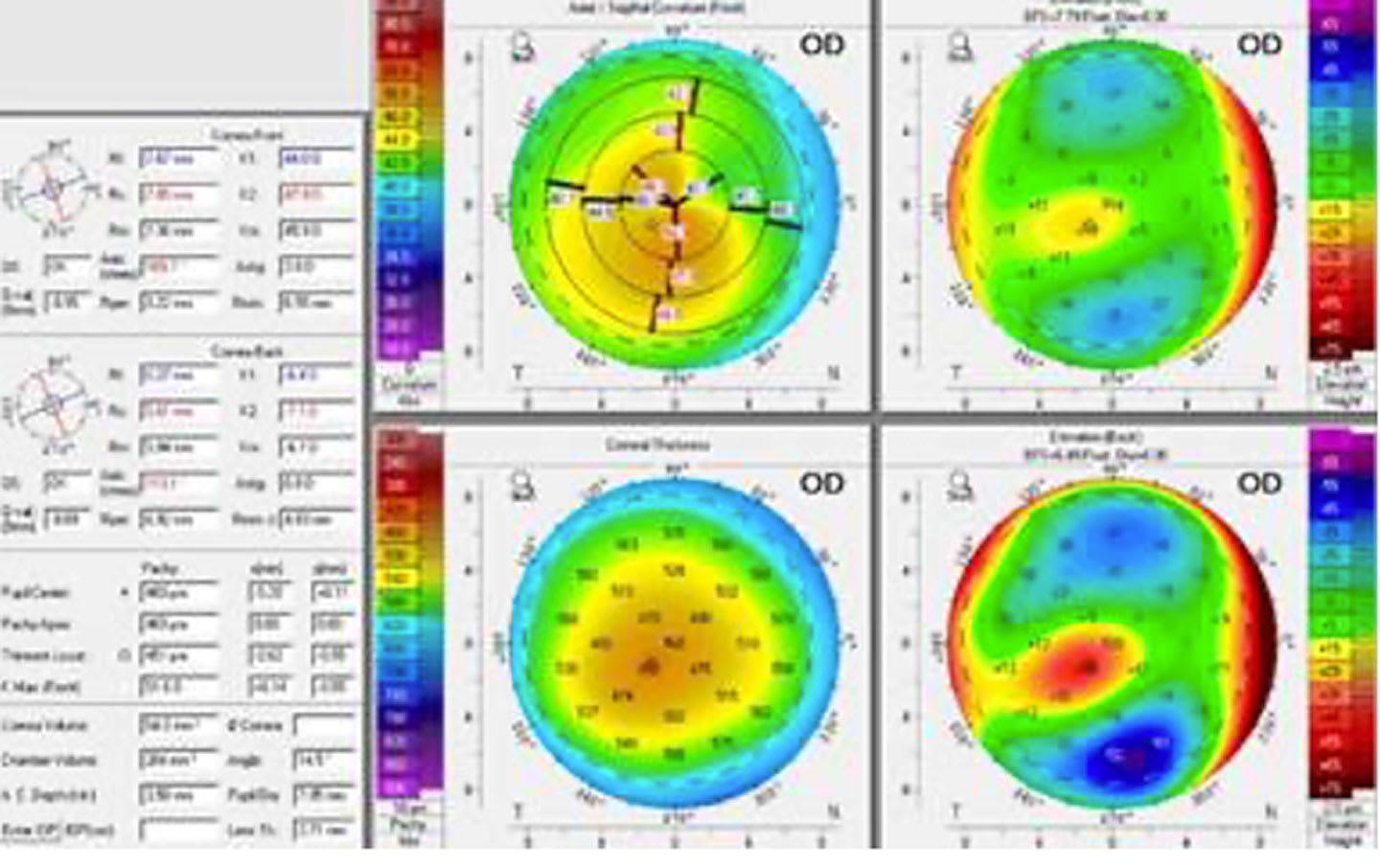
Approach: Diagnosis and Imaging: Emphasizes the importance of corneal imaging technology and slit lamp examination for early diagnosis of keratoconus.Patient Education: Highlights the need for educating patients about corneal ectasia, its risks, and management options.Follow-Up Recommendations: Provides a follow-up timeline based on patient age for repeat imaging and assessment.Key Findings: Keratoconus is often diagnosed in patients' second or third decade of life. Early diagnosis through imaging can prevent vision loss and may decrease the emotional impact and functional deficits. Specialty contact lenses are crucial for managing corneal ectasia, with or without vision loss. Mental health outcomes in keratoconus patients can be disproportionately affected despite good visual acuity. Interpretation: Corneal imaging and patient education are essential for effective management of keratoconus.
Limitations: Corneal topography has limitations in assessing the posterior corneal surface and global corneal thickness. Access to advanced imaging technologies may vary among clinics, which can affect diagnosis and management. Conclusion: Early screening and intervention are vital in managing keratoconus, as they can improve patient quality of life and reduce the risk of progression.